What is Vbeam? Its effects on facial redness and acne marks, and downtime
Vbeam is a type of laser treatment used for redness of vascular origin, such as facial redness, telangiectasia, and the redness of acne marks. Because suitability differs depending on the cause of the redness and the condition of the skin, it is considered after the condition has been assessed at a consultation.
Vbeam is a type of laser treatment used for redness of vascular origin, such as facial redness, telangiectasia, and the redness of acne marks. Because suitability differs depending on the cause of the redness and the condition of the skin, it is considered after the condition has been assessed at a consultation.
What is Vbeam
Vbeam is a pulsed dye laser that mainly uses a wavelength of 595 nm, and it has the property of responding readily to hemoglobin in the blood. It is a treatment intended to deliver heat selectively to redness and vascular lesions.
The redness being treated can have multiple causes, and even the same "facial redness" may involve vascular dilation, inflammation, skin quality, and lifestyle habits. The effects of Vbeam vary from person to person.
How Vbeam works
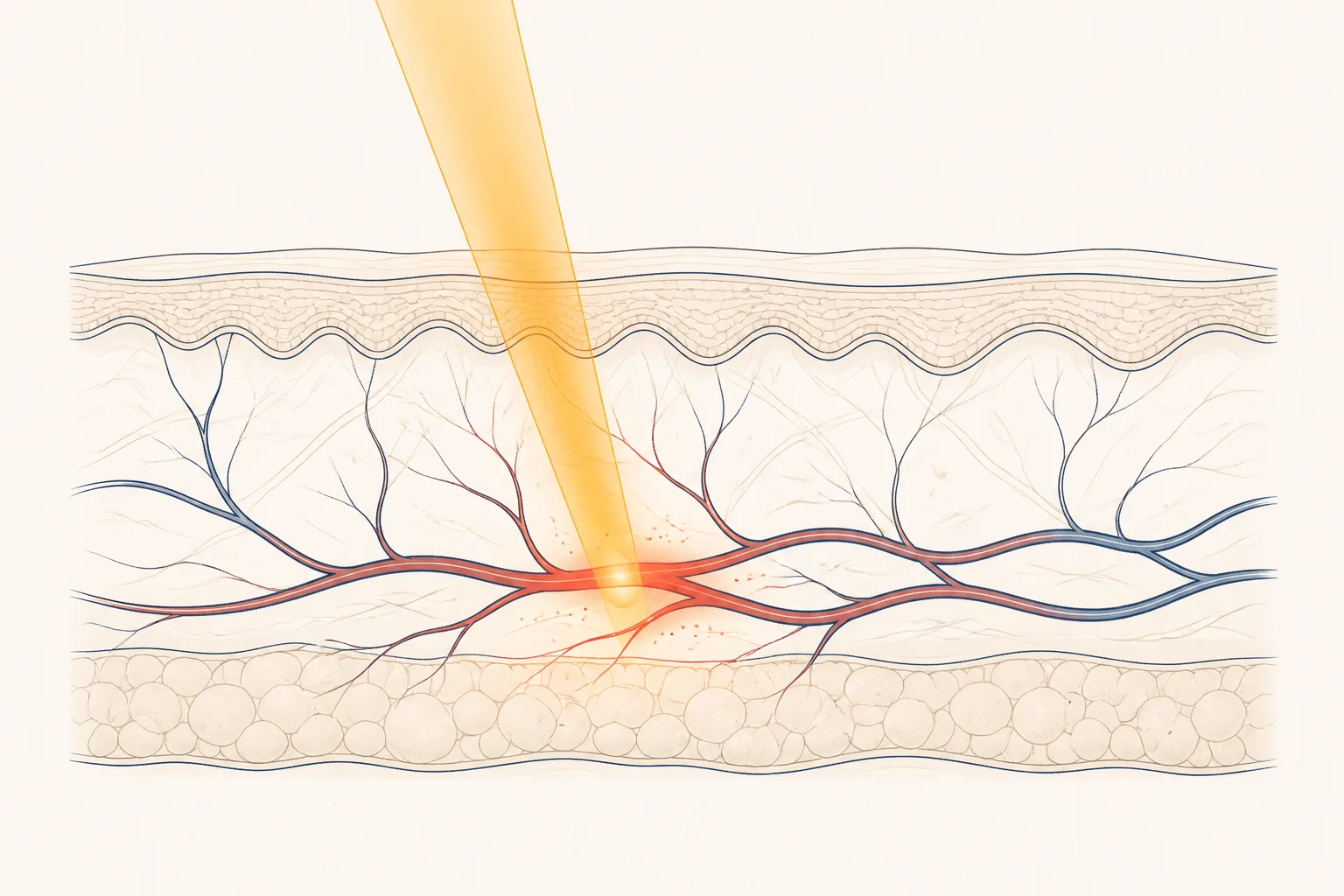
Vbeam works by delivering laser light that is readily absorbed by hemoglobin within blood vessels, producing a thermal effect on those vessels. It targets the blood vessels responsible for redness while limiting the impact on the surrounding skin.
A cooling function is often used together with the irradiation, so that treatment proceeds while the skin surface is protected. The output and irradiation time are adjusted taking into account the area, the intensity of the redness, skin quality, and medical history.
What conditions is it suited to?
Vbeam may be considered for facial redness, telangiectasia, redness associated with rosacea, red acne marks, and hemangiomas. The treatment plan changes depending on the extent and depth of the redness.
On the other hand, when the main issue is brown spots, melasma, strongly inflamed acne, or pigmentation, another treatment may be more appropriate. A diagnosis is required to determine suitability.
Effects of Vbeam
The aim of Vbeam is to make vascular redness less noticeable. How easily results are felt and how many sessions are needed differ according to the type of redness and the responsiveness of the skin.
This treatment is often searched for in relation to facial redness and the redness of acne marks, but not all redness responds in the same way. It is important to identify the cause before choosing a treatment.
Effects that can be expected
With Vbeam, improvement can be expected in redness due to telangiectasia, overall facial redness, red acne marks, and vascular lesions. A distinguishing feature is that it targets redness of vascular origin.
In addition, as the redness settles, unevenness in skin tone may appear less noticeable. However, the course varies depending on skin quality and the severity of symptoms, and results are not guaranteed.
About how many sessions before results are noticeable?
When the redness is mild and limited in area, a change may be felt after only a few sessions. On the other hand, for facial redness or extensive telangiectasia, treatment may be planned on the premise of multiple sessions.
Intervals between visits are often set at around several weeks to several months, and are adjusted while observing the area and the response. The number of sessions needed varies from person to person.
Downtime with Vbeam
Downtime with Vbeam varies according to the irradiation settings and the condition of the skin. Redness and a hot sensation may settle within a short period, while in other cases purpura may appear and remain noticeable for several days to about 1–2 weeks.
If you have work or other commitments, it is reassuring to check in advance whether the settings are likely to produce purpura. Changes in appearance after the procedure vary from person to person.
Symptoms after the procedure
Immediately after the procedure, redness, stinging, swelling, and a hot sensation may occur. Most of these are temporary reactions, but depending on the treated area and the output, purpura may appear.
Purpura is a reaction that looks like bruising, and it may change color and fade over time. Rarely, side effects such as pigmentation, burns, and blisters may also occur.
Points to note after the procedure
After the procedure, it is important to carefully protect against ultraviolet rays and to moisturize. Because sunburn can lead to a risk of pigmentation, protect the skin with sunscreen, a hat, and similar measures.
When washing the face and applying skincare, it is recommended to avoid strong friction and irritating ingredients. If redness or stinging is strong, do not use strongly irritating topical preparations on your own judgment; consult a medical institution.
Drawbacks and risks of Vbeam
Vbeam is a treatment used for redness of vascular origin, but there is a possibility of downtime and side effects. Before treatment, check not only the changes that can be expected but also the reactions that may occur.
Also, if the cause of the redness lies somewhere other than the blood vessels, it may be difficult to feel sufficient change with Vbeam alone. The cause is clarified at the consultation, and comparison with other treatments is made as needed.
Possible side effects
Side effects include redness, swelling, stinging, purpura, itching, dryness, pigmentation, loss of pigment, burns, and blisters. Most are temporary, but follow-up observation may be necessary.
Risks may vary depending on skin color, recent sun exposure (tanning), medications being taken, and medical history. Those using anticoagulants or drugs that readily cause photosensitivity need to declare this in advance.
Cases where results are harder to feel
When the main cause of the redness is inflammatory acne, pigmentation, melasma, rough skin, or a decline in barrier function, the response to Vbeam may be limited. It is important to determine whether the redness is of vascular origin.
Also, when a constitution or lifestyle habits that make redness prone to chronic flare-ups are involved, the redness may become noticeable again after treatment. Skincare, protection from ultraviolet rays, and avoidance of irritation are considered as well.
Differences between Vbeam and other redness treatments
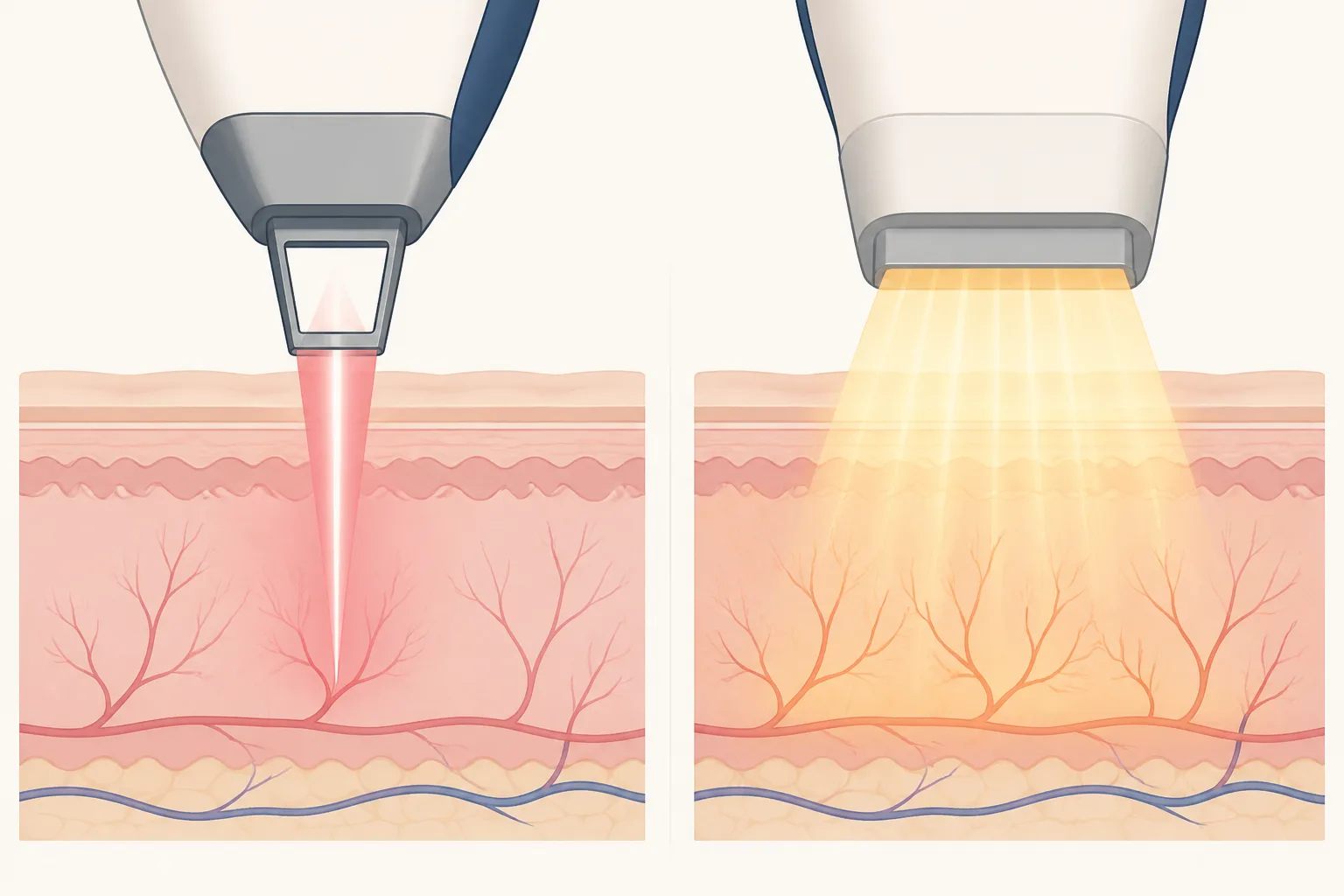
Treatments for redness include several options, such as lasers, light-based treatments, topical medications, oral medications, and skincare guidance. Among these, Vbeam is positioned as a treatment focused on redness of vascular origin.
Light-based treatments may use a broad range of wavelengths to act gently on the skin as a whole, whereas Vbeam differs in that it emphasizes the response of blood vessels. Which one is suitable depends on the symptoms.
Differences from lasers for pigmented spots
Many of the lasers used for pigmented spots mainly target melanin pigment and are considered for brown pigmented patches. Vbeam, on the other hand, makes use of a response to hemoglobin.
For this reason, Vbeam is a treatment suited to redness and vascular lesions, and its purpose differs from treatments that mainly target common pigmented spots or melasma. When redness and pigmented spots are both present, the order of treatment needs to be considered.
In what cases is it covered by insurance?
Vbeam may be covered by health insurance depending on the disease name and the type of lesion. For example, with some hemangiomas and vascular malformations, it may be handled as insured treatment depending on the diagnosis.
On the other hand, facial redness and the redness of acne marks treated for cosmetic purposes are generally self-pay treatment not covered by Japanese public health insurance. Whether insurance applies differs according to the diagnosis.
Vbeam pricing
The price of Vbeam differs depending on whether it is insured or self-pay treatment, the irradiation area, the site, the symptoms, the number of sessions, and the clinic's policy. In the case of self-pay treatment, each medical institution sets its own fees.
Even when comparing with searches such as "Vbeam Osaka cheap," it is important to check not only the price but also the content of the consultation, the irradiation area, aftercare, and whether there are additional costs.
Typical price range
Prices change depending on the area, such as the cheeks only, around the nose, or the whole face, as well as the number of shots and the extent of the lesion. Insured treatment reflects the patient's co-payment rate, while self-pay treatment reflects each clinic's own pricing.
Specific amounts vary with the time of year and campaigns. Please check the treatment booking page or campaign page for the latest costs.
Reasons why costs vary
The main reasons costs vary include the size of the irradiation area, the degree of redness, the number of sessions required, whether anesthesia or medications are used, and how consultation and follow-up visit fees are handled. Conditions may also differ between the first session and subsequent ones.
In addition, how out-of-pocket costs are calculated changes depending on whether the condition is eligible for insurance coverage. When receiving an estimate, check the approximate total and whether there are additional costs.
People who may wish to consider Vbeam

Vbeam is a treatment considered by those who are concerned about facial redness, those whose capillaries show through the skin, those in whom red acne marks tend to remain, and those who wish to consult about redness of vascular origin.
However, when the cause of the redness is mainly pigmentation or inflammation, another treatment may be more appropriate. It is important to discuss this, including your skin condition and lifestyle background, and to choose the method that suits you.
Flow of the procedure
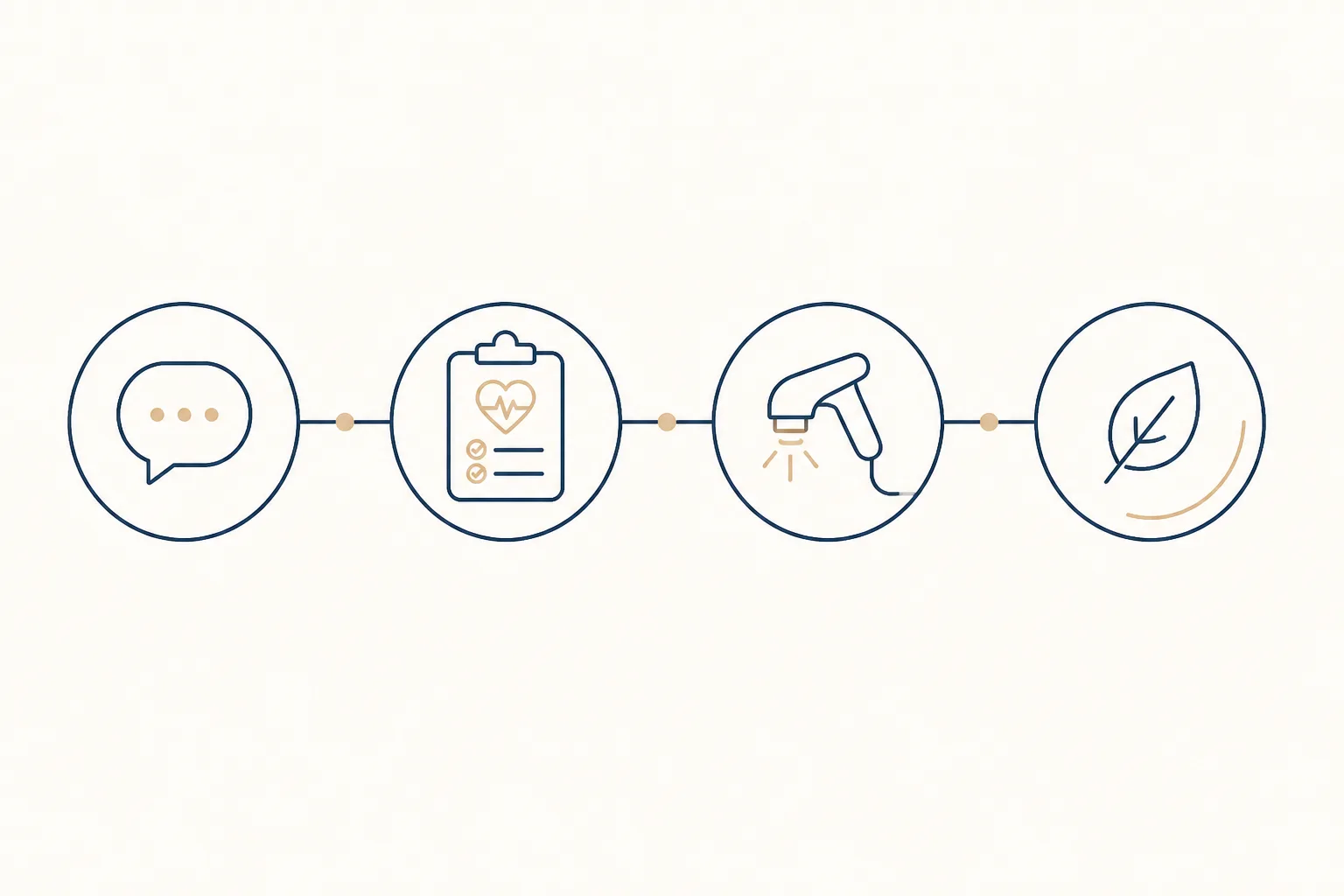
First, at the counseling session, your concerns about redness, when it began, situations in which it tends to worsen, medical history, medications being taken, and past treatment history are checked. Recent sun exposure (tanning) and whether you are pregnant or breastfeeding may also be checked.
Next, at the consultation, it is determined whether the redness is vascular, inflammatory, or pigmentary. As needed, you will receive an explanation of the irradiation area, the output, a guide to the number of sessions, and the downtime.
For the procedure, after washing the face, protective equipment is put on and the laser is applied to the target area. If you are concerned about pain, check in advance about the options for cooling and anesthesia.
After the procedure, cooling and moisturizing are carried out, and the degree of redness and swelling is checked. It is common to receive an explanation about skincare after returning home, protection from ultraviolet rays, and when makeup can be resumed.
Frequently asked questions
Does Vbeam hurt?
The pain of Vbeam is sometimes described as a sensation like being snapped with a rubber band. A cooling function may be used together with treatment to ease the pain, but this differs by area, output, and individual sensitivity to pain.
Areas such as around the nose and the high points of the cheeks tend to feel the stimulation more. If you have concerns, it is a good idea to discuss in advance whether anesthesia is possible and whether the output can be adjusted.
Does purpura occur in everyone?
Whether purpura appears or is less likely to appear depends on the output settings, the condition of the blood vessels, the type of lesion, and skin quality. Treatment may be carried out with settings that intentionally produce purpura, or with settings that keep it less noticeable.
If you have plans, check in advance the likelihood of purpura and how long it may last. Since it can be difficult to conceal with makeup, it is recommended to allow some leeway in your schedule.
Can it also be used for acne marks?
Vbeam may be used for the type of acne marks in which redness remains. When post-inflammatory redness or a capillary response is involved, it can be one of the treatment candidates.
On the other hand, for acne marks with brown pigmentation or with indentations and unevenness, other treatments may be considered. Which treatment is appropriate is determined after checking the skin condition at a consultation.
Disclaimer
* This is self-pay treatment not covered by Japanese public health insurance<br> * Results vary from person to person<br> * Side effects and risks: redness, stinging, purpura, pigmentation, burns, etc.<br> * The standard treatment period and number of sessions are several months and 1 to several sessions; side effects and, when unapproved devices are used, the procurement route and other details must be checked in advance. Prices vary with the time of year, campaigns, and contract terms, so please check the treatment booking page or campaign page.
Your next step, at your own pace.
Explore the official website for pricing and appointment information.
Pricing & booking