What is Ulthera? Effects, Pricing, Pain, and How It Differs from HIFU
Ulthera is a medical lifting treatment that uses ultrasound energy to address sagging of the face and neck. Known as a treatment that does not involve a scalpel, it is sometimes considered by those concerned about the jawline or laxity under the chin.

Ulthera is a medical lifting treatment that uses ultrasound energy to address sagging of the face and neck. Known as a treatment that does not involve a scalpel, it is sometimes considered by those concerned about the jawline or laxity under the chin.
It is categorized as a type of general HIFU treatment, but it has distinctive features in its delivery design and in how tissue is visualized. Because suitability differs depending on skin condition, amount of fat, and degree of sagging, it is important to choose it with an understanding of how it works and of its risks.

What is Ulthera
Ulthera is a treatment that uses high-intensity focused ultrasound (HIFU) to deliver thermal energy to the deep layers of the skin. The targets are mainly deep tissues including the layer known as the SMAS fascia.
The SMAS fascia is a membranous tissue that envelops the facial expression muscles, and it is one of the layers regarded as important in treating sagging. The treatment aims to produce a heat-induced tissue contraction response and to promote collagen production over time. Results vary from person to person.
How Ulthera Works
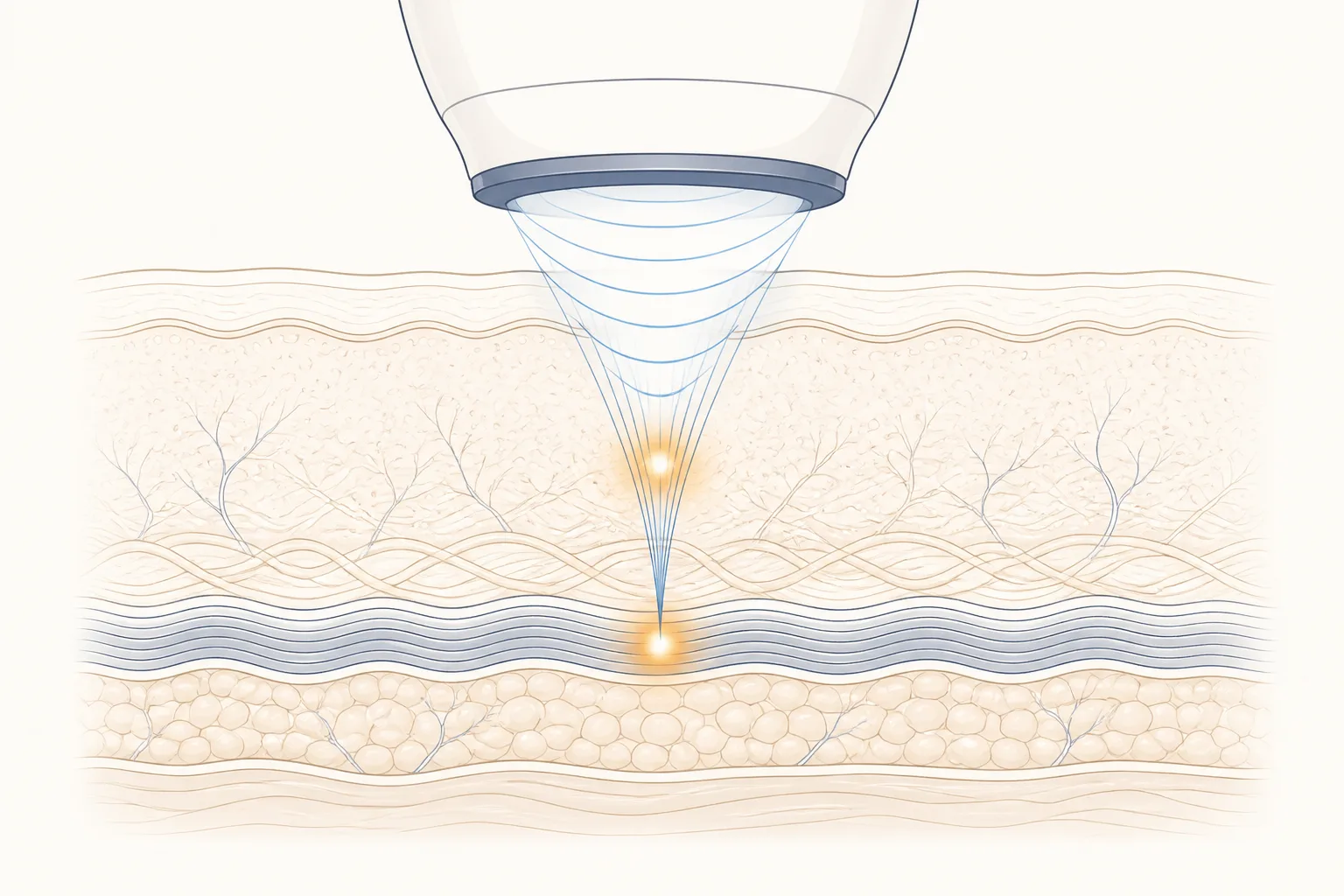
With Ulthera, ultrasound is focused on a single point, forming points of thermal coagulation in the deep layers while limiting the impact on the skin surface. It works much like a magnifying glass concentrating light, directing energy to the intended depth.
The depth of delivery is adjusted according to the area and the thickness of the skin. In shallower layers, skin tightening is considered; in deeper layers, an approach to sagging along the jawline and under the chin is considered.
What Concerns Is It Suited For?
Ulthera may be suitable for those concerned about a blurred jawline, laxity under the chin, or mild to moderate sagging of the cheeks. It can also be an option for those who are hesitant about surgery involving incisions.
On the other hand, when there is a large amount of excess skin or little fat, the result may not match what is expected. The appropriate treatment differs depending on symptoms, bone structure, and skin type.
Effects of Ulthera
The effects of Ulthera are mainly aimed at a sense of lifting and tightening of the contours. Some people feel tightening immediately after the session, but in general changes are observed over several weeks to several months.
Sagging has multiple causes, including skin laxity, the position of fat, the supporting strength of the fascia, and changes in bone structure. Ulthera alone cannot address every concern, and other treatments may be suggested depending on the condition.
Effects That Can Be Expected
Effects expected with Ulthera include tightening of the jawline, improvement of sagging in the cheeks and under the chin, and support for skin firmness. The concept is that applying heat to the deep layers promotes tissue contraction and remodeling.
Improvement of laxity along the jawline can be expected
Tightening under the chin and around the neck can be expected
Support in refining the impression of cheek position and facial contours can be expected
Promotion of collagen production that supports skin firmness can be expected
However, how the change appears differs with skin thickness, amount of fat, age, treatment area, and output settings. Rather than aiming for an excessive change, it is better to consider it a treatment aimed at natural tightening.
How Long Do the Effects Last?
The duration of Ulthera's effects is generally explained as roughly several months to about 1 year. Changes are observed gradually, including during the period when collagen remodeling progresses after thermal stimulation.
Duration varies from person to person. Because age-related changes continue after the procedure, repeat treatment after a certain interval may be considered depending on the condition.
Pain with Ulthera
Because Ulthera delivers heat to the deep layers of the skin, pain or a resonating sensation may accompany the procedure. How pain is felt varies depending on the area treated, the output, and whether the area is close to bone.
In particular, the area under the chin, the jawline, and the region near the temples may feel more sensitive. If you are anxious about pain, it is reassuring to check in advance whether pain management is available.
Pain During the Procedure
During the procedure, you may feel a dull pain resonating deep inside, a sensation of heat, a prickling stimulus, or a feeling that resonates in the teeth. In areas close to bone or where nerves run, the stimulus may feel stronger.
The degree of pain varies from person to person. Because sensations differ between individuals even at the same output, it is important not to endure too much and to tell the practitioner during the procedure if you feel discomfort or strong pain.
Are Anesthesia or Pain Measures Necessary?
As pain measures, some clinics use topical anesthesia, oral medication, cooling, or adjustment of the output. Which method is used is considered based on the treatment area, sensitivity to pain, medical history, and other factors.
The use of anesthesia and adjustment of output require a physician's judgment. It is important to proceed while checking not only pain reduction but also the balance with safety and treatment effect.
Downtime with Ulthera

Because Ulthera does not involve incisions, it is sometimes described as a treatment with relatively short downtime. However, redness, swelling, tenderness, or discomfort may appear after the procedure.
How symptoms appear differs depending on the treatment area, output, and skin type. If you have plans, it is advisable to schedule the procedure with a few days of leeway just in case.
Symptoms After the Procedure
After the procedure, temporary redness, mild swelling, a flushed feeling, pain on touch, or a discomfort similar to muscle soreness may occur. In most cases these settle down over time.
Rarely, numbness, dulled sensation, bruising, or burns may occur. If symptoms persist or the pain is severe, please consult the medical institution where you received the procedure.
Impact on Daily Life
Face washing and makeup may be possible from the day of the procedure, but when there is redness or a sense of irritation on the skin, it is important not to force it. Avoid strong friction and massage, and take care with moisturizing and UV protection.
Vigorous exercise, long baths, and alcohol may aggravate redness and swelling. The duration of lifestyle restrictions differs according to each clinic's policy and your skin condition, so please follow the instructions you are given.
Disadvantages and Risks of Ulthera
Ulthera is a treatment that uses a medical device, and it carries risks as well as benefits. Because heat is applied to deep layers, if the treated layer or the output is not appropriate, pain or discomfort may persist.
In addition, excessive treatment in those with little fat may lead to a hollowed appearance. It is important to assess facial features and the causes of sagging before judging whether the treatment is appropriate.
Possible Side Effects
Possible side effects include redness, swelling, a sensation of heat, stinging, tenderness, bruising, numbness, and abnormal sensation. Rarely, burns or neurological symptoms may occur.
If a side effect occurs, cooling, topical medication, or observation of the course may be carried out. If discomfort is strong or symptoms continue for a long time, please contact a medical institution rather than judging on your own.
Those Who Cannot Receive the Treatment
Those who are pregnant or breastfeeding, those with infection or strong inflammation in the treatment area, and those with serious underlying conditions may be unable to receive the treatment. The presence of metal threads, implants, or medical devices also needs to be checked.
If you are using anticoagulants, immunosuppressants, steroids, or similar medications, please report this in advance. Depending on your medical history and medications, the treatment may be withheld or another method considered.
Differences Between Ulthera and General HIFU
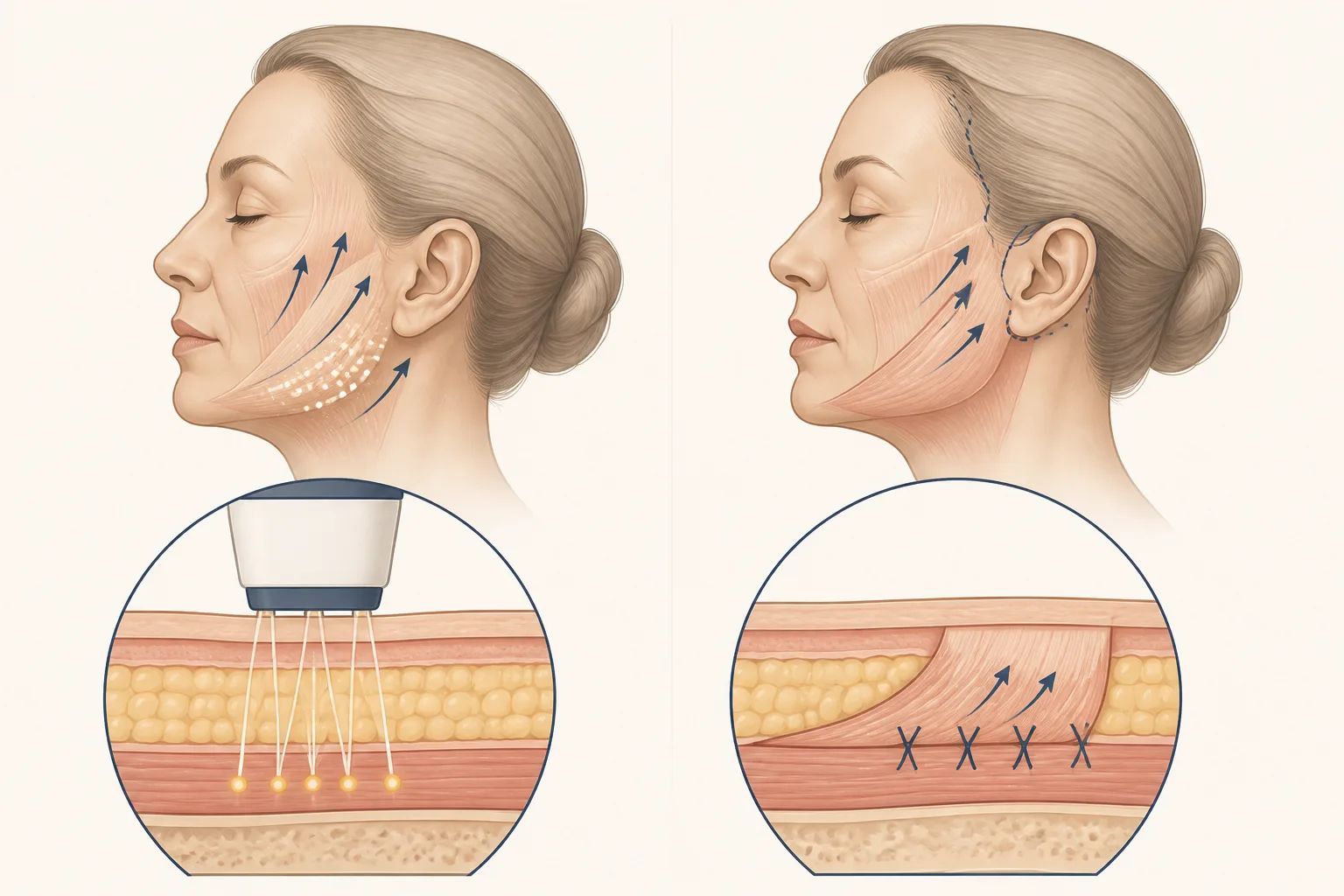
Ulthera is a type of HIFU treatment, but it differs from general HIFU devices in design and in how delivery is managed. When comparing, it is important to check not only the name but also the device used, the treatment depth, the number of shots, and the staffing arrangement for the procedure.
When comparing with searches such as "Ulthera HIFU difference," try not to decide based on low cost alone. The treatment plan changes depending on the output, treatment area, and the content of aftercare.
Differences in Device and Delivery
Ulthera is known as a medical HIFU device designed to allow the depth of the skin to be checked during treatment. A noted feature is that it makes the targeted layer easier to identify.
General HIFU devices, meanwhile, come in several types, differing in treatment depth, output, cartridges, and procedure time. Which device is suitable varies according to skin condition and treatment goals.
Differences in Who It Suits
Ulthera may be considered by those who want a relatively robust treatment design for sagging along the jawline and under the chin. Those who are sensitive to pain may wish to discuss anesthesia and output adjustment.
General HIFU ranges, depending on the device and menu, from options aimed at mild tightening to those delivering deep treatment. Suitability is determined by checking the amount of facial fat and the degree of sagging, including the physician's judgment.
Pricing for Ulthera
Ulthera is a self-pay treatment not covered by Japanese public health insurance, so the fee is not covered by insurance. Because it varies with the season, campaigns, treatment area, and number of shots, please check the specific cost on the booking page or the campaign page.
Many people search for "Ulthera cheap" or "Ulthera price comparison," but it is important to compare not only price but also the consultation setup, the treatment area, the device used, and whether aftercare is provided.
Price Range
Fees differ according to the treatment area, such as the whole face, cheeks, under the chin, or the neck. The whole face tends to cost more than individual areas, while partial treatment covers a limited area and may therefore keep costs lower.
Even for the same "whole face," the areas included and the number of shots differ depending on the treatment conditions. When looking at a price list, check how far the covered area extends and whether there are additional fees.
Why Costs Vary
The main reasons costs vary are the number of shots, the treatment area, the type of device, whether anesthesia is used, and the content of the consultation and aftercare. Costs also change depending on whether a campaign applies and on the contract terms.
Placing too much emphasis on low cost can lead to misunderstandings, such as the desired area not being included, the number of shots being small, or additional fees arising. Check the explanation given in advance and compare total amounts.
Those Who May Find Ulthera Worth Considering

Ulthera is a treatment considered by those who have begun to notice looseness of the jawline, laxity under the chin, or sagging of the cheeks. It can also be an option for those who want to limit the impact on daily life compared with surgery involving incisions.
On the other hand, another treatment may be more suitable for those with considerable excess skin, those with little fat who hollow easily, or those seeking a large change in a short period. Results vary from person to person.
Those concerned about a blurred jawline
Those concerned about laxity under the chin or around the neck
Those who are hesitant about treatment involving incisions
Those who want to aim for natural tightening
Those who find it difficult to take a long downtime
Flow of the Procedure

The Ulthera procedure generally proceeds in the order of counseling, examination, design, treatment delivery, and aftercare. The skin condition and causes of sagging are checked beforehand, and the treatment area and output are then decided.
Counseling: concerns, wishes, medical history, medications, and past aesthetic procedures are checked
Examination: skin thickness, amount of fat, degree of sagging, and left-right differences are checked
Design: the areas to be treated and the areas to be avoided are marked
Procedure: gel is applied, and treatment is delivered while adjusting depth and output for each area
Aftercare: the presence of redness or pain is checked, and how to spend the rest of the day is explained
The procedure time differs according to the area. The whole face may take comparatively longer, while partial treatment may finish in a short time.
Frequently Asked Questions
Does Ulthera Make You Look Older?
When someone feels they look older after Ulthera, factors such as a small amount of fat, the treated area, the output design, and the person's original bone structure or thin skin may be involved. In particular, in those with little cheek fat, excessive tightening may lead to a hollowed appearance.
For this reason, it is important before the procedure to confirm not only "where to tighten" but also "where to avoid." Treatment for sagging needs to be planned while considering the balance of the whole face.
When Do the Effects Appear?
With Ulthera, some people feel mild tightening immediately after the procedure, but in general changes are observed over several weeks to several months. This is because tissue contraction from thermal stimulation and collagen remodeling progress over time.
How the change appears differs with age, skin type, amount of fat, treated area, and number of shots. Rather than judging by appearance immediately after the procedure, it is important to evaluate while following the course over time.
How Long Is the Downtime?
Downtime is sometimes described as relatively short, but redness, swelling, tenderness, and a flushed feeling may continue for a few days. A sensation of pain on pressure or a discomfort like muscle soreness may also remain for a while.
If you have an important engagement, it is reassuring to avoid scheduling it right after the procedure and to allow some leeway. If symptoms are strong or prolonged, please consult the clinic where you received the procedure.
Disclaimer
*This is a self-pay treatment not covered by Japanese public health insurance<br> *Results vary from person to person<br> *Side effects and risks: redness, stinging, swelling, bruising, neurological symptoms, burns, etc.<br> *The standard treatment period and number of sessions are approximately several months to 1 year and 1 to several sessions; side effects and, when unapproved devices are used, the procurement route and other details must be confirmed in advance. Fees vary with the season, campaigns, and contract terms, so please check the booking page or the campaign page.
Your next step, at your own pace.
Explore the official website for pricing and appointment information.
Pricing & booking