What Is Calf Botox? Effects, Duration, and Impact on Walking Explained
Calf Botox is a procedure that acts on muscle bulk in the calves. Here we outline how to think about its impact on walking, the general guide to how long it lasts, and which of the four causes of legs looking thick it suits and does not suit.

[Key points of this article]
Calf Botox is a procedure in which an injection is given into developed muscle to soften its bulk, with the aim of refining the line of the legs.
Some people worry that they "may not be able to walk," but the dose is generally adjusted so that no major interference with everyday walking occurs.
The effect appears gradually, the duration is generally around several months, and repeat sessions may be considered.
However, there are also risks such as a sensation of reduced strength in the legs or left-right asymmetry, and it may not be suitable when fat or swelling is the cause.
Some people who are bothered by bulging calves may be considering treatment with Botox. At the same time, we also hear concerns such as "Will I be unable to walk after the injection?" In this article, we outline calf Botox — from how it works to its effects, duration, and risks — within the scope of facts and general information.

What is calf Botox?
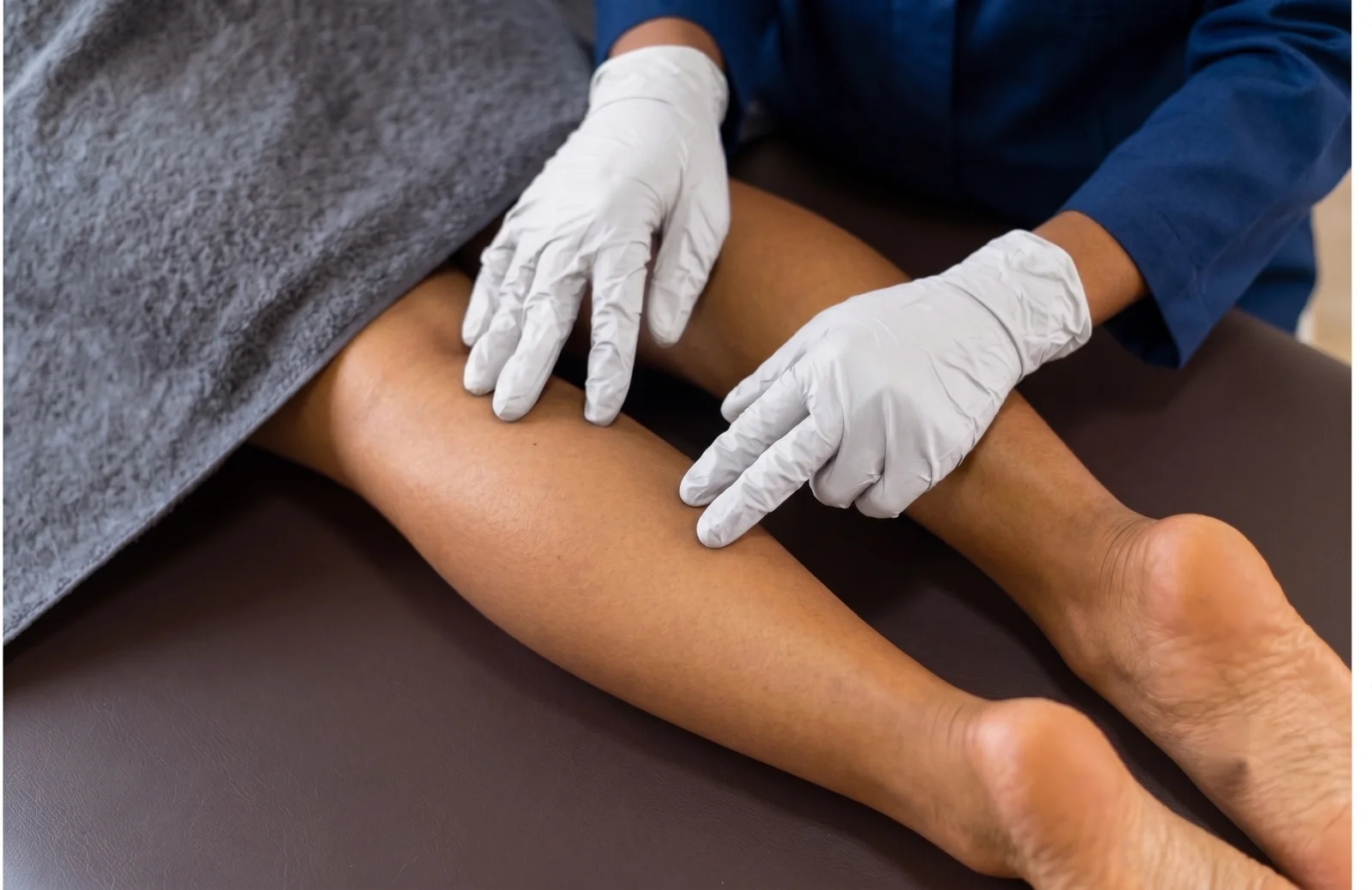
Calf Botox is a procedure in which botulinum toxin is injected into the calf muscles to soften muscle bulk, with the aim of refining the line of the legs. Botulinum toxin has an action that relaxes the function involved in muscle movement, and this property is used in the expectation of making the volume of developed muscle less noticeable.
The calf has two muscles: the superficial gastrocnemius and, deeper, the soleus. Much of what appears to bulge when seen from the outside is attributed to the gastrocnemius, and injections mainly target this area. The injection sites and doses are adjusted so that the action is less likely to reach the deep muscles involved in walking and maintaining posture.
One characteristic is that it can be received without using a scalpel. However, since muscle is not necessarily the only reason calves look thick, identifying the cause comes first.
Four reasons calves look thick
There are several factors behind calves looking thick. The main ones are as follows.
Muscle development: when the gastrocnemius is developed due to an exercise history or habits in the way of walking.
Fat: when there is a lot of subcutaneous fat, giving overall volume.
Swelling: when fluid or waste products stagnate, making the legs temporarily look thicker.
Skeletal structure or habits in weight distribution: when the way of standing or placing weight concentrates load on the muscle.
What Botox acts on among these is bulk due to "muscle development." When fat or swelling is the main cause, the expected change may be less likely to appear, and identifying the cause before treatment is important. Depending on the cause, other approaches may be considered.

Can calf Botox make you unable to walk?
The concern "Will I be unable to walk after the injection?" is one of the most commonly heard questions about this procedure. To state the conclusion first, the injection sites and doses are generally adjusted so that no major interference with everyday walking occurs.
Because botulinum toxin has an action that relaxes muscle movement, it has been pointed out that if the dose is too large or if it reaches muscles deeply involved in walking, a sensation of reduced strength may occur. However, in cosmetic procedures, the dose is set targeting the superficial muscles related to visible bulk, on the premise of preserving the function needed for daily life.
That said, for a while after the procedure you may notice an odd sensation in the legs, or feel tired more easily when going up and down stairs or walking for long periods. This is attributed to a temporary change in how the muscles are used. In particular, those who use their legs strenuously on a daily basis may be more likely to feel an impact, so it is advisable to inform your doctor about your lifestyle beforehand.
How long the effects of calf Botox last
How long the effect lasts is also a point many people are concerned about. The duration is often given as around several months, and it is a procedure for which repeat sessions may be considered.
The reason the duration is limited is that the action of botulinum toxin fades over time. As the action fades, muscle movement gradually returns, and the appearance of bulk also moves back toward its original state. How long it lasts is perceived differently from person to person and also varies with the degree of muscle development and exercise habits.
There is also a time lag in how the effect appears: rather than immediately after the injection, muscle volume becomes gradually less noticeable over several weeks. If you wish to maintain the state, repeat sessions timed to when the effect fades may be considered, but the number of sessions and intervals should be decided in consultation with your doctor.
Who calf Botox suits and who needs careful consideration
Calf Botox is a procedure considered for those bothered by bulk due to muscle development. However, whether it is suitable differs depending on the condition of the legs, so ultimately a doctor's assessment is needed.
Those who may be suitable include people whose muscles clearly bulge when standing on tiptoe, people whose muscles are likely well developed from exercise or similar activity, and people who want to refine their leg line but are hesitant about surgical procedures.
On the other hand, careful consideration is needed in cases such as the following.
When the main cause of calf thickness is fat or swelling
When engaged in a sport or job that uses the legs strenuously on a daily basis
When there is a disease involving the nerves or muscles
When pregnant or breastfeeding
When there is an allergy to botulinum toxin
When fat is considered the main cause, methods aimed at addressing fat may be considered in addition to Botox. It is important to accurately inform your doctor of your medical history and lifestyle beforehand.
Downtime for calf Botox
Calf Botox is often described as a procedure with relatively light downtime, but since it involves injections, it is not the case that no reaction occurs at all. How it appears and to what degree varies from person to person.
Bruising, mild swelling, redness, or pain may occur at the injected site. These are attributed to damage to capillaries from the needle insertion and to a temporary tissue reaction to the injection. Most settle within about a few days, though depending on constitution they may last longer.
After the procedure, you may be advised to avoid rubbing the injected site strongly and to refrain from vigorous exercise or long baths on the day. This is in order to avoid the product spreading to unintended areas. If an unusual sensation continues, it is advisable to consult a doctor rather than judging on your own.

Disadvantages, risks, and side effects of calf Botox
It is essential to understand not only the effects but also the disadvantages and risks, together with the reasons they occur. Frequency and degree vary from person to person, and they do not occur in everyone.
Bruising: needle insertion can damage capillaries, which may look like a blue bruise.
Swelling and pain: these may occur temporarily as a tissue reaction to the injection.
A sensation of reduced strength in the legs: due to the action that relaxes muscle movement, you may feel tired more easily on stairs or during long walks.
Left-right asymmetry: differences in how the muscles are developed or in the injected dose may lead to a perceived difference in the result.
Difficulty feeling an effect: when the cause of thickness lies outside the muscle, change may be hard to perceive.
An odd sensation like muscle soreness: this is attributed to a change in how the muscles are used.
Since this is a procedure that acts on muscle movement, it may be difficult to avoid all of these risks. In particular, because the legs are used every day, the dose generally needs to be set with more attention to function than in facial procedures. It is a good idea to confirm beforehand how any problems would be handled, so that you can seek advice promptly if you notice anything unusual.
Differences between calf Botox and other methods
When the appearance of the calves is a concern, the methods considered vary with the cause. The following compares general tendencies; actual responses vary from person to person.
Item | Calf Botox | Approaches targeting fat |
|---|---|---|
Main target | Bulk due to muscle development | Volume due to subcutaneous fat |
Mechanism | An action that relaxes muscle movement | Acts on the amount of fat |
How the effect appears | Gradually over several weeks | Varies by method |
Guide to duration | Given as around several months | Varies by method |
Cost range | Varies by area and number of units | Varies by method and area |
Since the two act on different targets, the method to consider changes depending on whether the cause is muscle or fat. Whether the muscle stands out when standing on tiptoe is one rough guide, but self-assessment is difficult, so it is advisable to confirm this at a consultation.
Calf Botox and how to think about pricing
Calf Botox is often handled as self-pay treatment not covered by Japanese public health insurance, and the cost varies with the type of product used, the number of units, and the medical institution. Specific amounts cannot be stated definitively in this article.
One reason prices vary is that the calf muscles are larger than those of the face, so the required dose is more variable. Because it is a procedure for which repeat sessions may be considered, it is advisable to think not only about the cost per session but also about the outlook if continued. It is important to consider not only cost but also whether there is a system in place for consultation after the procedure.
For exact costs, please check the treatment booking page. Prices change with the period and contract terms, so it is a good idea to confirm them in advance.
Frequently asked questions about calf Botox
When can the effects of calf Botox be felt?
Rather than the appearance changing immediately after the injection, muscle volume becomes gradually less noticeable over several weeks. This is attributed to the action of botulinum toxin appearing little by little. Perception varies from person to person.
Can I receive it if I exercise?
If you are engaged in a sport or job that uses the legs strenuously on a daily basis, it has been pointed out that a change in how the muscles are used may affect performance. This does not mean the procedure is not possible, but it is advisable to inform your doctor of your lifestyle and activity situation beforehand and to discuss it.
Will my legs stay slim after a single session?
Because the action fades over time, it is unlikely that the state will persist after a single procedure. If you wish to maintain the state, repeat sessions timed to when the effect fades may be considered. The appropriate interval should be decided in consultation with your doctor.
Summary
Calf Botox is a procedure in which an injection is given into developed muscle to soften its bulk, with the aim of refining the line of the legs. As for the impact on walking, which is a common concern, the dose is generally adjusted so that daily life is not disrupted, though you may feel that your legs tire more easily for a time.
The effect appears gradually, the duration is generally around several months, and repeat sessions may be considered. On the other hand, there are also risks such as bruising, left-right asymmetry, and a sensation of reduced strength in the legs, which are attributed to the nature of a procedure that acts on muscle movement. When the cause of thickness is fat or swelling, change may be hard to perceive. It is best to proceed in consultation with a doctor, understanding both the effects and the disadvantages.
[References and sources]
Ministry of Health, Labour and Welfare, Medical Advertising Guidelines
*This is self-pay treatment not covered by Japanese public health insurance. *Effects vary from person to person. *Side effects and risks: bruising, swelling, pain, left-right asymmetry, and a sensation of reduced strength in the legs may occur. *The standard treatment period and number of sessions differ according to the condition of the muscle and the goal; the effect appears gradually, and the duration is generally around several months. Bruising and swelling after the procedure generally last about a few days. Side effects and, when unapproved devices are used, the procurement route and other details require confirmation in advance. Prices change with the period, campaigns, and contract terms, so please check the treatment booking page and campaign page.
Supervised by: Rina Shindo, Director (cosmetic dermatology)
Graduated from Shiga University of Medical Science, School of Medicine, Department of Medicine
2019 Sumitomo Hospital (General Incorporated Foundation)
2021 Department of Dermatology, Kobe University Hospital
2022 Chief at a major cosmetic surgery clinic
2025 Director, PGC CLINIC SHINJUKU
Your next step, at your own pace.
Explore the official website for pricing and appointment information.
Pricing & booking