Pigmentation Removal with a Picosecond Laser: Effects and Recovery | How It Differs from Other Lasers
With a picosecond laser for pigmentation removal, dark spots may lighten after a single session, but the assessment is made about 3 months later. We have organized, in tables, how the 3 irradiation modes are used, the course of post-treatment darkening (rebound pigmentation), and the differences from Q-switched lasers and IPL treatment.
[Key points of this article]
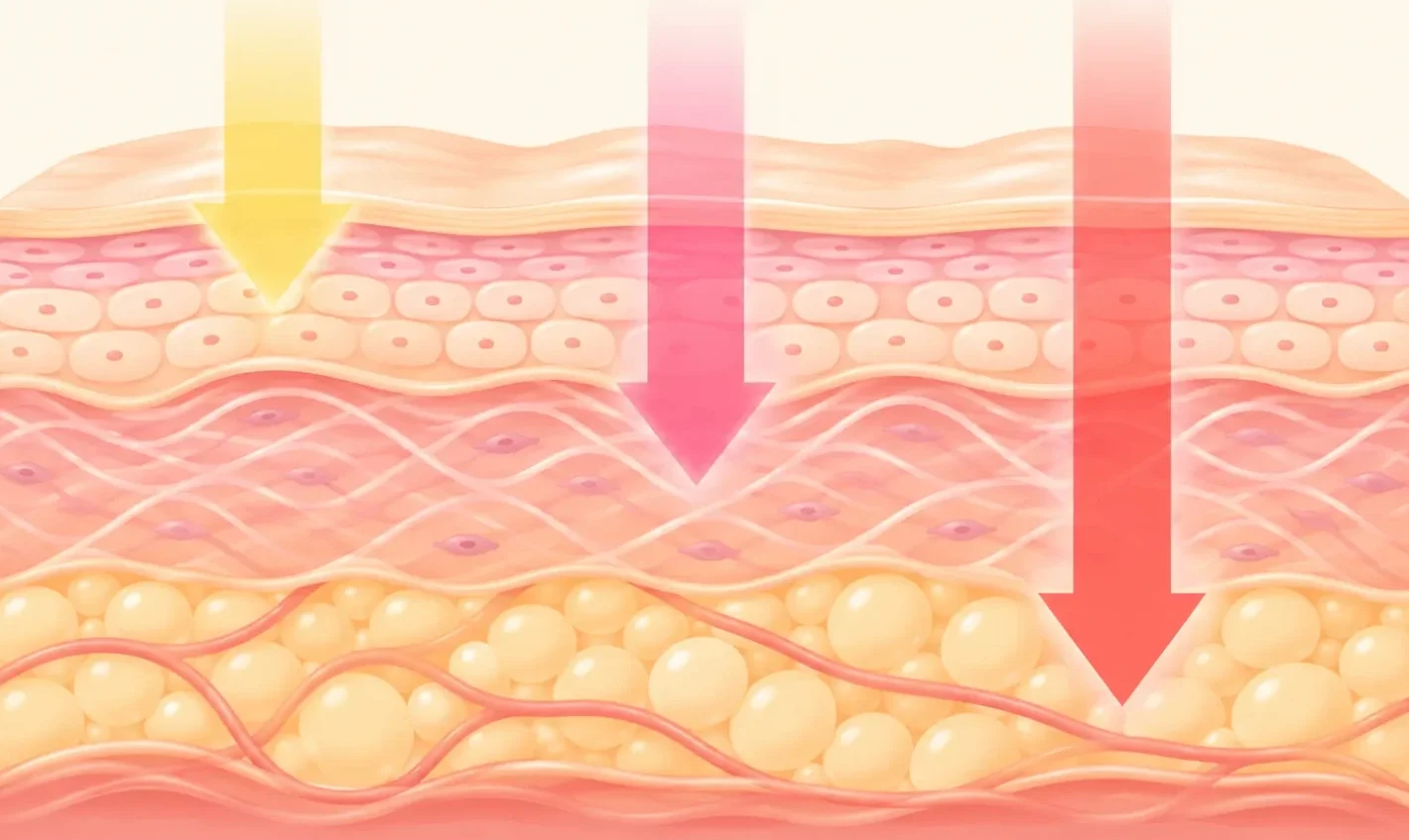
A picosecond laser for pigmentation removal delivers energy over an extremely short period measured in picoseconds, breaking the pigment of a spot into fine particles. Dark spots with clear borders may lighten after a single session.
There are 3 irradiation modes: spot-by-spot delivery for dark pigmentation, and low-energy delivery across the whole face for melasma and faint dullness, used according to the condition.
When dark spots are treated spot by spot, there is a period of several days to about a week during which the area is protected with tape.
Around 2–4 weeks after irradiation, "rebound pigmentation," in which the color darkens again, may occur; sun protection and continued topical treatment are the mainstays of management.
There are risks of redness, stinging, pigmentation, and rarely leukoderma (white patches) or burns. Please check the treatment booking page for fees.
*This is a self-pay treatment not covered by Japanese public health insurance. *Results vary from person to person. *Risks and side effects: redness, stinging, scabbing, and pigmentation may occur at the irradiated site.
When we receive consultations about pigmentation in Shinjuku, our clinic provides guidance after confirming the type of pigmentation during the examination.
What is picosecond laser pigmentation removal?
A picosecond laser is a device whose laser delivery time is measured in "picoseconds." A picosecond is one trillionth of a second, and the irradiation time is far shorter than with the nanosecond-level devices conventionally used for pigmentation treatment.
When the irradiation time is short, energy reaches the pigment before heat spreads to the surrounding skin. As a result, the main action is breaking up the pigment by shock rather than heat, which may allow the pigment to be finely fragmented while limiting the burden on the surrounding skin.
The fragmented pigment is taken up by cells involved in immune function and is excreted over time. The color does not disappear on the spot at the time of irradiation; rather, it lightens over several weeks to several months.
About the handling of the device
There are several picosecond laser devices, some approved in Japan and some not. Devices without approval are obtained through personal importation at the physician's discretion.
When an unapproved device is used, the case may not be eligible for the public relief system for adverse health effects. Please consider which device is used, and whether you can confirm its approval status and procurement route in advance, as factors in your decision.
The 3 irradiation modes of picosecond laser pigmentation removal
With a picosecond laser, the method of irradiation can be changed within a single device and selected according to the type of pigmentation.
Pico Spot — a method of delivering strong energy spot by spot to each dark area of pigmentation. Solar lentigines and freckles with clear borders are the targets.
Pico Toning — a method of delivering low energy broadly across the whole face. It is used in multiple repeated sessions for melasma, faint dullness, and fine unevenness in tone.
Pico Fractional — a method that creates microscopic points of action within the skin. Rather than color itself, it targets enlarged pores, acne scar unevenness, and skin texture.
Item | Pico Spot | Pico Toning | Pico Fractional |
|---|---|---|---|
Main targets | Dark, well-defined spots and freckles | Melasma, dullness, uneven tone | Pores, acne scars, skin texture |
Method of delivery | Spot-by-spot irradiation of pigmentation | Low-energy irradiation over the whole face | Creates point-wise action across the whole face |
Approximate number of sessions | 1–2 sessions | About 5 sessions at intervals of 2–4 weeks | About 5 sessions at monthly intervals |
Downtime | Scabbing and tape protection for several days to 1 week | Redness immediately afterward for a few hours | Redness and roughness for several days |
If strong energy is applied spot by spot to melasma, the stimulation may make it darker. It is important to determine the type of pigmentation through examination before deciding on the mode.
Effects and what can be expected from picosecond laser pigmentation removal
What can be expected is a lightening of color brought about by finely breaking up the pigment itself and promoting its elimination.
Dark, well-defined pigmentation becomes lighter in color
Contributes to making freckles less noticeable
Uneven tone from melasma and dullness becomes more even
The impression of overall skin brightness changes
Action on pore and acne scar unevenness (in the case of fractional mode)
When dark pigmentation is treated spot by spot, it may lighten noticeably after a single session. On the other hand, melasma and faint unevenness in tone are treated on the premise of repeated sessions. Even within the same category of "pigmentation," the number of sessions required and the speed of change differ greatly.
When results become noticeable
When dark pigmentation is irradiated spot by spot, the color looks darker immediately afterward, forms a scab within a few days, and when the scab comes off, pale pink skin appears. After that, the color may return around 2–4 weeks, and it settles over 3–6 months.
When the whole face is treated for melasma or dullness, many people notice a change in brightness from the third session onward. In either case, it is important not to judge after 1 or 2 sessions, but to look back after completing a certain number of sessions.

Guide to session numbers and intervals
Spot-by-spot irradiation of dark pigmentation: 1–2 sessions. Assessment is made about 3 months after irradiation
Whole-face treatment for melasma and dullness: about 5 sessions at intervals of 2–4 weeks as one set, repeated
When skin texture is the goal: about 5 sessions at monthly intervals
Even if dark pigmentation lightens after a single session, new spots will form with continued sun exposure. The habit of sun protection after irradiation is important for maintaining the condition.
Differences between picosecond laser pigmentation removal and other laser treatments
There are several methods for treating pigmentation, and the way energy is delivered and the targets they are suited to differ.
Item | Picosecond laser | Q-switched laser | IPL treatment (intense pulsed light) |
|---|---|---|---|
Unit of irradiation time | Picoseconds | Nanoseconds | Milliseconds (light delivered broadly) |
Main action | Breaks pigment into fine particles by shock | Destroys pigment with heat and shock | Delivers a broad range of wavelengths over the whole area |
Suited targets | From dark pigmentation to melasma and dullness | Dark pigmentation with clear borders | Faint pigmentation, redness, pores |
Downtime | Scabbing and tape protection for several days to 1 week | Scabbing and tape protection for 1–2 weeks | Redness immediately afterward for a few hours |
Approximate number of sessions | About 1–5 sessions depending on the target | Mainly 1 session | About 5 sessions at intervals of 3–4 weeks |
Fees | Please check the treatment booking page | Please check the treatment booking page | Please check the treatment booking page |
The basic way of choosing is: spot-by-spot irradiation if you want to address dark pigmentation in one go; repeated low-energy sessions if you want to even out tone including melasma; and IPL treatment if you want to address faint pigmentation and redness together. When several types are mixed, a plan may be drawn up that combines spot-by-spot irradiation and whole-face irradiation at different times.
Downtime and course after picosecond laser pigmentation removal
The course differs by mode. The general course after spot-by-spot irradiation is as follows.
Immediately after irradiation: the color looks darker, with mild stinging
Same day to 3 days: redness, thin scabbing
3 days to 1 week: the scab comes off naturally (the period during which protective tape is applied)
1–2 weeks: pale pink skin appears
2–4 weeks: the color may return
3–6 months: it settles down
When low energy is applied over the whole face, redness generally settles within a few hours, and makeup is usually possible from the same day.
The points to observe after irradiation are as follows.
Do not peel off the protective tape on your own; keep it on for the instructed period
Do not forcibly remove scabs
Use sunscreen daily, and also use a hat or parasol
Do not rub or wash the skin vigorously
Avoid long baths, saunas, and vigorous exercise on the day of treatment
Removing scabs early exposes the skin to stimulation before it has recovered, which can be a factor in color remaining.
Why rebound pigmentation occurs and points for prevention
Rebound pigmentation refers to a state in which, around 2–4 weeks after irradiation, an area that had once lightened becomes darker again. It is called post-inflammatory hyperpigmentation, and in most cases it lightens over 3–6 months.
This likely occurs because the stimulation from the treatment energy causes inflammation in the skin, temporarily making the pigment-producing cells that receive that stimulation more active. It is not that new pigmentation has formed; it is a reaction that appears during recovery. Stopping treatment on your own judgment at this stage prolongs the state in which the color remains.
The mainstays of management are the following 3 points.
Continue sun protection — ultraviolet light further stimulates pigment-producing cells. It is important to use sunscreen even on cloudy days and to reapply it.
Use topical or oral medication together — hydroquinone, tranexamic acid, and similar agents may be prescribed. The decision is based on examination.
Do not rub — friction from washing the face and from towels is also a stimulus. Changing how you touch the skin contributes to prevention.
Rushing to add another session as soon as the color returns can cause inflammation to accumulate and make color more likely to remain. The period of observing the course is also part of the treatment.
Cases suited to picosecond laser pigmentation removal and cases for which the treatment is not suitable
Cases commonly considered
You are bothered by dark pigmentation with clear borders
Freckles are scattered over the whole face
You want to even out tone, including melasma
You want to keep the period of tape protection short
You are concerned about skin texture as well as pigmentation

Cases for which the treatment is not suitable or requires careful consideration
Those who are pregnant or breastfeeding
Those with a strong suntan on the area to be irradiated
Those with photosensitivity, or who are taking medications that react to light
Those with a keloid-prone constitution
Those with inflammation or infection at the irradiation site
Those whose lesions look like pigmentation but may be a different skin condition
Lesions that change rapidly in shape or color, or that darken asymmetrically, may be skin conditions other than pigmentation. It is important to first confirm the type of pigmentation through examination.
Disadvantages, risks, and side effects of picosecond laser pigmentation removal
Redness and stinging — a temporary reaction to the irradiation energy. It generally settles within a few hours to a few days.
Scabbing and peeling — these form as the skin in the spot-treated areas reacts. Forcibly removing them can be a factor in color remaining.
Purpura (pinpoint bruising) — occurs when fine blood vessels in the superficial layer of the skin react. It fades over a number of days.
Pigmentation (rebound pigmentation) — occurs when pigment-producing cells are stimulated following inflammation. Continuing sun protection and topical treatment is the mainstay of management.
Leukoderma (loss of color) — when strong energy is applied repeatedly, pigment-producing cells may decrease and the area may turn white. Because this is difficult to reverse, adjusting the output is important.
Burns and scarring — these occur when strong heat is applied due to the output level or overlapping irradiation. If severe pain or blistering occurs, please contact us rather than waiting and judging on your own.
In addition, it is important to understand that, depending on the type of pigmentation, treatment may not be completed in one session and multiple visits may be necessary.
Frequently asked questions about picosecond laser pigmentation removal
Are there spots that can be removed in a single session?
Dark solar lentigines with clear borders may lighten after a single spot-by-spot session. However, the assessment is made about 3 months later, including observation of the course of rebound pigmentation. Melasma and faint unevenness in tone are treated on the premise of repeated sessions.
Is it painful?
With spot-by-spot irradiation, you may feel a pain like being snapped with a rubber band. With low-energy irradiation over the whole face, the sensation is mainly warmth and a prickling feeling. Anesthetic cream may be used together as needed.
When can I wear makeup after irradiation?
When low energy is applied over the whole face, makeup is generally possible from the same day. Since protective tape is applied to spot-treated areas, please follow instructions as to whether to apply makeup over the tape or wait until the tape is removed.
Can I not have a picosecond laser treatment if I have melasma?
Even when melasma is present, a method of repeating low-energy irradiation over the whole face may be considered. Because applying strong energy spot by spot can make it darker, the choice of mode is important. A plan combining oral and topical medication may also be drawn up.
How much does it cost?
It varies with the number and size of the spots, and the mode and number of sessions chosen. Because prices also change depending on the period and contract conditions, please check the treatment booking page. It is important to confirm the number of sessions needed at the examination and to understand the total amount before deciding.
Summary
A picosecond laser for pigmentation removal is a method that breaks pigment into fine particles with a short irradiation time measured in picoseconds. The 3 modes are used according to the condition: spot-by-spot irradiation for dark pigmentation, and low-energy irradiation over the whole face for melasma and uneven tone.
Dark pigmentation may lighten after a single session, but the assessment is made about 3 months later. The rebound pigmentation that appears around 2–4 weeks is a reaction during recovery, and sun protection together with continued topical treatment is the mainstay of management. Because Q-switched lasers and IPL treatment are suited to different targets, the method chosen varies with the type of pigmentation.
In addition to redness and pigmentation, there are rare risks of leukoderma and burns. Please first confirm through examination which type your pigmentation corresponds to before deciding. Please check the treatment booking page for fees.
References and sources
Ministry of Health, Labour and Welfare, "Medical Advertising Guidelines"
Handling information for the devices used (please confirm details at the time of examination)
*This is a self-pay treatment not covered by Japanese public health insurance. *Results vary from person to person. *Side effects and risks: redness, stinging, scabbing, peeling, and purpura at the irradiated site, pigmentation (rebound pigmentation), and rarely leukoderma, burns, or scarring may occur. *As a guide, the standard treatment period and number of sessions is 1–2 sessions for spot-by-spot irradiation of dark pigmentation, and about 5 sessions at intervals of 2–4 weeks for whole-face irradiation for melasma and dullness, after which treatment is continued according to the condition. Side effects and, when unapproved devices are used, the procurement route and similar matters must be confirmed in advance. Because fees vary with the period, campaigns, and contract conditions, please check the treatment booking page and campaign page.
Supervised by: Dr. Rina Shindo, Director (Aesthetic Dermatology)
Graduated from Shiga University of Medical Science, School of Medicine
2019: Sumitomo Hospital (General Incorporated Foundation)
2021: Department of Dermatology, Kobe University Hospital
2022: Chief at a major cosmetic surgery clinic
2025: Director, PGC CLINIC SHINJUKU
Your next step, at your own pace.
Explore the official website for pricing and appointment information.
Pricing & booking