What Is a Garlic Injection? Effects and How It Differs from Oral Vitamins and Supplements
A garlic injection is an injection that supplements vitamin B1; it contains no garlic. We summarize in a table five things you can expect, the guideline that effects are felt on the same day and last several days, and how absorption differs from oral vitamins and supplements.
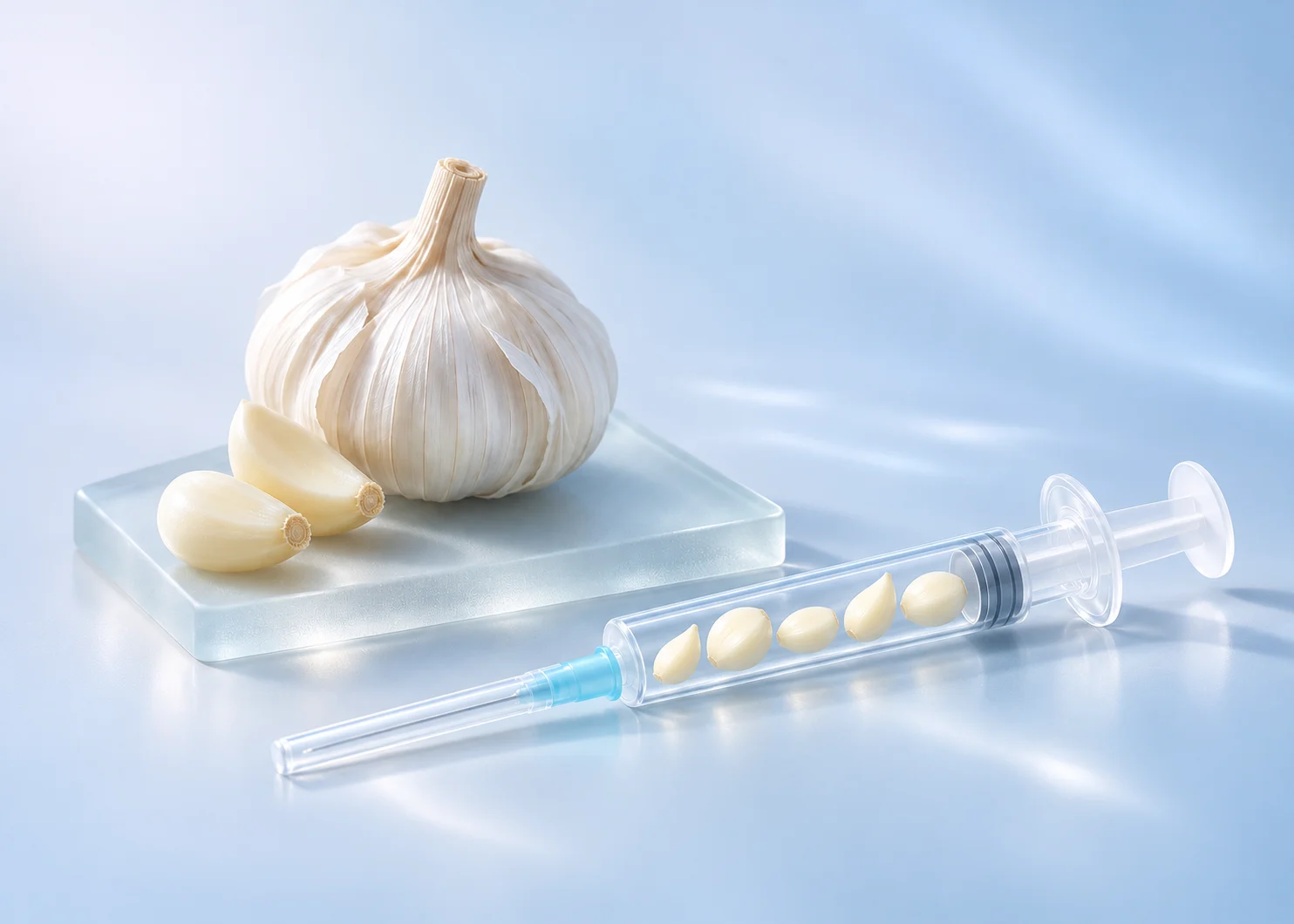
[Key Points of This Article]
- A garlic injection is an injection whose main ingredient is vitamin B1 (a thiamine derivative). It contains no garlic; the smell comes from the sulfur component in vitamin B1.
- The five things expected are relief of fatigue, relief of hangover symptoms, relief of stiff shoulders and feeling cold, skin condition, and recovery after exercise. As a guideline, the effect is felt on the same day and lasts roughly several days.
- The difference from oral vitamins and supplements lies in the absorption route. Absorption from the intestine has an upper limit, whereas with an injection blood concentration rises without going through digestion.
- Pain at the injection site, bruising, pain along the vein, and, rarely, allergic reactions may occur.
- If the cause of fatigue lies elsewhere, such as lack of sleep or anemia, this is a case in which the expected result is less likely to appear. Please check the treatment reservation page for the cost.
*Self-pay treatment not covered by Japanese public health insurance. *Effects vary from person to person. *Risks and side effects: Pain at the injection site, bruising, pain along the vein, feeling unwell, and other symptoms may occur.
When people in Shinjuku consult us about garlic injections, our clinic confirms your physical condition and goals before providing guidance.
What Is a Garlic Injection?
A garlic injection is a treatment in which a drug whose main ingredient is vitamin B1 is injected into a vein. A thiamine derivative such as fursultiamine is used, and it is a prescription drug approved in Japan. However, use for reducing fatigue or improving general condition is not covered by insurance and is handled as self-pay treatment not covered by Japanese public health insurance.
The treatment itself takes only a few minutes. For menus with a larger volume, it is given as a drip, which generally takes about 15 to 30 minutes.
Why It Is Called Garlic and Why It Contains No Garlic
Although it is called a garlic injection, it contains no garlic ingredients. The vitamin B1 molecule has a sulfur-containing structure that it shares with garlic, so you notice a similar smell during the injection.
The smell travels through the bloodstream to the lungs and is felt as a sensation passing up to the nose with exhaled breath. It does not come from the surface of the body, and in most cases you stop noticing it within several minutes to several tens of minutes.
Difference Between an Injection and a Drip
An injection delivers a small amount in a short time, and its composition is mainly vitamin B1. A drip contains more fluid and is chosen for menus combining vitamin C, B-group vitamins, taurine, and so on. An injection may be considered when you want to finish quickly, and a drip when you also want hydration. Because menu names and formulations differ by facility, it is important to confirm what is included.
Five Things You Can Expect from Garlic Injection Effects
In summary, the five things expected are relief of fatigue, relief of hangover symptoms, relief of stiff shoulders and feeling cold, skin condition, and recovery after exercise. All of these may be changes resulting from supplementing a vitamin B1 shortfall, and differences are less likely to appear if there is no deficiency.
1. Fatigue and Sluggishness
Vitamin B1 works as a coenzyme in the reaction that converts carbohydrates into energy. When it is lacking, carbohydrates are not fully converted into energy, and intermediate metabolites accumulate, which may lead to sluggishness and a heavy feeling. Deficiency is more likely when meals high in carbohydrates continue or the diet is unbalanced, and some people feel that supplementing it smooths the flow of metabolism and eases fatigue.
2. Hangover
Vitamin B1 is also consumed in the process of breaking down alcohol. With continued drinking, the amount in the body tends to fall, which may prolong next-day sluggishness. With a drip, fluid is given at the same time, so this may also play a role when dehydration from drinking is present.
3. Stiff Shoulders and Feeling Cold
Vitamin B1 is also involved in the process by which muscles use energy. When it is lacking, lactic acid and similar substances may accumulate more easily, which may be felt as stiffness or tightness.
However, stiff shoulders have multiple background factors, such as posture, eye strain, and stress. What an injection changes is the part related to metabolism, and if the cause is posture, the expected result is less likely to appear.
4. Skin Condition
The skin is a tissue with rapid turnover, and this process is supported by energy metabolism. When vitamin B1 is lacking, metabolism stagnates, which may show in the condition of the skin. Menus combined with vitamin C may also be considered for dullness and skin texture.
However, an injection does not directly change spots or wrinkles, and if you want to work on the skin itself, other methods such as skin boosters or peeling may be considered.
5. Recovery After Exercise
Exercise uses a lot of carbohydrates, and vitamin B1 consumption increases accordingly. If consumption continues to exceed intake, it may be felt as delayed recovery. See treatment details here
When You Can Expect to Feel the Effect
Because blood concentration rises without going through digestion, this is a treatment that many people feel on the same day. This is because the shortfall is supplemented right away.
On the other hand, it is harder to feel a change when there is no deficiency. Excess is excreted in the urine, so increasing the amount does not increase the sensation proportionally.

Difference Between Garlic Injections and Oral Vitamins/Supplements
In summary, the difference lies in the absorption route and in how blood concentration rises. When vitamin B1 is taken by mouth, it goes through absorption in the intestine, but this absorption has an upper limit in its transport mechanism, so even a large dose at once is absorbed only within a certain range. An injection does not go through this process, so blood concentration can be raised in a short time.
| Item | Garlic Injection | Oral Vitamins/Supplements |
|---|---|---|
| How it reaches the body | Enters directly through a vein | Absorbed in the intestine |
| Absorption limit | Not affected by intestinal absorption | There is an upper limit to the amount absorbed at one time |
| Time to feel an effect | May be felt on the same day | Change is felt over continued use |
| Ease of continuing | Clinic visits required | Can be continued at home |
| Suitable situations | When feeling fatigued, before a scheduled event | When you want to make up for deficiency on a daily basis |
| Cost | Please check the treatment reservation page | Varies by product |
The basic approach is to use an injection when you want to recover in a short time, and oral vitamins or supplements when you want to make up for deficiency on a daily basis. Combining both is also possible.
Guideline for Duration and Frequency of Garlic Injections
In summary, the effect from one session lasts roughly several days. This is because vitamin B1 is water-soluble, is not stored in the body, and the excess is excreted in the urine, so it does not stay fixed for long.
For frequency, there are two approaches: receiving it when you feel fatigued, or continuing at a guideline of about once a week. Adjustments such as shortening the interval during busy periods or periods of heavy exercise and lengthening it when things calm down may also be considered. Because the interval and number of sessions vary with physical condition and goals, it is important to decide based on a consultation. Cost varies with the menu and formulation, so please check the treatment reservation page.
Flow of the Garlic Injection and Downtime
After confirming your physical condition, medical history, current medications, and allergies at the consultation, a vein in the arm is disinfected and the drug is slowly injected through a thin needle. As a guideline, an injection takes a few minutes, and a drip about 15 to 30 minutes.
You can go about your normal life from the same day. Do not rub the injection site hard for several hours, and avoid pressing the punctured area strongly when bathing. If bruising appears, the color fades over 1 to 2 weeks. It occurs when the needle hits a thin blood vessel, and because the position of vessels cannot be seen from the outside, it cannot be completely avoided.
Cases Where a Garlic Injection Is Often Considered and Cases Where Treatment Is Not Suitable
Cases Where It Is Often Considered
- Fatigue or sluggishness continues
- The diet tends to be unbalanced and skewed toward carbohydrates
- You want to recover quickly from heaviness the day after drinking
- You exercise a lot and recovery cannot keep up
- You find it hard to feel a change with supplements

Cases Where Treatment Is Not Suitable or Careful Consideration Is Needed
- People with an allergy to vitamin B1 preparations
- People who are pregnant or breastfeeding (consultation with a doctor is required)
- People with inflammation or infection at the injection site
- People who have felt unwell during blood draws or injections
- People with impaired kidney function or those receiving dialysis
In addition, if the background of fatigue includes anemia, a thyroid function problem, sleep apnea, depressive state, or similar conditions, this is a case in which the expected result is less likely to appear. When fatigue has continued for a long time, it is important to confirm the cause with blood tests or similar examinations before repeating injections.
Disadvantages, Risks, and Side Effects of Garlic Injections
- Pain at the injection site and bruising — These occur as the needle passes through the skin and blood vessel, and bruising fades in 1 to 2 weeks.
- Pain along the vein — This occurs when a highly concentrated drug irritates the inside of the vessel. It may ease if the injection speed is slowed.
- Induration and swelling — If the drug leaks outside the vessel, a lump-like area that can be felt may remain. If you feel strong pain during the injection, it is important to tell us immediately.
- Feeling unwell and dizziness — The stimulation of the needle can trigger a temporary drop in blood pressure or pulse. It generally settles when you lie down.
- Smell — This is due to a sulfur-containing component, is felt on the exhaled breath, and in most cases disappears within several minutes to several tens of minutes.
- Change in urine color — With menus combined with vitamin B2, the excess is excreted in the urine, making it a deeper yellow.
- Allergic reaction — Itching, rash, and a drop in blood pressure occur rarely. Serious allergic reactions have been reported with vitamin B1 preparations, so it is important to tell us immediately if symptoms appear.
Three Points to Check When You Find It Hard to Feel an Effect
- Whether vitamin B1 is lacking — If levels are sufficient, differences are less likely to appear even with supplementation. The content of your diet and the amount you drink serve as a guide.
- Whether the cause of fatigue lies outside metabolism — If sleep quality, anemia, the thyroid, or mental state is in the background, a different approach is needed.
- Whether lifestyle conditions are in order — If sleep time and diet remain inadequate, the effect will be felt for a shorter time.
This treatment supplements a lacking nutrient and does not change your constitution or how easily you tire. The degree of effect varies from person to person and is not uniform even with the same number of sessions.
Frequently Asked Questions About Garlic Injections
When can I feel the effect, and how long does it last?
Because the injection does not go through digestion, this is a treatment that many people feel on the same day. However, it is hard to feel a difference when levels are sufficient, and results differ depending on the degree of deficiency. As a guideline, the effect lasts roughly several days. This is because it is a water-soluble vitamin that is not stored in the body, and the excess is excreted in the urine.
Will my body smell of garlic?
The smell travels through the bloodstream and is felt on the exhaled breath; it does not come from the surface of the body. In most cases you stop noticing it within several minutes to several tens of minutes.
Is it all right to receive it every day?
Excess is excreted in the urine, so increasing the number of sessions does not increase the sensation proportionally. Because frequency varies with physical condition and goals, it is important to decide based on a consultation.
Summary
A garlic injection is an injection whose main ingredient is vitamin B1. It contains no garlic, and the smell comes from a sulfur component. The five things expected are relief of fatigue, relief of hangover symptoms, relief of stiff shoulders and feeling cold, skin condition, and recovery after exercise.
The difference from oral vitamins and supplements lies in the absorption route. Absorption from the intestine has an upper limit, whereas with an injection blood concentration rises without going through digestion, so the effect may be felt on the same day. As a guideline, the effect lasts roughly several days, and the frequency is either when you feel fatigued or about once a week.
On the other hand, if vitamin B1 levels are sufficient, or if the cause of fatigue lies elsewhere, such as lack of sleep or anemia, this is a case in which the expected result is less likely to appear. Please check the treatment reservation page for the cost.
References and Sources
- Ministry of Health, Labour and Welfare, "Medical Advertising Guidelines"
- Package insert of the preparation used (please confirm details at your consultation)
*Self-pay treatment not covered by Japanese public health insurance. *Effects vary from person to person. *Side effects and risks: Pain at the injection site, bruising, induration, swelling, pain along the vein, feeling unwell or dizziness, smell during injection, changes in urine color, and allergic reactions such as itching or rash may occur. *The standard treatment duration and number of sessions is a few minutes to about 30 minutes per session, and continuing when you feel fatigued or at intervals of about once a week is a guideline. The effect lasts roughly several days. Side effects and, when using unapproved preparations or devices, the sourcing route must be confirmed in advance. Prices vary depending on the period, campaigns, and contract conditions, so please check the treatment reservation page and the campaign page.
Supervised by: Director Rina Shindo (Aesthetic Dermatology)
- Graduated from the Faculty of Medicine, Shiga University of Medical Science
- 2019: Sumitomo Hospital (General Incorporated Foundation)
- 2021: Department of Dermatology, Kobe University Hospital
- 2022: Chief physician at a major cosmetic surgery clinic
- 2025: Director, PGC CLINIC SHINJUKU
Your next step, at your own pace.
Explore the official website for pricing and appointment information.
Pricing & booking