What Are the Effects of Mounjaro 2.5 mg? Usage, Storage, and Side Effects Explained
An explanation of the effects of Mounjaro 2.5 mg. From the mechanism acting on the two hormones GIP and GLP-1, to how to use the pen, injection sites, and storage methods, as well as side effects, points to note about off-label use, and how to think about pricing — presented from the perspective of aesthetic medicine.
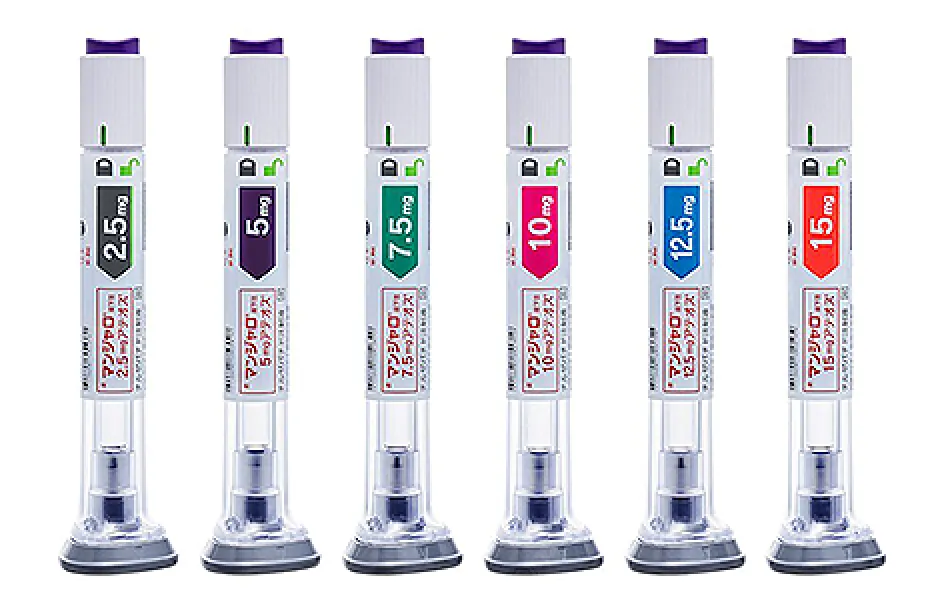
[Key points of this article]
- Mounjaro (tirzepatide) is a once-weekly injectable drug that acts simultaneously on two hormone receptors, GIP and GLP-1
- 2.5 mg is the starting dose used when beginning treatment, and it is expected to help suppress appetite and make it easier to maintain a feeling of fullness
- The basic approach is to inject once a week, on the same day of the week, into the abdomen, thigh, or upper arm, alternating between the left and right sides
- As a rule, the pen should be stored refrigerated (2–8°C), and it cannot be used if it has been dropped
- In Japan it is approved as a treatment for type 2 diabetes, so use for dieting purposes constitutes off-label use and self-pay treatment not covered by Japanese public health insurance
Quite a few people wonder, "What kind of effects does Mounjaro 2.5 mg have?" or "How should I handle injecting and storing it at home?" Mounjaro is a once-weekly injectable drug expected to suppress appetite and help maintain a feeling of fullness for longer, and it is used to help support dietary restriction in cases where overeating is frequent and weight management is difficult. In this article, we organize and explain the mechanism of Mounjaro 2.5 mg and its expected effects, along with practical information such as how to use the pen, storage methods, and injection sites, as well as side effects and how to think about pricing — all from the perspective of aesthetic medicine.
What is Mounjaro 2.5 mg? Expected effects
Basic information on Mounjaro (tirzepatide)
Mounjaro is a once-weekly subcutaneous injection whose active ingredient is tirzepatide. In Japan it is a pharmaceutical approved for type 2 diabetes, and it is originally prescribed for the purpose of controlling blood glucose levels. On the other hand, its appetite-suppressing action and the changes in body weight have drawn attention, and at aesthetic clinics it is sometimes used as a medical diet (GLP-1 injection) under self-pay treatment not covered by Japanese public health insurance. It is positioned as a treatment in which a reduction in body fat and a weight-loss effect may be expected through once-weekly subcutaneous injection. However, since use for weight management purposes falls outside the range of the approved indications (off-label use), the premise is that the decision is made after receiving a medical examination and explanation from a physician. Please also note that there are cases in which it cannot be prescribed, depending on the physician's judgment.
A mechanism acting on two hormones at once
A characteristic of Mounjaro is that it is designed to act simultaneously on the receptors of two hormones, GIP and GLP-1. Both are hormones called "incretins" that are secreted from the digestive tract at mealtimes, and they are involved in regulating blood glucose and appetite. Through its action on the GLP-1 receptor, it acts on regions of the brain involved in appetite, making it easier to feel full, and it may also slow the emptying of the stomach contents, working in the direction of preventing overeating. Its action on the GIP receptor may be involved in energy metabolism and in effects on adipose tissue; by controlling both blood glucose and appetite, support may be expected from both the standpoint of improving eating habits and that of weight management.
The positioning of the 2.5 mg dose
Mounjaro comes in several doses, and 2.5 mg is the lowest of them, serving as the starting dose. Generally, the flow is to first continue 2.5 mg for about 4 weeks to let the body get used to the drug, and then move to a maintenance dose at the physician's discretion. In other words, 2.5 mg is positioned as "the dose for starting treatment while limiting side effects." That said, some people notice that their appetite settles down or their food intake decreases even at the 2.5 mg stage, and in some cases it becomes an opportunity to review eating habits from the introductory period onward. Since the timing of dose increases differs depending on one's physical condition and how side effects appear, it is advisable to proceed in consultation with a physician.
When do the effects of Mounjaro 2.5 mg appear? A guide to how long they last
How long until you begin to notice effects
The timing at which effects are felt varies from person to person. For some people, changes such as "my appetite has settled down" or "I can feel satisfied with a small amount" may be noticed from the first to several administrations, while changes in body weight itself tend to appear gradually over a span of several weeks to several months. Because 2.5 mg is the starting dose, it is not unusual for clear changes in weight to be felt only after increasing to a maintenance dose. Rather than seeking results too quickly, it is important to view this as a medium- to long-term plan.
Why the action continues with once-weekly administration
Tirzepatide is a drug designed to resist breakdown in the body so that its action lasts a long time. Since the action of a single injection may persist for approximately 1 week, the basic dosing interval is once a week. Because daily injections or oral medication are unnecessary, many people find it easier to continue; on the other hand, it is necessary to keep to a fixed day of the week so that a dose is not forgotten. Please note that administering it irregularly based on your own judgment may affect both how the effects are felt and the management of your physical condition.
How to think about maintaining the effects
It has been pointed out that when Mounjaro is stopped, appetite may return to its former state and weight may also come back. How long to continue and at what stage to finish are decided in consultation with a physician, taking into account your target weight and physical condition. Establishing lifestyle habits such as how you eat and exercise during the administration period may help maintain your figure after finishing. The drug is ultimately a supporting role that assists dietary restriction, and it is advisable to use it in parallel with building habits.
Who Mounjaro 2.5 mg is suited to, and who it is not suited to
Those it is suited to
- Those who overeat frequently and feel that weight management is difficult
- Those who find appetite control difficult and cannot keep up dietary restriction for long
- Those who want to work on weight loss at a manageable pace with a once-weekly injection
- Those who have repeatedly rebounded from self-styled dieting
For those who fit the above, the appetite-related support from Mounjaro may make it easier to stick with. However, since suitability differs according to body type and health status, it is determined through counseling and a medical examination.
Those who require careful judgment and those who cannot receive it
- Those who are pregnant or breastfeeding, or who plan to become pregnant in the near future
- Those with a history of pancreatitis or with serious gastrointestinal disease
- Those undergoing treatment for type 1 diabetes
- Others whom a physician judges unsuitable based on medical history or medications being taken
At the time of examination, it is important to accurately convey your medical history, medications you are taking, and any allergies. Please also understand in advance that there are cases in which it cannot be prescribed, depending on the physician's judgment.
How to use the Mounjaro pen and how to store it
Rules for administration (day of the week, injection site)
Mounjaro is administered once a week, on the same day of the week each time. If you wish to change the day of administration, please inject only after leaving an interval of at least 3 days from the previous administration. The following three sites are the basic injection sites.
- Abdomen
- Thigh
- Upper arm (when another person administers the injection)
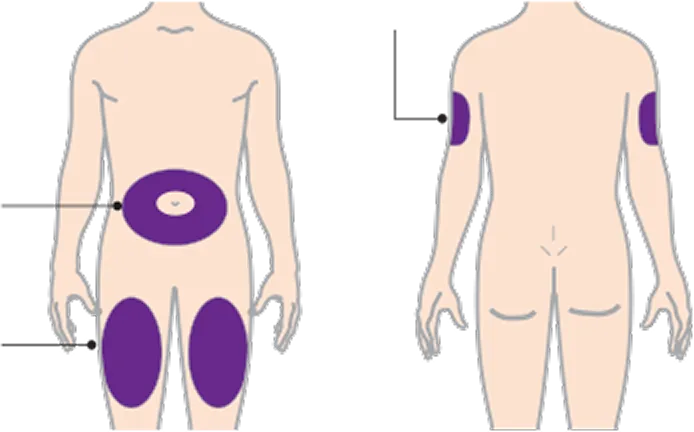
It is recommended to avoid injecting into the same spot every week and instead to shift the site little by little, such as by alternating left and right, to reduce the burden on the skin.
[Image: Illustration of injection sites (abdomen, thigh, upper arm)]
Pre-use check and the three steps of injection
Before use, check that the green mark is in the locked position. At this point, do not unlock it; limit yourself to checking only. The actual injection is performed according to the following steps.
- Pull the gray cap straight off. Do not remove the cap until immediately before use; once removed, discard it right away and do not reattach it (as this may damage the needle).
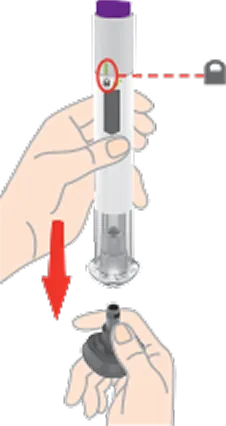
- Place the clear base firmly and perpendicularly against the skin, and turn the green mark in the unlock direction until it stops. Do not squeeze the center of the pen firmly (as the needle may fail to retract).
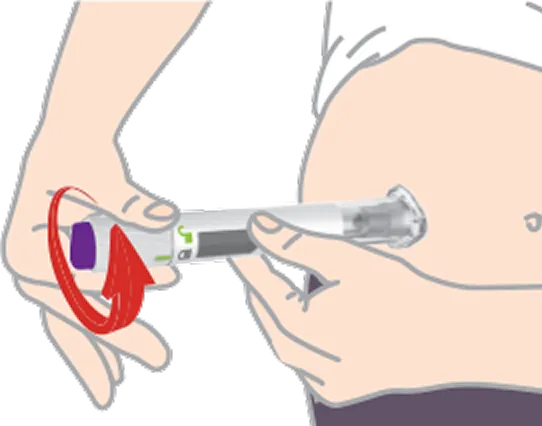
- Press the purple injection button and wait. Injection starts with the first "click" sound and is complete with the second "click" sound. The injection finishes within 10 seconds.
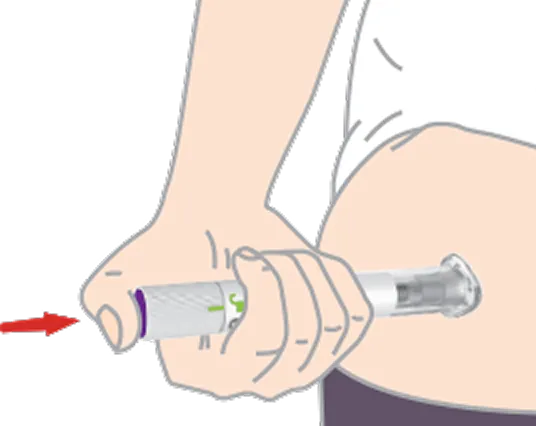
Even if the sound is hard to hear, the injection is complete if the gray rubber plunger is visible. If you are unsure about the procedure, do not proceed on your own judgment; please check with the clinic.
Points to note for storage and handling
- As a rule, store refrigerated (2–8°C); if it has been frozen, it cannot be used
- If refrigeration is not available, storage at a room temperature of 30°C for up to 21 days is the guideline
- Please avoid direct sunlight and places that become hot
- Because glass is used inside, dropping it may cause damage
- If you accidentally drop the pen on the floor, do not use that pen; use a new one
Even if there is no visible abnormality, a dropped pen may be damaged internally. If you have concerns about storage conditions, consult the clinic before use.
The course after injection and how to think about downtime
Reactions that tend to occur at the injection site
Because Mounjaro is a subcutaneous injection using a fine needle, there is generally almost no downtime as a procedure, but pain or redness may occur at the injection site. These tend to settle down in a few days in most cases, and the impact on daily life is limited. Alternating the site between the left and right sides can reduce the burden on the same spot. If severe pain or swelling persists, please consult the clinic that prescribed it.
The course of your physical condition and how to get through it
Immediately after starting administration or at the time of a dose increase, there is a period when gastrointestinal symptoms such as nausea, heartburn, gastrointestinal discomfort, constipation, and diarrhea tend to appear. They tend to ease over several days to several weeks as the body becomes accustomed to the drug, but if symptoms are severe, it is recommended not to force yourself to continue and to consult a physician. In some cases symptoms are eased by measures such as avoiding greasy meals and overeating, eating slowly in small amounts, and taking fluids frequently.
Disadvantages, risks, and side effects of Mounjaro 2.5 mg
Main side effects
As side effects associated with the injection, pain and redness may occur. In addition, gastrointestinal symptoms such as constipation, nausea, heartburn, gastrointestinal discomfort, and diarrhea may rarely occur. How and to what degree side effects appear varies from person to person, and starting from the low dose of 2.5 mg is intended to let the body become accustomed while limiting such symptoms. If used together with drugs that lower blood glucose, attention to signs of hypoglycemia is also considered necessary.
Serious side effects reported rarely
Although not frequent, serious side effects such as acute pancreatitis and gallbladder disease have been reported. If symptoms such as severe abdominal pain or vomiting appear, please consult the medical staff immediately. Precisely because such risks exist, it is important to use it under the supervision of a medical institution where you can promptly consult about changes in your condition.
Off-label use, procurement route, and approval status overseas
Mounjaro, a GLP-1 receptor agonist, is a pharmaceutical approved in Japan for type 2 diabetes. On the other hand, use for obesity treatment or dieting purposes falls outside the range of the approved indications and constitutes off-label use as well as self-pay treatment not covered by Japanese public health insurance. The pharmaceutical used is purchased from a domestic pharmaceutical wholesaler. In addition, tirzepatide formulations with the same active ingredient are approved as pharmaceuticals for weight management purposes by the US FDA and others, and similar side effects have been reported overseas as well. With off-label use, it is also necessary to understand in advance that, in the unlikely event of harm to health, it may not be covered by public relief systems.
Three points to know before starting
- That 2.5 mg is the starting dose, and it may take time before you notice changes in body weight
- That it is advisable not to rely on the drug alone, but to review your diet and exercise in parallel
- That if you experience side effects or changes in your condition, you should not continue on your own judgment, but consult the clinic that prescribed it
Differences between Mounjaro and GLP-1 receptor agonists
In medical dieting, GLP-1 receptor agonists such as semaglutide are also often used. The main differences from Mounjaro are organized as follows.
| Item | Mounjaro (tirzepatide) | GLP-1 receptor agonists (semaglutide, etc.) |
|---|---|---|
| Receptors acted on | Two: GIP and GLP-1 | GLP-1 only |
| Method of administration | Once-weekly subcutaneous injection | Varies by formulation, such as a once-weekly injection or daily oral medication |
| Expected actions | Appetite suppression, sustained feeling of fullness, involvement in metabolism | Appetite suppression, sustained feeling of fullness |
| Main side effects | Gastrointestinal symptoms such as nausea and constipation | Gastrointestinal symptoms such as nausea and constipation |
| Cost | Varies with dose and duration of continuation | Varies with formulation and dose |
Which one suits you differs according to your constitution, goals, lifestyle, and how side effects appear, and it is not something where superiority can be determined in a blanket manner. Because their names and actions are similar they tend to be confused, but they are different drugs with different active ingredients and different approved indications. We recommend choosing in consultation with a physician during counseling.
How to think about the cost of Mounjaro 2.5 mg
Because use of Mounjaro for dieting purposes is self-pay treatment not covered by Japanese public health insurance, insurance does not apply and the entire cost is borne by the patient. Fees are often set on a monthly basis (with once a week × 4 times counted as one month), and the total amount changes according to the dose, duration of continuation, and timing of dose increases. Whether examination fees or testing costs apply in addition to the drug cost also differs by clinic, so checking the breakdown before entering into a contract will help you feel confident. Because specific amounts vary by period and plan, please check on the treatment reservation page. Rather than choosing on price alone, whether a follow-up system is in place where you can consult if side effects occur is also an important perspective.
Frequently asked questions (FAQ)
Can Mounjaro 2.5 mg alone produce a weight-loss effect?
Because 2.5 mg is the starting dose, in many cases clear changes in body weight appear only after a dose increase; on the other hand, some people feel their appetite settle down from the 2.5 mg stage. How the effects appear varies from person to person, and combining it with diet and exercise may make changes easier to notice.
What should I do if I want to change the day of the week I inject?
If you change the day of administration, please leave an interval of at least 3 days from the previous administration. Because too short an interval may place a burden on the body, if you are unsure how to make the change we recommend checking with the clinic that prescribed it.
I dropped the pen on the floor. Can I still use it?
Please do not use it. Glass is used inside the pen, and it may have been damaged by the fall. Even if there is no visible abnormality, do not use that pen; use a new one and inform the clinic of the situation.
What happens if I forgot to put it in the refrigerator?
As a rule, Mounjaro is stored refrigerated (2–8°C), but if refrigeration is not available, storage at a room temperature of 30°C for up to 21 days is the guideline. However, if it has been exposed to direct sunlight or high temperatures, or if the duration or temperature is unknown, do not use it on your own judgment; please consult the clinic. Also, a pen that has been frozen cannot be used.
Will I rebound if I stop?
It has been pointed out that when administration is ended, appetite may return and weight may increase. Establishing eating and exercise habits during the administration period may help with maintenance after finishing. Please decide the timing of stopping in consultation with a physician.
Summary
Mounjaro 2.5 mg is the starting dose of a once-weekly injectable drug that acts on two hormone receptors, GIP and GLP-1, and by suppressing appetite and making it easier to maintain a feeling of fullness, it is expected to help support dietary restriction. Observing the rules for home use — administration once a week on the same day of the week, alternating left and right injections into the abdomen, thigh, or upper arm, refrigerated storage, and handling when dropped — is also indispensable for both effectiveness and management of your physical condition. Working on it in combination with improvements to lifestyle habits, on the basis of an understanding of side effects centered on gastrointestinal symptoms and of the fact that this is off-label use, leads to a manageable medical diet. If you are interested, why not first consult a physician at a counseling session?
[References and sources]
- Ministry of Health, Labour and Welfare, Medical Advertising Guidelines
*This is self-pay treatment not covered by Japanese public health insurance *Effects vary from person to person *Side effects and risks: In addition to pain and redness at the injection site, constipation, nausea, heartburn, gastrointestinal discomfort, and diarrhea may rarely occur, and serious side effects such as acute pancreatitis and gallbladder disease have been reported to occur rarely. If symptoms such as severe abdominal pain or vomiting appear, please consult the medical staff immediately. *As a guide, the standard treatment period and number of times is to continue once-weekly administration in units of one month (4 times), and after about 4 weeks at 2.5 mg, to adjust the dose and period at the physician's discretion. This treatment constitutes off-label use of a pharmaceutical approved in Japan for type 2 diabetes, and the pharmaceutical is purchased from a domestic pharmaceutical wholesaler. Tirzepatide formulations with the same active ingredient are approved as pharmaceuticals for weight management purposes by the US FDA and others, and similar side effects have been reported overseas. Because fees vary depending on the timing, campaigns, and contract conditions, please check on the treatment reservation page and campaign page.
Supervised by: Rina Shindo, Director (Aesthetic Dermatology)
- Graduated from Shiga University of Medical Science, Faculty of Medicine, School of Medicine
- 2019 Sumitomo Hospital (general incorporated foundation)
- 2021 Department of Dermatology, Kobe University Hospital
- 2022 Chief at a major cosmetic surgery clinic
- 2025 Director, PGC CLINIC SHINJUKU
Your next step, at your own pace.
Explore the official website for pricing and appointment information.
Pricing & booking