How Many Days Is LHALA Peel Downtime? Recovery Course and Aftercare
LHALA Peel downtime is generally a few hours to 1 day of redness and 2–3 days of dryness. We have summarized when peeling may appear, when you can resume makeup, 5 tips to support recovery, and how it differs from Potenza.

[Key Points of This Article]
LHALA Peel downtime is generally a few hours to 1 day of redness and about 2–3 days of dryness or tightness. Because it is designed so that the skin is unlikely to peel in large sheets, the impact on daily life is generally small.
If fine peeling occurs, it settles in about 2–5 days. If acne temporarily increases, it settles in about a few days to 2 weeks.
Makeup is generally allowed from the same day. However, the decision depends on how much redness appears.
Whether you continue sun protection and gentle care without rubbing affects how quickly you recover and the risk of pigmentation.
Treatment is not suitable when your skin is sensitive or right after sunburn. Please check the treatment booking page for costs.
*Self-pay treatment not covered by Japanese public health insurance *Results vary between individuals *Risks/side effects: Redness, stinging, dryness, and a temporary increase in acne may occur in the treated area.
If you are considering a consultation about skin texture in Shinjuku, our clinic checks your skin condition at the consultation before providing guidance.
What Is LHALA Peel?
LHALA Peel is a treatment that uses a peeling agent originating in Italy. Rather than stripping the stratum corneum with a strong acid, it is designed to condition the skin surface with a mild acid while delivering moisturizing and skin-soothing ingredients.
For this reason, it is classified as a "skin-nurturing peel," distinguishing it from conventional peels that involve peeling. The treatment generally takes around 30 minutes and is completed on the same day.
Whether the formulation used is approved in Japan differs by product, and formulations that are not approved are obtained through personal import under a physician's judgment. In that case, they are not covered by the public system for relief of health damage. Please confirm the name of the formulation used and how it is obtained in advance.
Three Main Ingredients and Their Roles
LHALA Peel is characterized by an ingredient composition that acts on the stratum corneum while protecting the skin at the same time.
Lactobionic acid — An acid with large molecules that does not readily penetrate rapidly into deeper skin. It acts gently on the stratum corneum while also holding water.
Moisturizing ingredients — They replenish dryness right after the stratum corneum has been conditioned and help bring the skin closer to a state where moisture does not easily escape.
Skin-soothing ingredients — They may help reduce redness and stinging caused by irritation from the acid.
Lactobionic acid is milder in irritation than acids such as glycolic acid. This property contributes to its ability to act on the stratum corneum while limiting peeling. Details of the formulation can be confirmed in the product information.
LHALA Peel Downtime Course
In short, LHALA Peel downtime is short, and many people can go about their usual routine from the next day. This is because it is not designed to strip the skin forcefully.
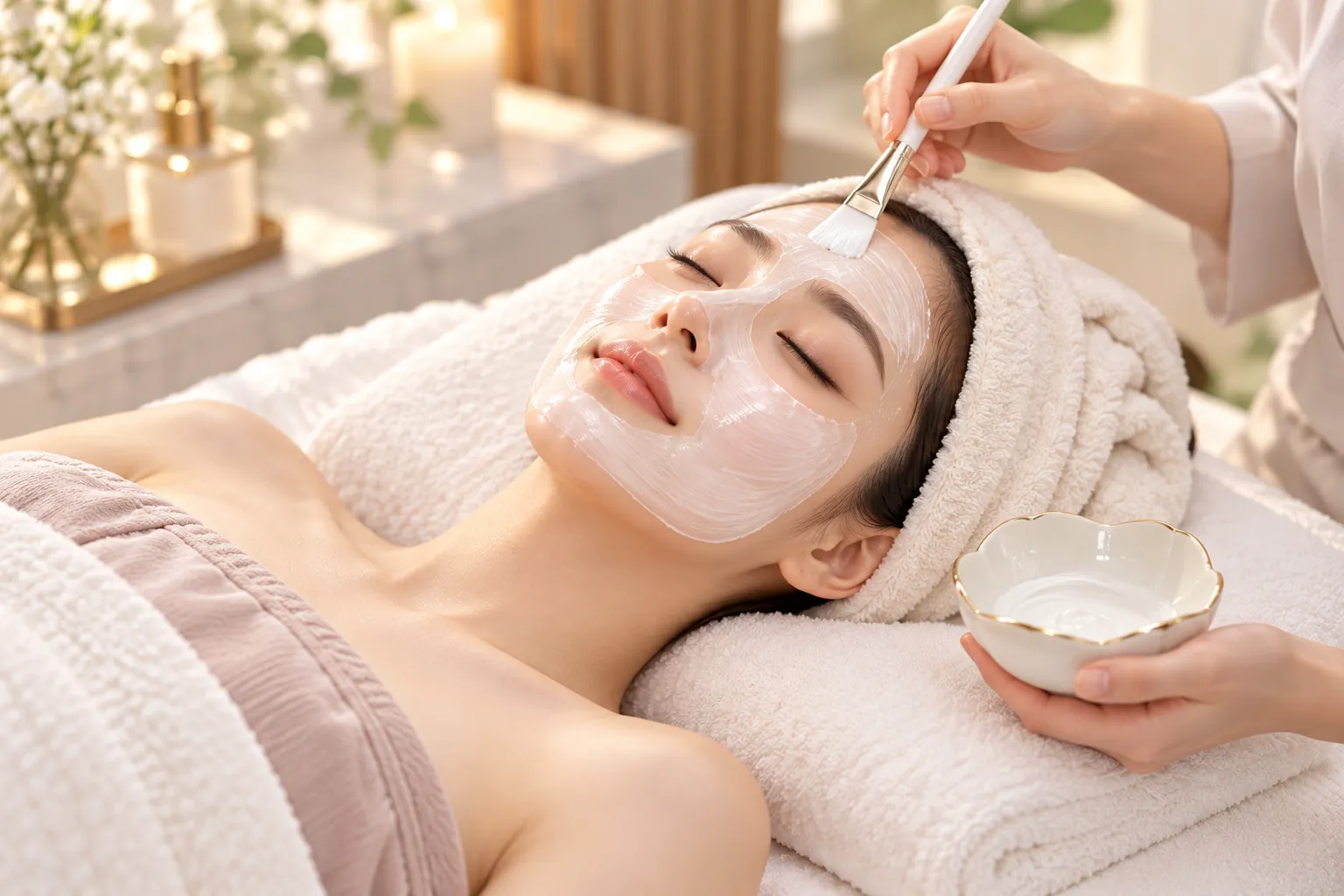
General Timeline
During and right after treatment: stinging, warmth, redness
Treatment day to day 1: redness gradually settles
Treatment day to day 3: dryness, tightness
Days 2–5: fine peeling may occur
A few days to 2 weeks: acne may temporarily increase
Redness generally settles in a few hours to about 1 day. Dryness and tightness continue for 2–3 days but ease with careful moisturizing.
Whether peeling occurs varies between individuals. It is more likely to occur in people whose stratum corneum is naturally thick or during periods of marked dryness. When it does occur, it is fine and powdery, and the design makes large sheets of peeling unlikely.
When Can I Wear Makeup and Wash My Face?
Makeup is generally allowed from the same day. However, if redness remains, please decide based on the condition of your skin. It is important not to rub when removing makeup.
You can also wash your face from the same day. Use lukewarm water and wash by enveloping the skin with foam. It is important to avoid hot water and facial cleansers containing scrub for a few days. Right after the stratum corneum has been conditioned, the skin is more susceptible to external irritation.
5 Tips for Shortening Downtime
How quickly you recover changes depending on how you spend the time after treatment.
Moisturize more carefully than usual — Because moisture escapes easily, increase the amount of moisturizer you use.
Continue sun protection — Use sunscreen every day and add a hat or parasol. Ultraviolet rays can contribute to pigmentation.
Do not rub — Friction from washing your face or from towels is also an irritant. Blot the moisture off by pressing gently.
Do not forcibly remove peeling skin — Wait until it falls off naturally. Pulling it can leave discoloration.
Pause strongly irritating care for a few days — Leave an interval before using retinol, scrubs, or another peel.
On the day of treatment, it is also important to avoid saunas, long baths, and strenuous exercise. Increased blood flow can make redness more pronounced.
Changes That Tend to Occur During LHALA Peel Downtime and Why
Each change that appears during the course has a reason. Knowing this can help you avoid stopping care in a panic.
Redness and stinging — A temporary reaction when the acid acts on the stratum corneum. It is felt more easily when the skin is dry.
Dryness and tightness — This is because conditioning of the surface stratum corneum temporarily makes it easier for moisture to escape.
Fine peeling — Occurs in the process of old stratum corneum being replaced. It is more noticeable in people with a thicker stratum corneum.
Temporary increase in acne — In the process of clogged pores being pushed to the surface, small pimples may appear after treatment. They generally settle in about a few days to 2 weeks.
A temporary increase in acne is a change that is easily perceived as worsening. However, it may occur as material that had accumulated in the pores comes to the surface. If it is accompanied by strong inflammation or pain, it is important to contact us rather than continuing on your own judgment.
Effects of LHALA Peel and What to Expect
What is expected is a change in the skin surface resulting from the stratum corneum being conditioned and moisture being replenished.
Old stratum corneum is conditioned, and the skin surface feels smoother
A dull impression becomes lighter, and brightness changes
It acts on stratum corneum clogging the pores, reducing roughness
Fine lines caused by dryness and uneven skin texture are improved
How lotions and serums absorb and how makeup sits on the skin change
On the other hand, it is not a treatment that erases well-defined dark spots, deep wrinkles, or deep acne scar depressions. If these are your main concerns, methods using lasers or needles may be considered as well.
When to Expect Results and Frequency
Skin smoothness can change even after 1 session, but a clear difference is generally noticed from the 2nd–3rd session onward. Taking the turnover cycle of the stratum corneum into account, an approach of repeating around 5 sessions at 2–4 week intervals as one course is chosen.
After the introductory period, maintaining the condition about once a month is a realistic option. Because the change from each session is gradual, it is important not to judge midway but to continue for a set period and then review.
Differences in Downtime Between LHALA Peel and Potenza
Potenza is often compared as a treatment for improving skin quality. The length and nature of downtime differ greatly.
Item | LHALA Peel | Potenza | HydraFacial |
|---|---|---|---|
Method | Applying a solution containing acid | Stimulating the skin with fine needles and radiofrequency | Removing stratum corneum and pore clogging with water flow and suction |
Layer targeted | Skin surface (stratum corneum) | Deeper layers of the skin | Skin surface (stratum corneum) |
Redness | A few hours to about 1 day | About 1–3 days | About a few hours |
Other reactions | Dryness, fine peeling | Pinpoint scabs and swelling for a few days | Pinpoint redness from suction |
Makeup | Generally allowed from the same day | From the next day onward is a guideline | Generally allowed from the same day |
Guideline number of sessions | Around 5 sessions at 2–4 week intervals | 3–5 sessions at 1-month intervals | Around 5 sessions at 2–4 week intervals |
Cost | Please check the treatment booking page | Please check the treatment booking page | Please check the treatment booking page |
The basic way to choose is LHALA Peel if you want to improve texture while keeping downtime low, and Potenza if you want to address acne scar depressions or enlarged pores themselves.
Because their purposes differ, a plan may be made to combine them at staggered times. Which one suits you depends on the depth of your concerns and how much downtime you can take.
Cases Suited to LHALA Peel and Cases Where Treatment Is Not Suitable

Cases Often Considered
You are concerned about dullness and roughness, and makeup no longer sits as well
You want to avoid treatments that involve peeling
Your schedule is packed and it is difficult to take time off
You repeatedly have clogged pores or small pimples
You want to condition the skin surface before an important event
Cases Where Treatment Is Not Suitable or Careful Consideration Is Needed
People with strong inflammation, wounds, or infection in the area to be treated
People whose skin is sensitive due to conditions such as atopic dermatitis
People who have recently been sunburned
People who are pregnant or breastfeeding
People with an allergy to the ingredients
People currently using strongly irritating topical products such as retinol
People during a period when symptoms such as cold sores are present
If your main concerns are deeply etched wrinkles or changes in facial contour due to sagging, conditioning the stratum corneum may be unlikely to produce the results you expect. Because the decision is based on a consultation, please tell us in advance your medical history, allergy history, and any topical products you are using.
Disadvantages, Risks, and Side Effects of LHALA Peel
Redness and stinging — A temporary reaction to the acid. It is felt more strongly when the skin is dry.
Dryness and tightness — Conditioning of the stratum corneum makes it easier for moisture to escape. It is important to keep moisturizing.
Fine peeling — Occurs in the process of the stratum corneum being replaced. Rubbing it off causes irritation.
Temporary increase in acne — Occurs in the process of pore clogging being pushed out. If it becomes worse, please contact us.
Pigmentation — If you are exposed to strong ultraviolet rays after treatment, discoloration may remain, triggered by inflammation. Continuing sun protection helps prevent this.
Itching and rash — Rarely occur as a reaction to an ingredient. It is important to contact us rather than continuing on your own judgment.
In addition, this is not a treatment that changes the skin greatly in 1 session. It is a method premised on repeated sessions, and if you stop midway, the skin will return to its original condition. It is important to make a plan with this in mind.
Frequently Asked Questions About LHALA Peel
How long is the downtime?
Redness is generally a few hours to about 1 day, and dryness or tightness is about 2–3 days. If fine peeling occurs, it takes about 2–5 days. Because it is designed so that large sheets of peeling are unlikely, some people have it done a few days before an event.
How much peeling will occur?
Whether it occurs varies between individuals. It is more likely in people with a thick stratum corneum or during periods of marked dryness, and when it occurs, it is mainly fine and powdery. The amount of peeling is not proportional to the size of the effect.
Is there pain?
You may feel stinging or warmth during application, but it is milder than treatments that use strong acids. How it feels varies between individuals, and irritation is felt more easily when the skin is dry. If you are concerned, please tell us during treatment.
How much does it cost?
It depends on the number of sessions and the area treated. Because the amount may also vary depending on the time period and contract conditions, please check the treatment booking page. It is important to confirm the number of sessions needed at the consultation and to understand the total amount before deciding.
Can it be combined with other treatments?
To improve skin condition, a plan may be made to combine it with treatments such as water-glow skin booster injection or Dermapen at staggered times. Whether to do them on the same day is decided at the consultation based on the burden on the skin.
Summary
LHALA Peel downtime is generally about a few hours to 1 day of redness and 2–3 days of dryness or tightness. Because it is designed so that the skin is unlikely to peel in large sheets, makeup is generally allowed from the same day, and the impact on daily life is small.
Fine peeling and a temporary increase in acne are changes that occur as the stratum corneum and pore clogging are replaced. Continuing sun protection, gentle care without rubbing, and moisturizing helps with how quickly you recover and with preventing pigmentation.
Both the length of downtime and the target differ from methods that act on deeper layers, such as Potenza. Please start after sorting out your skin condition, goals, and the time off you can take at a consultation. Please check the treatment booking page for costs.
References and Sources
Ministry of Health, Labour and Welfare, "Medical Advertising Guidelines"
Handling information for the formulation used (please confirm details at the consultation)
*Self-pay treatment not covered by Japanese public health insurance *Results vary between individuals *Side effects/risks: Redness, stinging, dryness, tightness, and fine peeling in the treated area, a temporary increase in acne, pigmentation, and allergic reactions such as itching and rash may occur. *The standard treatment period and number of sessions is a guideline of around 5 sessions at 2–4 week intervals, followed by continuation about once a month. Side effects and, when using unapproved devices, the route of acquisition must be confirmed in advance. Prices vary depending on the time period, campaigns, and contract conditions, so please check the treatment booking page and campaign page.
Supervised by: Director Rina Shindo (Aesthetic Dermatology)
Graduated from Shiga University of Medical Science, Faculty of Medicine, School of Medicine
2019: Sumitomo Hospital (General Incorporated Foundation)
2021: Department of Dermatology, Kobe University Hospital
2022: Chief at a major aesthetic surgery clinic
2025: Director, PGC CLINIC SHINJUKU
Your next step, at your own pace.
Explore the official website for pricing and appointment information.
Pricing & booking