What Is Lip Filler? How Many cc Are Needed? Duration, Cost, and Drawbacks
Lip filler is an aesthetic medical treatment in which a hyaluronic acid product is injected into the lips to adjust volume, contour, and the appearance of vertical lip lines. Because the lips move frequently during facial expressions, conversation, and eating, careful adjustment of the design and injection volume is important.

Lip filler is an aesthetic medical treatment in which a hyaluronic acid product is injected into the lips to adjust volume, contour, and the appearance of vertical lip lines. Because the lips move frequently during facial expressions, conversation, and eating, careful adjustment of the design and injection volume is important.
What Is Lip Filler
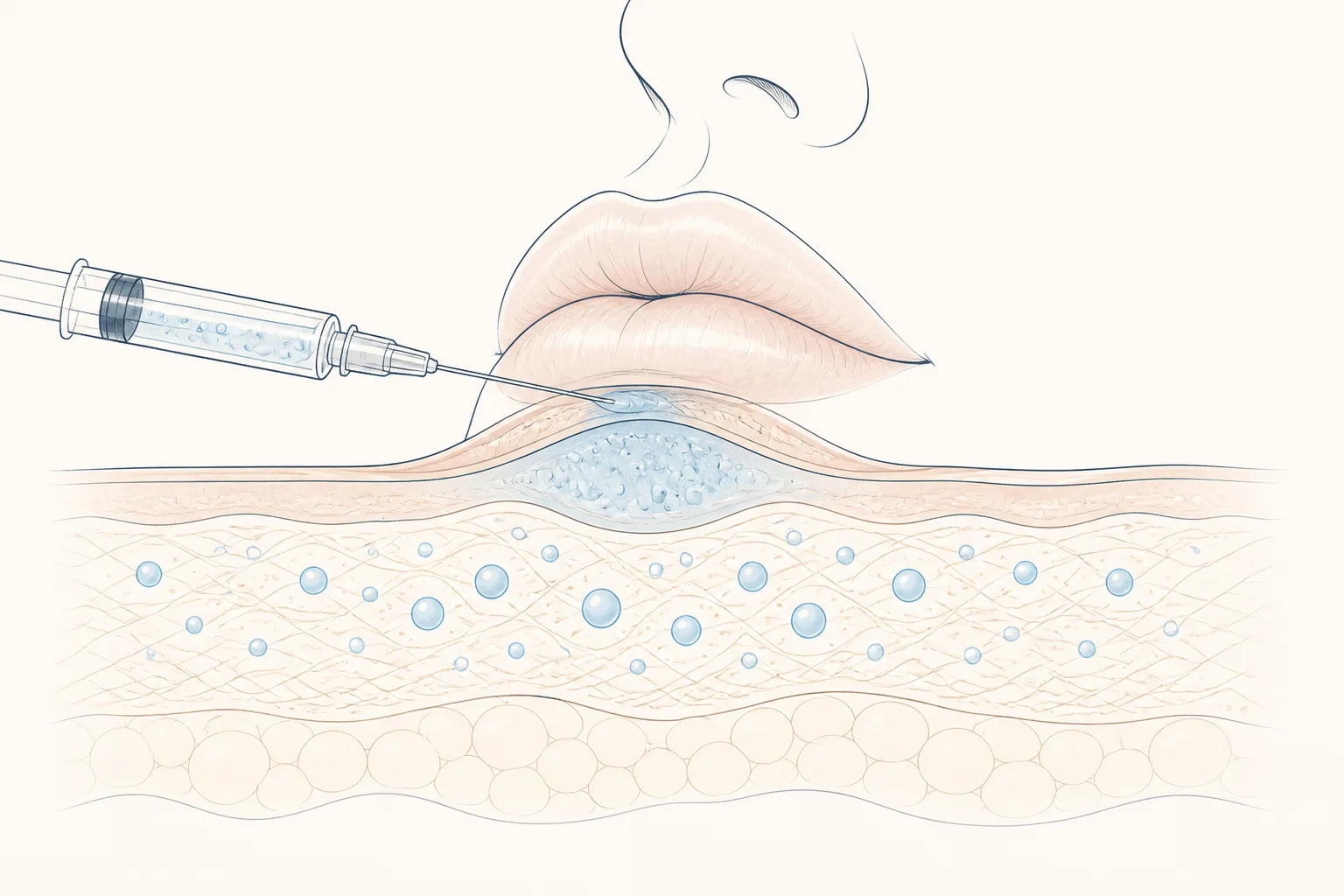
Lip filler is a procedure in which hyaluronic acid—a moisture-retaining substance that also exists in the body—is used on the lips in the form of a medical injectable product. It is performed to add fullness to thin lips, refine the lip line, or aim for a more hydrated-looking impression.
Hyaluronic acid is gradually broken down and absorbed in the body over time. For this reason, the change generally lasts for a certain period and then gradually settles. Results vary from person to person.
Changes You May Expect
With lip filler, you may expect adjustment of upper and lower lip volume, clearer definition of the contour, and vertical lip lines becoming less noticeable. It is also considered by those who want to refine the shape of the lips when wearing lip makeup.
In addition, by injecting while considering the balance of the entire mouth area rather than the lips alone, the aim may be to adjust the impression seen from the side and from the front. Many people prefer a change within a natural range rather than an excessive one.
What Designs Are Available?
Lip filler designs include adding natural volume, an M-shaped design that refines the peaks of the upper lip, a design that adds roundness to the lower lip, and approaches that balance the lips with the corners of the mouth.
Even if you have a desired lip shape in mind, the suitable design varies depending on your original lip thickness, tooth alignment, the degree of mouth protrusion, and left–right asymmetry. Since the outcome varies from person to person, it is important to confirm a reasonable range during the consultation.
How Many cc Are Needed?
For lip filler, around 0.5 cc to 1 cc is often considered as a guide for a first session. However, the required amount varies depending on lip thickness, the desired design, and whether the upper or lower lip is being injected.
"How many cc are needed for lip filler" is a frequently searched question, but injecting more does not necessarily bring you closer to your ideal. Because the lips are a small area, even a small difference in amount can affect appearance and how they feel to the touch.
The Difference Between 0.5 cc and 1 cc
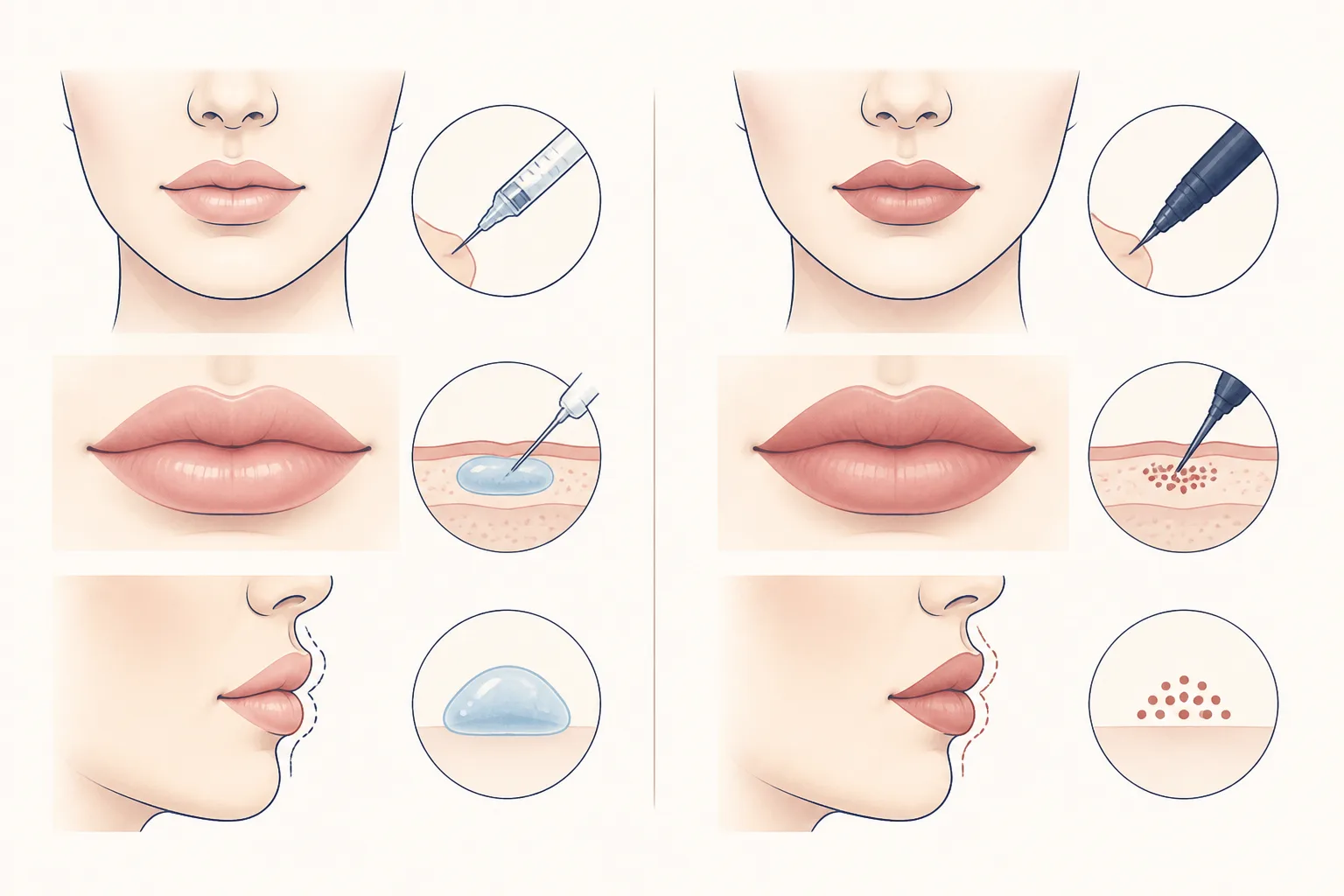
0.5 cc is an amount often chosen by those who want a subtle change or who are receiving lip filler for the first time. It may be used to slightly refine the contour or to compensate for thinness on one side.
1 cc is considered when you want to add volume evenly across the upper and lower lips, or when the area of concern regarding thinness is wide. However, this is only a guide; in practice the amount is adjusted after assessing the condition of the lips.
Why the Required Amount Varies
The main reasons the required amount varies are original lip thickness, left–right asymmetry, the depth of vertical lip lines, and differences in the desired design. The suitable injection sites and amounts also differ between wanting to refine mainly the upper lip and wanting to add roundness to the lower lip.
In addition, if you have a history of previous injections, the amount, firmness, and integration of remaining hyaluronic acid are also taken into account. The actual injection volume is generally decided by the physician after examining the condition of the lips.
How Long Lip Filler Lasts
How long lip filler lasts varies depending on the type of product used, the injection volume, individual constitution, metabolism, and how much the lips move. Because the lips move frequently during conversation and eating, changes may be noticed earlier than in other areas.
After injection, the appearance changes as the immediate swelling subsides. It often settles over a period of several days to several weeks, so the final impression can be difficult to judge from the immediate post-treatment appearance alone.
Guide to Duration
The duration of lip filler may be given as a guide of several months to around one year. However, the speed of absorption differs depending on the firmness of the product and its degree of cross-linking, the injection site, and lifestyle habits.
The lips have rich blood flow and move constantly in daily life. For this reason, even with the same hyaluronic acid, duration may differ compared with areas such as the cheeks or chin. Results vary from person to person.
Cases That Tend to Last Longer
Cases that tend to last relatively longer include those in which a product with firmness suited to the lips has been selected, and in which the injection has not been concentrated in shallow layers that are prone to excessive movement.
In addition, how you spend your time after the procedure—such as not massaging more than necessary and avoiding strong pressure or friction immediately afterward—also affects how the filler settles. Smoking, dryness, and the habit of frequently touching the lips may also have an influence.
Downtime After Lip Filler

During the downtime after lip filler, swelling, bruising, redness, pain, puffiness, and a feeling of discomfort may occur. Because the lips are close to mucous membrane and have abundant blood flow, swelling and bruising tend to be noticeable in this area.
In many cases, pronounced swelling subsides in about a few days, after which the filler may gradually settle over roughly one week. However, the way symptoms appear and how long they last vary from person to person, so if you have plans, it is advisable to allow ample time in your schedule.
Symptoms After the Procedure
After the procedure, you may temporarily notice swelling at the injection sites, bruising, redness at the needle entry points, pain when pressed, a lump-like feel, and left–right asymmetry. Early asymmetry can sometimes be due to the way swelling appears.
On the other hand, caution is needed if there is severe pain, a change in the color of the skin or lips, a sensation of coldness, or sudden worsening of swelling. Since vascular compromise or infection is also possible, please consult the medical facility where you received the procedure as soon as possible.
When Can I Kiss or Wear Makeup?
You are generally advised to avoid lip makeup on the day of the procedure until the needle entry points settle. From the next day onward as well, if there is redness or pain, it is important not to rub forcefully and to use clean tools.
Kissing and strong pressure on the lips may be related to swelling, bruising, and uneven distribution of the injected hyaluronic acid, so you may be advised to refrain for several days. The timing for resuming differs depending on symptoms and the details of the procedure, so please follow your physician's judgment.
Drawbacks and Risks of Lip Filler
Lip filler is an option for refining the impression of the mouth area without surgery, but as a medical procedure it carries drawbacks and risks. It is important to understand not only changes in appearance but also texture and practical precautions in daily life.
Excessive injection may lead to an impression in which only the lips stand out, the mouth area looks heavy, or the lips appear unnatural when smiling. It is necessary to align the desired design with the balance of the whole face.
Possible Side Effects
Possible side effects include swelling, bruising, pain, redness, lumps, a nodular sensation, left–right asymmetry, discomfort, infection, and allergic reactions. Rarely, damage to the skin or mucous membrane due to vascular occlusion may also occur.
With hyaluronic acid, correction using a dissolving agent may be considered in some cases, but the approach differs depending on the condition. If concerning symptoms persist or there is a sudden change, do not press forcefully on your own judgment; consult a medical facility.
Those Who Cannot Receive the Procedure
Those who are pregnant or breastfeeding, those with severe inflammation, infection, or herpes symptoms at the planned injection site, and those with allergies to specific drugs or ingredients may not be able to receive the procedure.
Those using anticoagulants or antiplatelet drugs, those under treatment for autoimmune disease, and those with a keloid-prone constitution also require prior consultation. Please accurately convey your current treatment and medication status at the time of consultation.
Lip Filler Pricing
Because lip filler is self-pay treatment not covered by Japanese public health insurance, the price differs depending on the treatment conditions. The total amount may vary according to the product used, the injection volume, the difficulty of the design, whether anesthesia is used, and the content of any corrective treatment.
Some people search for "cheap lip filler" to compare prices, but caution is needed when judging by price alone. It is important to check the type of product, the treatment area, aftercare, and whether there are additional fees.
Price Range
The price of lip filler varies depending on the type of product, the volume per syringe, and the number of cc injected. Specific amounts vary by period and campaign, so please check the treatment booking page or the campaign page.
In price listings, the injection fee, product fee, anesthesia fee, follow-up consultation fee, and fees for dissolving or correction may be listed separately. It is reassuring to confirm at the consultation the total amount required on the day and the conditions for additional fees.
Why Costs Vary
Reasons costs vary include the type of hyaluronic acid product, the injection volume, the level of detail in the design, whether previously injected material is present, and whether correction of left–right asymmetry is needed. Even a small amount may require delicate adjustment.
Also, if a plan is proposed that includes the balance with the corners of the mouth, the philtrum, and the chin in addition to the lips, the content of the treatment may change. With an estimate, check whether it covers lip filler alone or also includes related areas.
Who May Consider Lip Filler

Lip filler is a procedure considered by those concerned about thin lips, those who want to refine the lip line, those who want to make vertical lip lines less noticeable, and those who want to adjust the balance between the upper and lower lips.
On the other hand, if you are seeking a large change or want to significantly alter a skeletally determined impression of the mouth area, hyaluronic acid alone may not be sufficient. It is important to confirm in advance the desired outcome and whether the treatment is suitable.
Treatment Flow

Lip filler is generally performed in the following flow: consultation, examination, design confirmation, anesthesia, injection, confirmation of the result, and explanation of the recovery course. The time required differs depending on the content, but the procedure is often completed on the same day.
At the consultation, we confirm the desired lip shape, the impression you want to avoid, any history of previous injections, allergies, and medication status. If you are wearing lip makeup, the bare condition of the lips is also checked.
For the design, the balance of the lips and the whole mouth area is assessed from the front, at an angle, and in profile. The injection sites are determined while checking the ratio of the upper and lower lips, the corners of the mouth, vertical lip lines, and left–right asymmetry.
During injection, topical anesthesia, cooling, or products containing an anesthetic component may be used to reduce pain. The filler is injected in small amounts at a time, with adjustments made while checking shape and symmetry.
After the procedure, you will receive an explanation of swelling and bruising, actions that are best avoided, and symptoms that require a visit. Follow-up checks or consultation about correction may be arranged as needed.
Frequently Asked Questions
Does Lip Filler Hurt?
The lips have relatively many nerves, and a pricking pain or a sensation of pressure tends to occur during injection. How pain is felt differs depending on the injection site, whether a needle or cannula is used, the anesthesia method, and the degree of tension.
If you are worried about pain, check in advance about topical anesthesia, cooling, or the use of products containing an anesthetic component. Methods for reducing pain differ by clinic, so it is reassuring to discuss this at the consultation.
How Much Swelling Occurs?
Swelling after lip filler may be noticeable from immediately after the procedure through the following day. In some cases it subsides within about a few days and settles in around one week, but if bruising occurs, discoloration may remain for a while.
To avoid worsening swelling, you may be advised to refrain from drinking alcohol, long baths, vigorous exercise, and strong massage on the day of the procedure. It is advisable to avoid scheduling the treatment right before an important occasion and to allow ample time.
Will the Result Look Natural?
To aim for a natural result, it is important to keep the injection volume modest and to consider not only lip thickness but also the contour and the balance of the entire mouth area. Even if you bring a reference photo, the same shape cannot necessarily be reproduced.
Excessive volume or localized injection can lead to an unnatural impression. The degree of change that is appropriate is determined by the physician after examining the condition of the lips and the facial features.
Disclaimer
* This is self-pay treatment not covered by Japanese public health insurance<br> * Results vary from person to person<br> * Side effects and risks: swelling, bruising, pain, lumps, left–right asymmetry, vascular occlusion, infection, allergy, etc.<br> * As a standard treatment course and frequency, swelling usually lasts about 1 day to 1 week, and the effect lasts for about several months to 1 year; side effects and, when unapproved devices are used, the procurement route and other details require prior confirmation. Prices vary depending on the period, campaigns, and contract conditions, so please check the treatment booking page or the campaign page.
Your next step, at your own pace.
Explore the official website for pricing and appointment information.
Pricing & booking