What is medical hair removal? Pricing, number of sessions, and the difference between heat-destruction and heat-accumulation methods
Medical hair removal is a hair removal treatment performed at a medical institution. Using a medical laser, heat is applied to the tissue that produces hair, with the aim of long-term hair reduction.
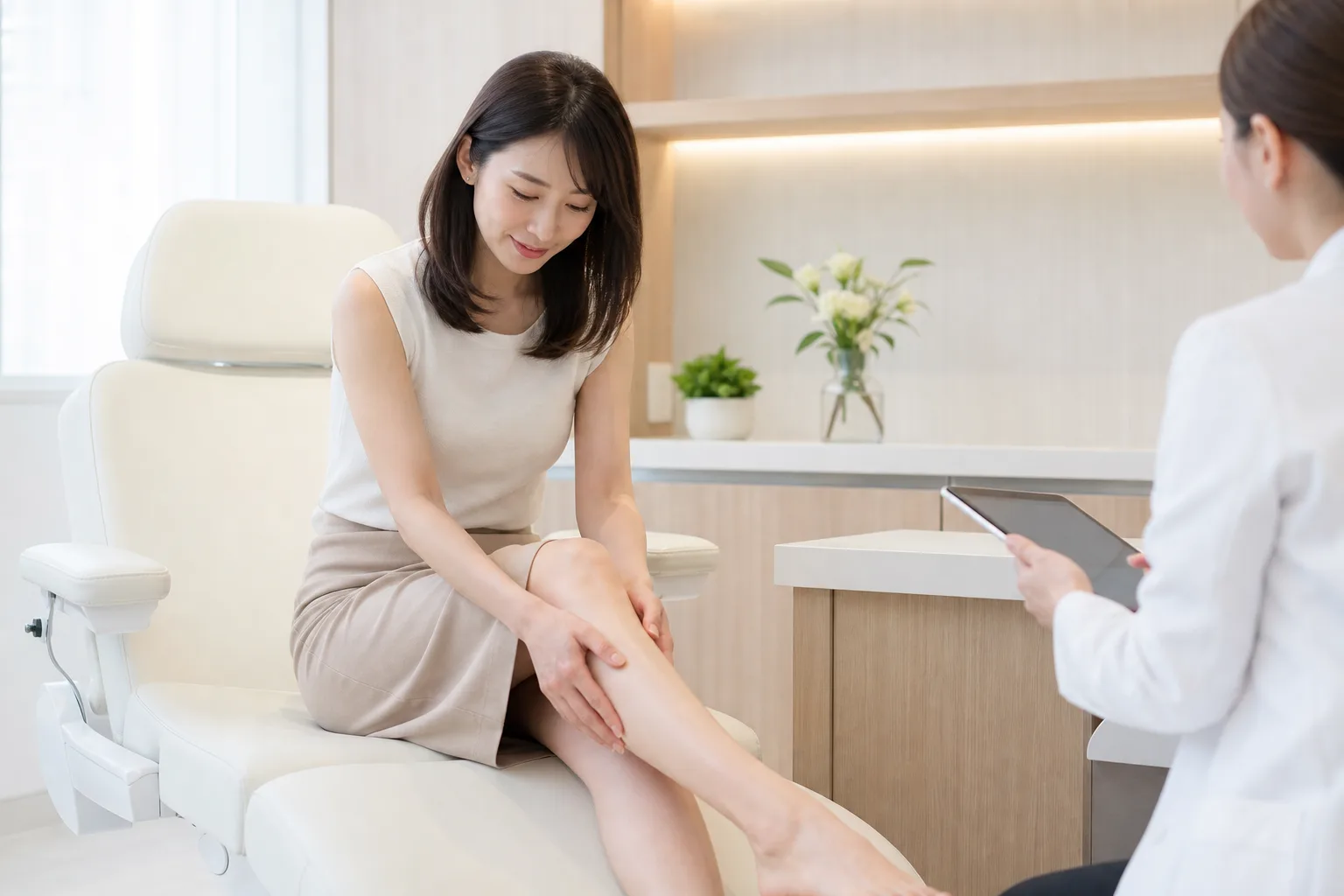
Medical hair removal is a hair removal treatment performed at a medical institution. Using a medical laser, heat is applied to the tissue that produces hair, with the aim of long-term hair reduction.
It differs from salon (esthetic) hair removal in the devices that may be used, the purpose, and the approach to output management. It is a treatment aimed at a state in which hair grows back less easily, but the way the skin responds and the course afterward vary from person to person.
What is medical hair removal
In hair removal treatment performed at a medical institution, a medical laser applies heat around the hair root and acts on the tissue that produces hair, with the aim of long-term hair reduction. Results vary from person to person, but it may be considered with the aim of reducing the burden of self-shaving.
Because the procedure is performed by a physician or under a physician's supervision, if a skin problem occurs, medical responses such as examination and prescription of topical medication can be considered. The output levels and management structure differ from those of salon (esthetic) hair removal.
How medical hair removal works
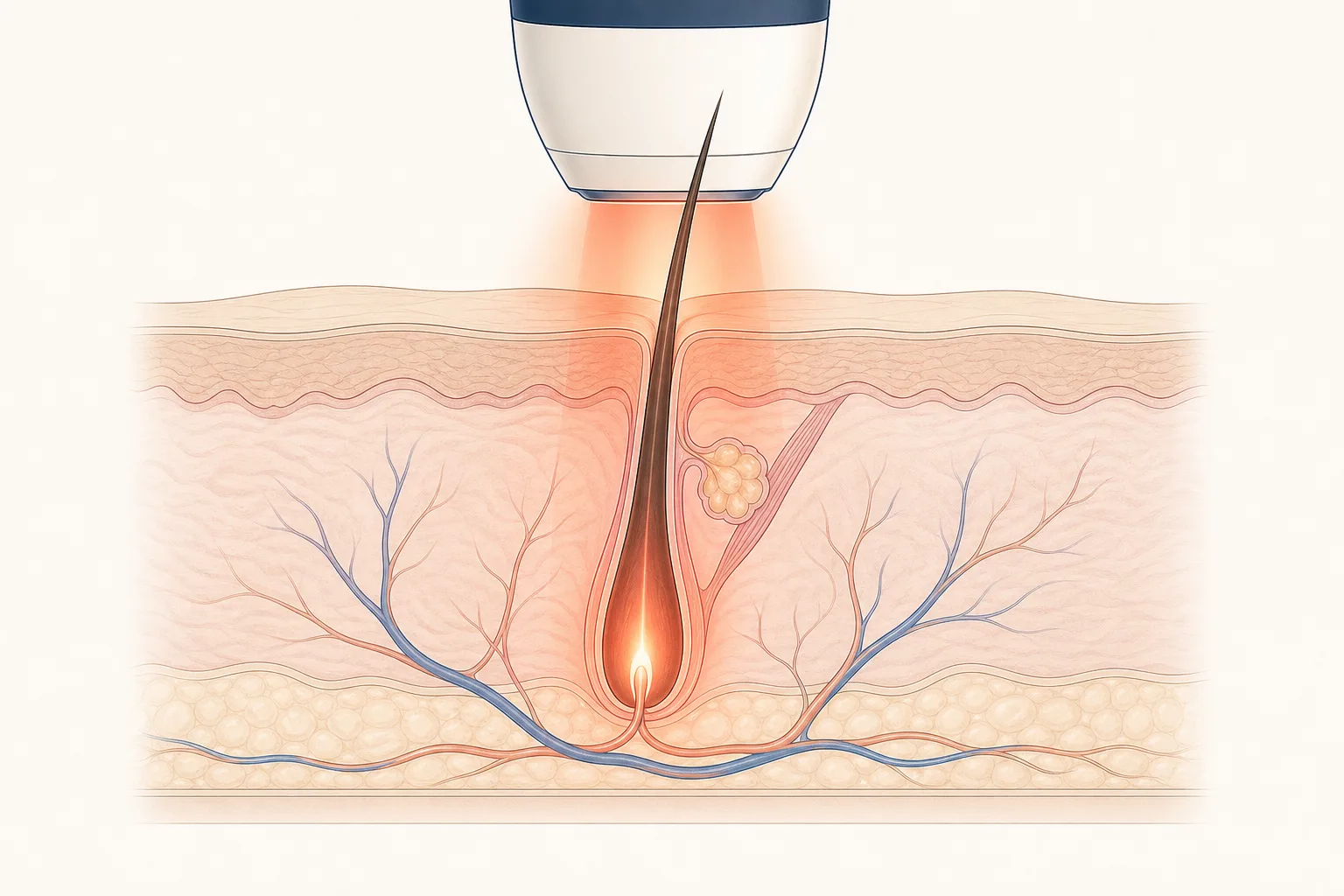
The laser responds to melanin, the dark pigment in hair, and that heat is transmitted around the hair follicle, acting on the tissue involved in hair growth. Hairs in the growth (anagen) phase in particular have a strong connection with the hair root and tend to respond more readily.
Hair has growth, regression, and resting phases, and not all hairs are in the same phase at the same time. For this reason, it is difficult for all hairs to show the same response in a single session, so irradiation is divided into multiple sessions timed to the hair cycle.
Lasers used in medical hair removal include alexandrite at around 755 nm, diode at around 810 nm, and Nd:YAG at around 1064 nm. The shorter the wavelength, the more readily it responds to melanin; the longer the wavelength, the more readily it tends to reach the deeper layers of the skin.
Which areas can be treated?
Many areas can be treated, including the face, underarms, arms, legs, back, and VIO (bikini) area, and some people choose a full-body plan. However, irradiation may not be possible on mucous membranes, around the eyes, or on areas with marked inflammation or sunburn.
The underarms and VIO area have many thick, dark hairs and tend to respond readily to the laser. On the other hand, the face and back have a lot of fine vellus hair, so more sessions may be needed, or it may be necessary to check for paradoxical hair thickening.
Men sometimes consult us about medical hair removal for the beard, chest, and legs. Because beard hair is thick and densely distributed, pain tends to be felt more easily, and multiple visits may be required even when the goal is to reduce hair volume.
Effects of medical hair removal
With this treatment, changes in hair volume and hair thickness are anticipated, so it may be chosen with the aim of reducing the burden of self-shaving. Results vary from person to person, and the course differs depending on the state you are aiming for, hair quality, and the area treated.
Not all hairs fall out immediately after irradiation; hairs that have responded may shed naturally over several days to several weeks. Rather than checking by pulling on the hair, the shedding may be noticed gradually during face washing or bathing.
For a while after irradiation, hair may appear to be growing, but in some cases hairs that have responded are being pushed out toward the skin surface. How the course appears differs depending on the hair cycle, individual constitution, and the area.
Changes that can be expected
By continuing the treatment, the following changes can be expected.
Less frequent self-shaving
Less irritation from razors
Hair becomes less noticeable
Easier grooming of the VIO area and underarms
As the frequency of self-shaving decreases, irritation from razors may be reduced. This is not a treatment intended to improve skin roughness itself, and the course differs depending on skin condition and hair quality.
While the frequency of self-shaving tends to change readily for the underarms and legs, changes in the appearance of fine facial hair may feel more gradual. It helps to sort out in advance whether your goal is adjusting hair volume or making grooming easier, which makes consultation easier.
About how many sessions are needed?
The number of sessions needed differs from person to person, but generally around 5 to 8 sessions is a guide for body areas. The face, fine vellus hair, and men's beards may require more sessions.
By area, the guide may be around 5 to 6 sessions for the underarms, 5 to 8 for the VIO area, 5 to 8 for the arms and legs, and 6 to 10 for men's beards. However, this varies with hair quality, skin type, and the state you are aiming for.
The interval between visits is timed to the hair cycle, and roughly once every 1 to 3 months may serve as a guide. With medical hair removal of the VIO area, it varies depending on whether the aim is to reduce hair volume or to shape the area, so additional irradiation may be considered depending on the desired state. It is important to share your goals at the consultation.
Types of medical hair removal
There are several types of laser devices used for hair removal at medical institutions, with alexandrite, diode, and Nd:YAG being representative. The wavelength and the hair types that respond readily differ with each device.
Alexandrite has a comparatively high response to melanin and may be used for thick hair. Diode is used for a wide range of hair types, and Nd:YAG reaches deeper areas more readily, so it may be considered for dark hair or when the skin tone requires particular care.
Irradiation methods are divided into the heat-destruction type and the heat-accumulation type, but neither one is always the more suitable choice. The selection is made based on skin type, hair quality, area, and how pain is felt.
Difference between the heat-destruction and heat-accumulation methods
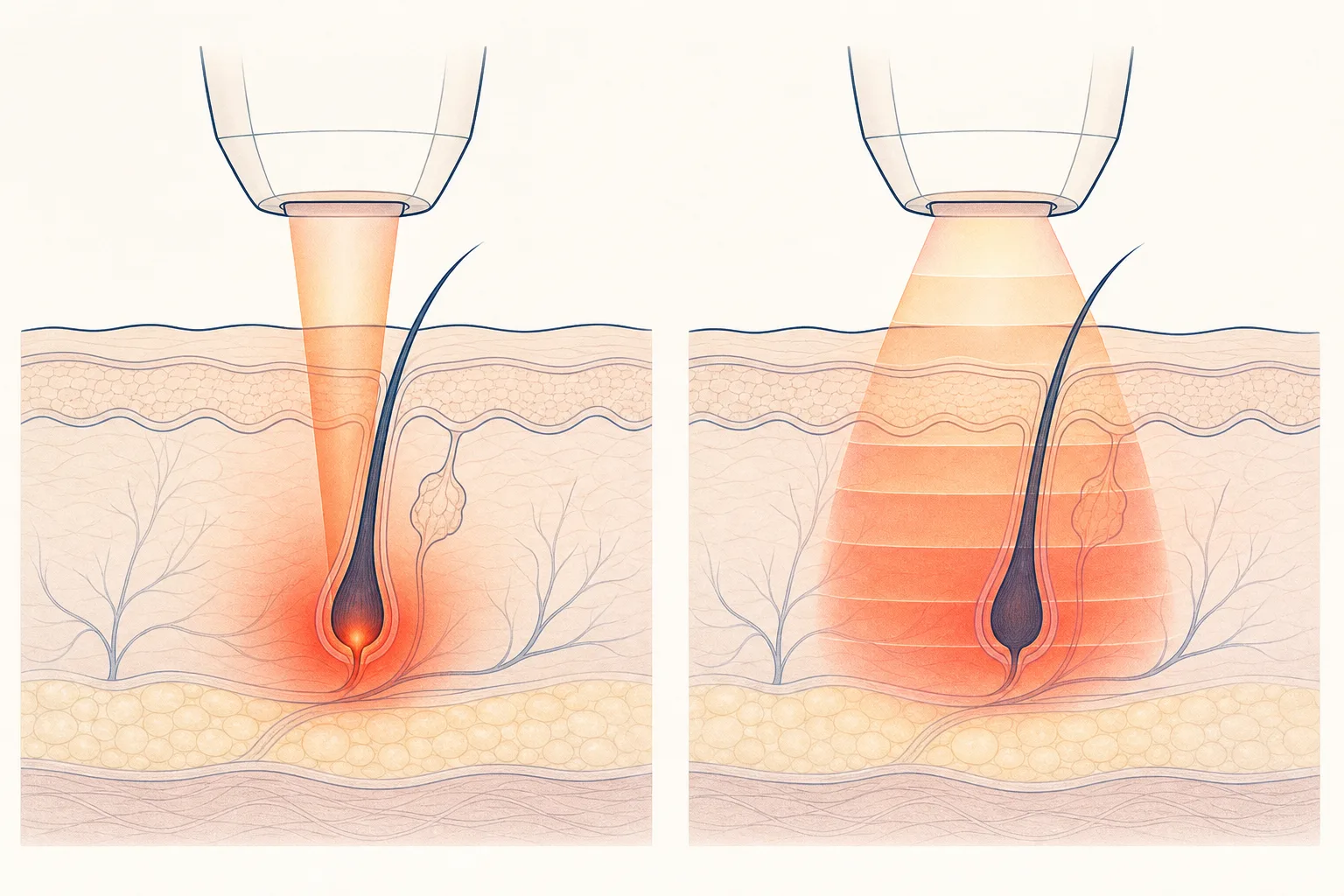
The heat-destruction method applies high heat over a short time, with the aim of acting on hair-growth tissue around the hair root, such as the dermal papilla and hair matrix cells. It tends to respond readily to thick, dark hair.
The heat-accumulation method applies lower heat repeatedly, with the aim of acting on areas such as the bulge region, which may be involved in signaling hair growth. Pain may be felt as comparatively mild.
Pain and response are not determined by the device alone; they also vary with irradiation output, cooling, the area, and hair density. In areas where hair is densely distributed, such as the VIO area or the beard, a strong sensation of heat may occur.
Which one is more suitable?
For the underarms, VIO area, and men's beards, the heat-destruction method may be considered, as it is sometimes chosen for thick, dark hair. However, these are also areas where pain tends to be felt strongly, so treatment proceeds while adjusting output and applying cooling.
For those concerned about pain or for irradiation of wide areas, the heat-accumulation method may be considered. It is also sometimes selected for areas with a lot of fine vellus hair, and the final choice of method is determined based on the findings of the examination.
For skin that tans easily, areas with pigmentation, or areas with marked dryness, not only the method but also the timing of irradiation and the output settings are checked. With safety as the priority, postponement or a change of area may be suggested.
Downtime and risks of medical hair removal
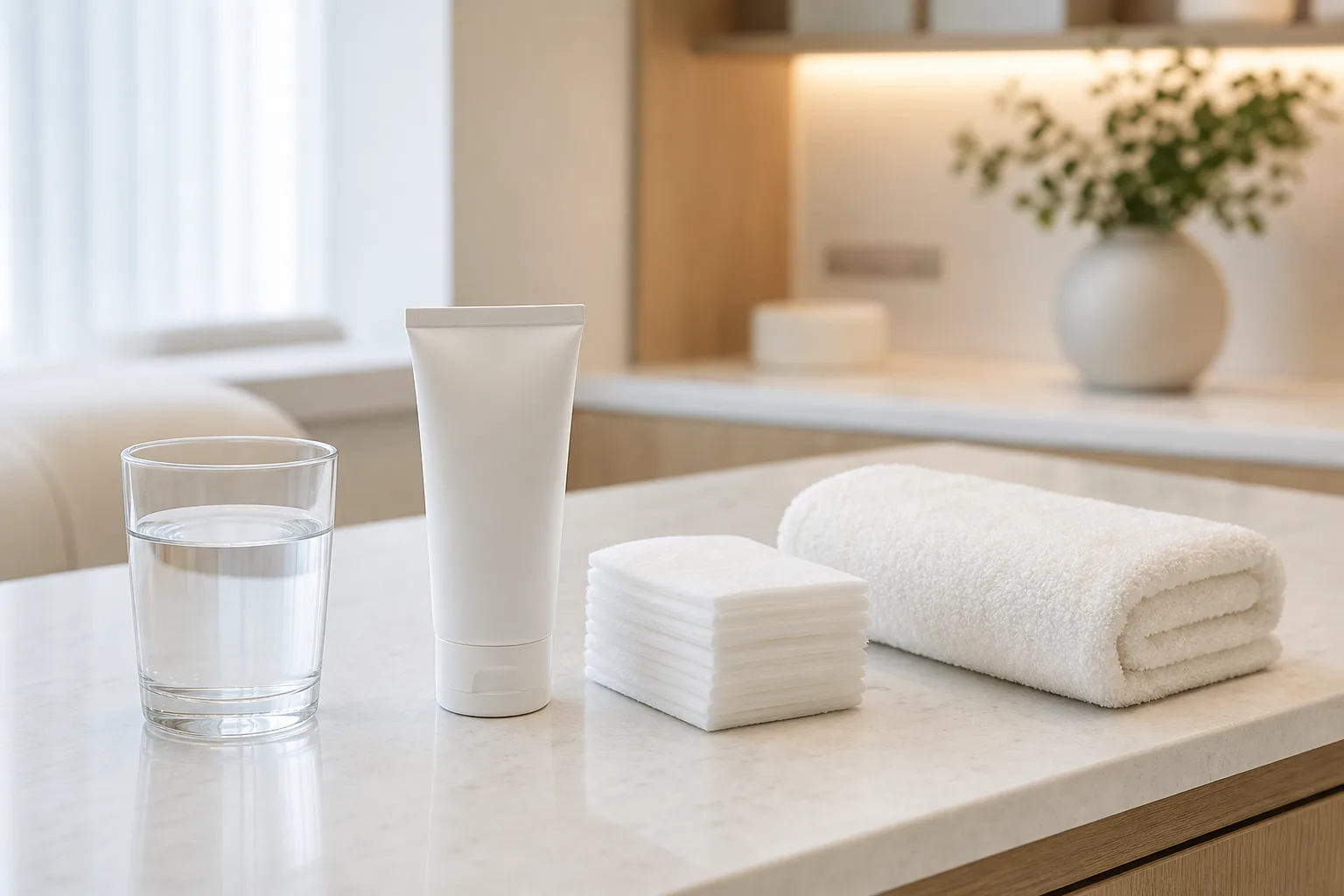
After the procedure, redness and a sensation of heat may occur. In most cases these are temporary, but since the course varies from person to person, avoid rubbing the skin on the day and apply cooling, moisturizing, and UV protection.
Dryness and itching may remain from the following day onward, so avoid friction during bathing and harsh scrubs. Be mindful of sun protection when going out, and protect exposed areas such as the face and arms with sunscreen or clothing.
As this is a medical procedure, side effects are possible. If there is severe pain, swelling, or blistering, an examination is necessary. It is important to understand the risks before the procedure.
Possible side effects
Side effects that may occur with this treatment include the following.
Redness, stinging, swelling
Folliculitis, itching, dryness
Burns, pigmentation
Paradoxical hair thickening, increased hair growth
Redness and stinging are relatively common reactions, but if they persist or worsen, they need to be checked. Folliculitis may appear as acne-like bumps, and topical medication or other treatment may be used at the physician's discretion.
Burns, blisters, and pigmentation are rare, but if there is severe pain or discoloration, please seek examination promptly. If there is any abnormality, do not apply irritation based on your own judgment; please consult a physician.
Paradoxical hair thickening may be seen in areas with fine vellus hair, such as the face and back. If it occurs, the physician will review the irradiation method, the intervals, and whether treatment can be continued.
Those who cannot undergo the procedure
Some facilities have a policy of refraining from the procedure for those who are pregnant or breastfeeding. Caution is also required in cases of photosensitivity, marked sunburn, or dermatitis, and when there is marked sunburn or skin irritation, irradiation may be performed after it has settled.
Depending on the medications being taken, irradiation may not be possible. Medications related to photosensitivity, such as tetracycline-class antibacterials, new quinolone (fluoroquinolone) antibacterials, some anti-inflammatory drugs, and vitamin A derivatives, must be declared in advance.
For areas that have recently undergone other laser treatment, peeling, or intense light treatment, the decision is made after confirming the skin's recovery status. If you have a chronic condition or are under treatment, please declare this in advance.
Whether the procedure can be performed is determined by a physician after checking the skin condition and general physical condition. Do not discontinue medication based on your own judgment, and check with your prescribing physician as necessary.
Price of medical hair removal
Costs vary greatly with the area and the number of sessions, and fee settings differ for full body, face, VIO area, men's beard, and so on. Even plans with the same name may differ in the irradiation range covered.
This treatment is self-pay treatment not covered by Japanese public health insurance. Since public health insurance does not apply in principle, it is important to confirm the total amount and any additional costs before entering into a contract.
The amount payable changes depending on whether prices are shown including or excluding tax, and costs for anesthesia, shaving, cancellation, follow-up visits, and medication may be charged separately. Rather than looking only at the monthly payment figure, check the total contract amount and the payment conditions.
Typical price range

Fees vary considerably depending on the time of year and the campaigns that apply. For specific amounts, please check the latest information on the treatment booking page, the campaign page, or official information sources.
As a general tendency, the broader the areas covered and the greater the number of contracted sessions, the higher the total amount. Even for the same "full-body hair removal," the price setting differs depending on whether the face, VIO area, nape, and fingers and toes are included.
Because medical hair removal is self-pay treatment not covered by Japanese public health insurance, whether prices include or exclude tax, and whether costs for anesthesia, shaving, cancellation, follow-up visits, and medication are charged separately, are items worth confirming when obtaining a quote. There may also be a difference between the monthly payment figure and the total contract amount.
*Campaigns, discount eligibility conditions, and contract conditions vary by period. For the latest accurate fees, please check the official information on the treatment booking page or the campaign page.
Reasons costs vary
Costs vary according to several factors.
The irradiation area and its extent
The number of contracted sessions and the validity period
The device used and the irradiation method
Costs for anesthesia, shaving, and medication
Cancellation rules and follow-up visit fees
Check not only the low price but also how easy it is to attend appointments. How skin problems are handled, additional costs, and how easily appointments can be changed are also points for comparison.
For full-body hair removal, the price changes depending on whether the nape, fingers and toes, face, and VIO area are included. For beard hair removal as well, it is reassuring to confirm how far the coverage extends among the upper lip, chin, under the chin, cheeks, and neck.
People who may find medical hair removal worth considering
Hair removal at a medical institution can be an option for those who want to reduce hair volume over the long term. Those who want to reduce the frequency of self-shaving may also consider a consultation, but suitability differs depending on skin condition, physical condition, and other factors.
People such as the following may wish to consider a consultation.
Those who repeatedly get razor burn
Those who want full-body hair removal at a medical institution
Those who want to make grooming of the VIO area easier
Men who want to reduce self-shaving of the beard
Those who are able to attend the required number of visits
If there is dermatitis or marked dryness, treatment for that is needed first. Irradiation may be performed after the skin condition has been brought into balance.
Those who have many plans involving sun exposure, those hoping to become pregnant in the near future, and those seeking completion in a short period should discuss a visit plan in advance. Even if the interval between irradiation sessions becomes longer, treatment may be able to resume at the physician's discretion.
Flow of the procedure
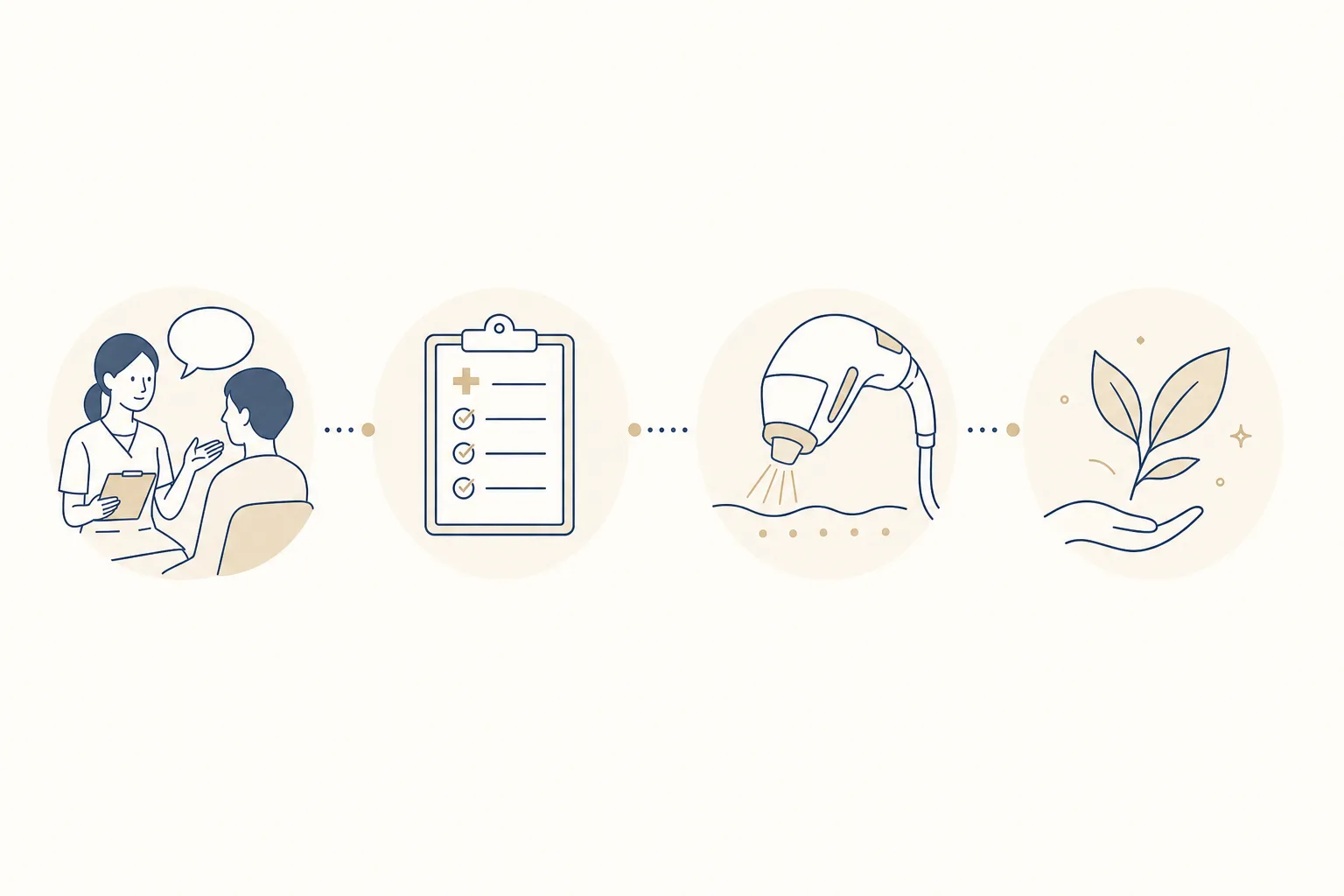
The treatment begins with a counseling session, in which the desired areas, medical history, medications, and skin type are confirmed. A physician examines you and determines the skin condition and whether irradiation is possible, after which irradiation is performed by a physician or under a physician's supervision.
The general flow is as follows.
Counseling and physician's examination: the desired areas, goals, medical history, medications, and presence of sunburn are confirmed
Checking the shaving and skin condition: any remaining unshaved hair, dryness, inflammation, and pigmentation are checked
Laser irradiation: output, cooling, and irradiation range are adjusted according to the area and pain
Cooling, moisturizing, and explanation of precautions: the degree of redness is checked, and precautions regarding bathing and exercise on the day are explained
The procedure time differs depending on the area and extent. Shave the specified areas by the day before, and on the day avoid sun exposure and friction and keep the skin clean.
For facial hair removal, makeup is removed before irradiation, and for the VIO area, the shaving range and the shape you wish to keep are confirmed in advance. For areas that are hard to shave, do not force it and injure yourself; please confirm how to handle this in advance.
Frequently asked questions
Before a visit, there are many questions about pain and the number of sessions. Here we organize the points that are commonly checked before a visit.
Is medical hair removal painful?
How pain is felt differs from person to person. The VIO area, underarms, and men's beards tend to be areas where pain is felt more readily, and the thicker and denser the hair in an area, the more readily a sensation of heat occurs.
It is sometimes described as pain like being snapped with a rubber band, as heat, or as a prickling sensation. Dryness or sunburn makes irritation more noticeable, so moisturizing and sun protection before and after irradiation are important.
Cooling, output adjustment, or anesthetic cream may be used. If you have concerns, please discuss your tolerance for pain and the cost of anesthesia with the physician in advance.
How many sessions until it is finished?
The required number of sessions varies with the state you are aiming for, hair quality, and the area. The visit plan also differs between wanting to make self-shaving easier and wanting to reduce hair volume further.
For body areas, around 5 to 8 sessions may serve as a guide. Guides of around 5 to 6 sessions for the underarms, 5 to 8 for the VIO area, and 6 to 10 for men's beards are sometimes given.
For fine vellus hair on the face and back, the response may feel more gradual, and additional irradiation may be considered. Visit intervals are adjusted using a guide of 1 to 3 months while monitoring the hair cycle and skin condition.
Can I wear makeup or bathe on the day?
Whether makeup can be worn after facial hair removal is judged according to the skin condition. If there is redness or stinging, it is important to avoid irritation, and low-irritant cosmetics are preferable.
For bathing, avoid long soaks and use a lukewarm shower. Saunas, vigorous exercise, and alcohol promote blood circulation and may intensify redness and itching, so you may be advised to refrain from them.
On the day, wash without rubbing, moisturize, and avoid exposing the irradiated areas to strong ultraviolet light. Ultimately, please follow the instructions of your physician or clinic.
Disclaimer
*This is self-pay treatment not covered by Japanese public health insurance<br> *Results vary from person to person<br> *Side effects and risks: redness, folliculitis, burns, paradoxical hair thickening, pigmentation, dryness, itching, and others<br> *The standard treatment period and number of sessions are about several months to a year and a half and around 5 to 8 sessions; side effects (such as redness) and, when unapproved devices are used, the procurement route and other details must be confirmed in advance. Fees vary with the time of year, campaigns, and contract conditions, so please check the treatment booking page or the campaign page.
Your next step, at your own pace.
Explore the official website for pricing and appointment information.
Pricing & booking