Can Hollow Cheeks Be Improved? Causes, Treatment Options, and 5 Points to Prevent Progression
With hollow cheeks, what can be improved and what is harder to change depends on the cause. We outline the structure of the five layers that support the cheek, how hollowing appears by area, why tightening-type treatments are not well suited, and 5 points for preventing progression.

A shadow forms below the cheekbone and you look tired. Your weight is the same, yet your face looks more gaunt than it used to. Have you noticed changes like these?
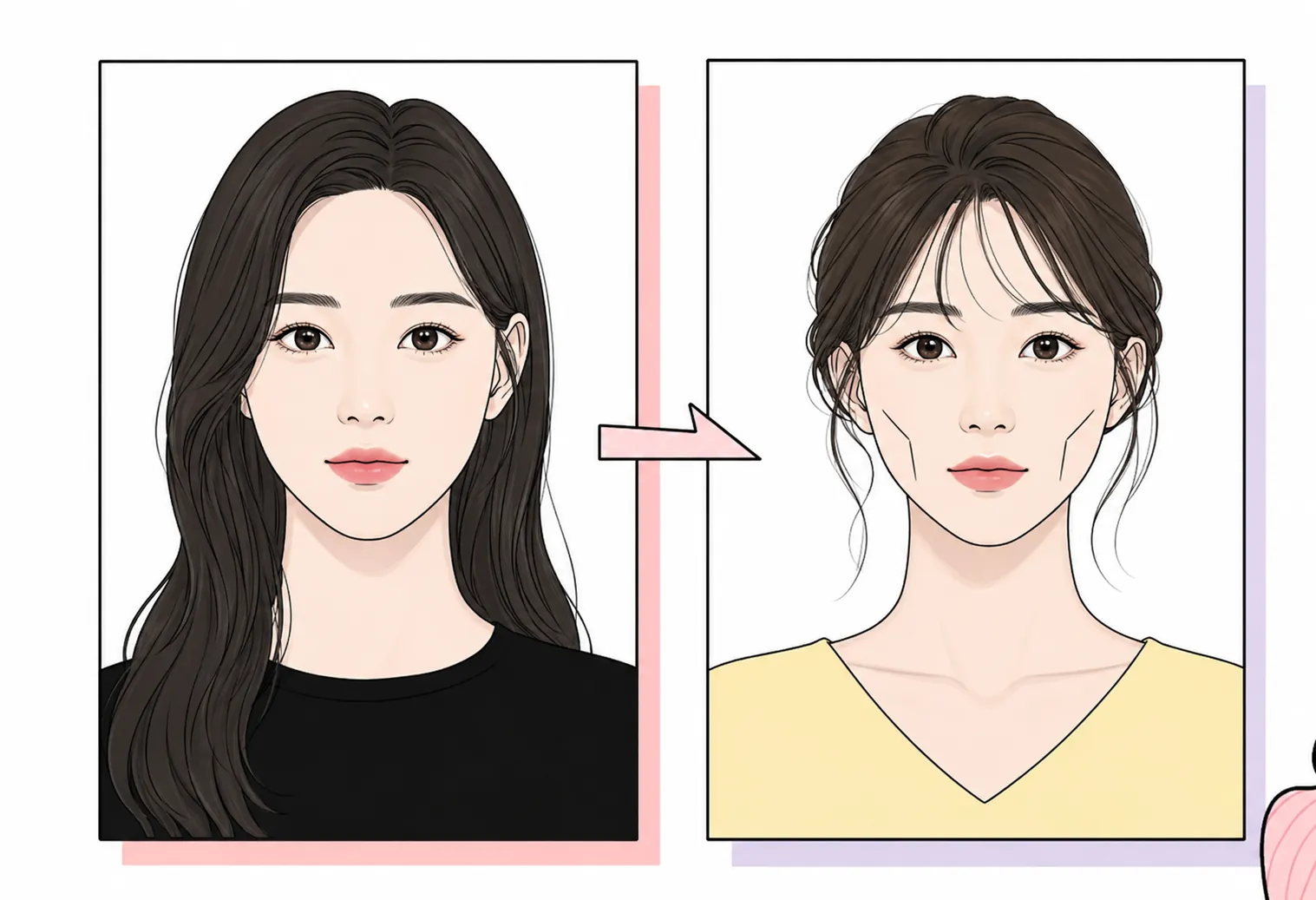
Hollow cheeks refer to a state in which the volume of fat and bone supporting the cheek from within has decreased, so the area below the cheekbone becomes depressed and appears as a shadow.
To start with the conclusion: with hollow cheeks, what can be changed and what is harder to change depends on the cause. If rapid dieting or dryness is behind it, improvement can be expected by reviewing your lifestyle and skincare; on the other hand, when bone or deep-layer fat has decreased, this is an area that is difficult to restore with self-care alone. We will outline the mechanism behind the hollowed appearance, how it appears by area, why tightening-type treatments are not well suited, and 5 points for preventing progression. At our clinic in Shinjuku as well, consultations begin by first distinguishing the underlying cause.
*This is self-pay treatment not covered by Japanese public health insurance. *Results vary by individual. *Risks and side effects: swelling, bruising, asymmetry, and lumps from injection may occur, and rarely vascular occlusion.
What Are Hollow Cheeks? The Mechanism Behind the Hollowed Appearance
The fullness of the cheek is not made up of skin alone. Understanding the internal structure clarifies why the cheek comes to look hollow.
The Five Layers Supporting the Cheek and Volume Loss
The face is made up of the following five layers, stacked from the surface inward.
Skin — the layer responsible for firmness and elasticity
Superficial fat — fat that moves with facial expression and creates roundness
Superficial fascia (SMAS) — the membranous layer connecting skin and muscle
Deep fat — the foundation that supports the height of the cheek from within
Bone — the deepest structure supporting everything
Hollow cheeks may occur when the volume of the deep fat and bone among these decreases. When the foundation becomes smaller, the superficial fat and skin above it have nowhere to go and shift downward, producing a twofold change in which the upper portion becomes depressed and the lower portion sags. The sense that "I haven't lost weight, yet my cheeks look hollow" comes from this change in structure.
How Hollow Cheeks Appear by Area (Temples, Under the Eyes, Below the Cheekbone)
The impact on overall impression differs depending on where the depression occurs.
Temples — when bone and fat decrease, the contour looks square, which contributes to a tired impression.
From under the eyes to the upper cheek — when the supporting tissue loosens, the shadow extends and can look like dark circles.
Below the cheekbone — when deep fat decreases, the cheekbone appears to protrude and a triangular shadow forms beneath it.
Outer area around the mouth — when support weakens, a step-off forms and nasolabial folds and marionette lines become more noticeable.
Check in the mirror where the shadows appear on your own face. The approach needed varies with the location.
What Causes Hollow Cheeks?
Behind hollow cheeks are both structural changes due to aging and factors originating in lifestyle habits.
Age-Related Changes in Bone, Fat, and Skin
First, bone. The facial bones are gradually resorbed with age, the space around the eyes widens, and the upper jaw recedes. Because the foundation becomes smaller, it can no longer fully support the tissue above it.
Next, fat. Cheek fat is not a single mass but is divided into several compartments. The deep compartments atrophy, while the superficial compartments move downward with gravity. Because the areas that decrease and the areas that shift are different, the upper portion becomes hollow and the lower portion becomes heavy.
And then the skin. Collagen and elastin decrease and supportive strength declines, so internal changes show directly on the surface. Because these three progress at the same time, a single measure tends not to be enough.
Characteristics of People Prone to Hollow Cheeks
Lost a large amount of weight in a short period
Naturally slim with little subcutaneous fat
Skeletal factors such as high cheekbones or a long face
A habit of smoking
No habit of sun protection
Ongoing lack of sleep or a high-stress lifestyle
Continuing intense aerobic exercise for long periods
Hollow cheeks can occur even in younger people when skeletal structure or rapid weight loss is involved. Rather than judging by age alone, it is important to consider whether multiple factors overlap.
Can Hollow Cheeks Be Improved? What You Can Do Yourself and Its Limits
To state the conclusion first, if the cause lies in lifestyle habits or the condition of the skin, change can be expected with self-care. On the other hand, if bone resorption or atrophy of deep fat is the main background, there are limits to what can be done on your own. The measures you can take are as follows.
Avoid rapid weight loss and manage your weight gradually
Secure the building blocks for tissue with a diet mindful of protein
Ensure enough sleep to allow time for recovery
Refrain from smoking
Make sun protection and moisturizing a habit
These work in the direction of "slowing progression." However, they do not restore deep fat that has already decreased or bone volume that has been resorbed. Facial muscle training and massage are also not methods for increasing supportive tissue, and performed forcefully, the friction may instead become a burden. If the position of the shadow does not change after 2 to 3 months of continued effort, it may be beyond the range that self-care can reach.
Effects of Treatment for Hollow Cheeks
Treatment for hollow cheeks performed at a medical facility aims to replace the lost volume and make the shadow less noticeable.
Changes That Can Be Expected
The shadow below the cheekbone becomes shallower and the contour looks smoother
Hollowing at the temples is filled and roundness returns to the upper face
Support increases, and nasolabial folds and step-offs around the mouth become less pronounced
The impression of looking tired or gaunt changes
The main methods are injecting hyaluronic acid into a layer near the bone to supplement the foundation, injecting your own fat, and injectables that stimulate collagen production. Which is chosen depends on the depth of the layer that has decreased and the amount required. When skin sagging is marked, adding volume alone can look heavy, so a thread lift or radiofrequency and ultrasound treatments are planned in combination.
When Results Tend to Be Noticeable, and Individual Variation
With hyaluronic acid, the change in shape appears immediately after injection. However, since swelling and puffiness are included at that stage, the final result is assessed after 1 to 2 weeks. When placed in a deep layer, duration is generally around 1 year.
With fat injection, part of the injected fat is absorbed, so it settles over 3 to 6 months. The proportion that takes hold varies considerably between individuals, and treatment may be planned across multiple sessions. With injectables that stimulate collagen production, thickness develops gradually over several months.
Does Thermage Improve Hollow Cheeks?
When looking into cheek sagging, you may come across the name Thermage. However, there are situations where hollow cheeks and Thermage work in opposite directions.
Item | Treatment for hollow cheeks (replacing volume) | Thermage (tightening) |
|---|---|---|
Mechanism | Replaces the decreased layer with product or fat, supporting from within | Radiofrequency heat acts on the dermis and subcutaneous tissue to promote contraction |
Target of action | Deep fat and the space near the bone | Skin sagging and laxity of subcutaneous tissue |
How results appear | The shape changes immediately after injection | Gradually over several weeks to several months |
Approximate duration | About 6 months to 1 year, depending on the product and method | About 6 months to 1 year |
Downtime | Swelling 2 to 3 days; bruising about 1 to 2 weeks | Redness for several hours |
Suitability for hollow cheeks | Suitable if hollowing is the main concern | Works in the direction of reducing subcutaneous fat, and hollowing may become more pronounced |
How cost is determined | Depends on the amount used and the method | Depends on the number of shots delivered |
Differences in Mechanism and How Results Appear
Volume-replacing treatment works in the direction of "adding," while Thermage works in the direction of "tightening." Because hollow cheeks are a state of insufficient support, tightening alone can make the shadow appear deeper.
Thermage has been noted to have an aspect that acts on subcutaneous fat, and in people who are slim or whose cheek hollowing is noticeable, there are known cases of feeling that the hollowed impression became more pronounced after treatment. Simply equating "sagging = tightening" can lead to choosing the wrong direction.
How to Decide Between Approaches
The dividing line is whether the central concern is "hollowing" or "sagging."
A shadow below the cheekbone, with the upper portion looking sunken → the direction of replacing volume
A blurred contour with heaviness along the jawline → the direction of tightening
Hollow above and heavy below → restore the foundation with volume-replacing treatment and combine it with tightening
Many people fall into the third category. In this case the order matters: performing tightening alone first results in the hollowing becoming more noticeable. Please have an examination to distinguish what has decreased and what has descended before building a treatment plan.
Downtime and Risks of Treatment for Hollow Cheeks
Before choosing a treatment, it is important to know the reactions that may occur and why. Frequency and severity vary between individuals.
Possible Side Effects and Why They Occur
Swelling and puffiness — in addition to the reaction of the needle passing through tissue, the property of hyaluronic acid holding water is involved. About 2 to 3 days is the general guide.
Bruising — occurs when the needle contacts fine blood vessels. It takes about 1 to 2 weeks for the color to fade.
Asymmetry — because the face is not symmetrical to begin with, the result can differ even with the same amount.
Irregularities and lumps — if the product collects in one spot, it can remain as a firmness detectable by touch.
Unnatural appearance from overfilling — excessive filling makes the cheek look protruded and creates an unnatural look when smiling.
Infection — as long as a needle is inserted, the possibility of resident skin bacteria entering is not zero.
Vascular occlusion — if the product enters a blood vessel or compresses it strongly, blood no longer reaches the area beyond. If the skin turns white or severe pain develops, please contact us promptly rather than waiting to see.
With fat injection, in addition to these, swelling and bruising at the harvest site and asymmetry due to uneven fat survival can occur.
Cases Requiring Careful Consideration
Those who are pregnant or breastfeeding
Those with infection, inflammation, or skin wounds at the injection site
Those with an allergy to components of the product
Those taking blood-thinning medication
Those undergoing treatment for an autoimmune disease
Those in the middle of weight loss whose weight is not yet stable
During periods when weight is fluctuating, the result will also change. Planning after weight loss has settled tends to avoid wasted effort. Please inform us in advance of your medical history, allergy history, and any medications you are taking.

Skincare and Sun Protection to Prevent Hollow Cheeks from Progressing: 5 Points
Whether or not you undergo treatment, measures to slow progression are part of daily life. The following 5 points are the basics.
Continue sun protection year-round — make it a daily habit regardless of season or weather.
Switch to skincare without rubbing — review your cleansing, makeup removal, and how you use a towel.
Maintain barrier function with moisturizing — dryness is the entry point for inflammation.
Avoid rapid weight gain and loss — it contributes to uneven reduction of fat compartments.
Ensure sleep and protein — the time and materials for rebuilding tissue.
Why Ultraviolet Light Leads to Volume Loss
It is well known that ultraviolet light causes pigmentation, but its connection with hollow cheeks is seldom discussed. Long-wavelength UVA passes beyond the epidermis and reaches the dermis. In the dermis it works in the direction of breaking down supportive tissue such as collagen and elastin, while the capacity to produce new tissue may also decline. When this state continues for many years, the skin loses thickness and elasticity, and changes in the underlying fat and bone show directly on the surface.
It has also been noted that chronic inflammation from ultraviolet light may affect subcutaneous tissue as well. It is important to understand that sun exposure is not limited to a surface pigmentation issue but relates to deterioration of the supporting structure itself. Sunscreen is not a matter of applying it once in the morning and being done; please reapply on days you spend time outdoors. Combining a parasol or hat can reduce the burden of how much you need to apply.
Daily Care to Reduce Dryness and Friction
When the skin is dry, the stratum corneum becomes disordered and external irritants reach it more easily. Irritation invites inflammation, and inflammation leads to breakdown of supportive tissue. Breaking this chain is the role of daily care.
Cleanse with lukewarm water at around 32°C, rolling the foam over the skin briefly. Not rubbing comes first. Press the towel against the skin, and avoid wipe-off type makeup removers. Apply moisturizer containing barrier ingredients such as ceramides thinly and evenly. Spreading it without rubbing places less burden on the skin than layering it thickly.
Facial massage and facial rollers deserve caution. They are used with the aim of promoting circulation, but when someone with hollow cheeks applies strong pressure, friction and traction are added to tissue with weak support. It is not uncommon for a habit continued with good intentions to be a factor in progression.
The pace of weight loss is the same. When weight is lost over a short period, facial fat tends to decrease before trunk fat. Because deep cheek fat is difficult to regain once lost, it is important to proceed gradually.
How to Tell When Self-Care Is Not Making a Difference
In cases like the following, the situation may be beyond the range of self-care.
The position and depth of the shadow do not change even after 2 to 3 months of continued care
Weight has returned, but only the cheek hollowing remains
Hollowing is widespread, including the temples and under the eyes
The cheekbones protrude markedly as a skeletal feature, with a shadow beneath them
These are signs that the cause lies in areas cosmetics cannot reach, namely bone and deep fat. The earlier you seek consultation, the more options are available.
How Pricing for Hollow Cheek Treatment Is Determined
The cost of treating hollow cheeks varies with the method chosen and the amount required. With hyaluronic acid it depends on the type and volume of product; with fat injection, on the harvesting and processing steps; with injectables, on the number of sessions, so the cost structure differs. If the hollowed area is extensive, the plan may be divided into multiple sessions. We recommend considering not only the cost per session but the total across the expected number of sessions. Please check the treatment booking page for specific prices.
Who May Want to Consider Treatment for Hollow Cheeks
If your situation is like the following, methods at a medical facility become an option.
The shadow below the cheekbone is dark and a tired impression persists
Weight has been regained, but only the hollowing remains
The cheekbones protrude markedly as a skeletal feature
Nasolabial folds and step-offs around the mouth are also a concern at the same time
Conversely, if you are in the middle of weight loss or your daily rhythm is not stable, it is better to postpone treatment until things have settled. Please start by confirming what has decreased.
Frequently Asked Questions
Do hollow cheeks resolve on their own?
If rapid weight loss was the cause and weight is subsequently regained, cheek fullness may recover to some extent. On the other hand, when age-related bone resorption or atrophy of deep fat is the background, natural return to the original state is less likely to be expected.
How long do the results last?
With hyaluronic acid, about 1 year is the general guide when placed in a deep layer. With fat injection, the portion that takes hold is maintained for a long time, while part of the injected volume is absorbed over 3 to 6 months. In both cases there is variation depending on the amount, the area, and individual constitution.
Is there pain during or after treatment?
The sensation is mainly from the fine needle or cannula, and anesthetic cream is used as needed. Some products contain an anesthetic component. A feeling of tightness after the procedure may continue for 2 to 3 days, but there are no major restrictions on daily life.
Why do cheeks become hollow even in young people?
Skeletal factors, a naturally lean constitution with little subcutaneous fat, weight loss over a short period, and prolonged aerobic exercise are among the possible backgrounds. In people with high cheekbones or a long face, shadows tend to appear below the cheekbone regardless of aging. Regardless of age, the approach changes according to the cause.
Are there options other than hyaluronic acid injection?
There are methods that harvest and inject your own fat, and injectables that stimulate collagen production. When skin sagging is present at the same time, a thread lift or radiofrequency and ultrasound treatments may be combined. Which is suitable can be confirmed at your examination.
Summary and Disclaimer
Hollow cheeks arise when the volume of deep fat and bone decreases and the tissue above shifts downward. If rapid weight loss or dryness is the background, slowing progression can be expected by reviewing lifestyle and skincare. On the other hand, if bone resorption or atrophy of deep fat is the background, this is an area that is difficult to restore with self-care alone.
Treatment is planned in the direction of replacing the lost volume. The direction differs from tightening treatments such as Thermage, and performing tightening alone when hollowing is noticeable can make the shadow deeper. Please have an examination to distinguish what has decreased and what has descended before deciding the order of treatment. In daily life, the basics are 5 points: sun protection, care without rubbing, moisturizing, gradual weight management, and sleep with adequate protein. Please check the treatment booking page for prices.
[References and Sources]
Ministry of Health, Labour and Welfare, "Medical Advertising Guidelines"
Handling information for the products and devices used (please confirm details at your examination)
*This is self-pay treatment not covered by Japanese public health insurance. *Results vary by individual. *Side effects and risks: swelling, puffiness, bruising, pain, and redness at the injected site, asymmetry and irregularities, lumps, infection, vascular occlusion, and allergic reactions such as rash or itching may occur. With fat injection, swelling and bruising at the harvest site and uneven fat survival may occur. *As a guide for the standard treatment period and number of sessions: with hyaluronic acid, about 6 months to 1 year from a single injection; with fat injection, fat survival is confirmed over 3 to 6 months with additional treatment as needed; with injectables that stimulate collagen production, several sessions are layered at intervals of a few months. Prices vary depending on the period, campaigns, and contract conditions, so please check the treatment booking page and campaign page.
Supervised by: Dr. Rina Shindo, Director (cosmetic dermatology)
Graduated from Shiga University of Medical Science, School of Medicine, Department of Medicine
2019: Sumitomo Hospital (general incorporated foundation)
2021: Department of Dermatology, Kobe University Hospital
2022: Chief at a major cosmetic surgery clinic
2025: Director, PGC CLINIC SHINJUKU
Your next step, at your own pace.
Explore the official website for pricing and appointment information.
Pricing & booking