High-Dose Vitamin C IV Drip: When Do the Effects Appear? Frequency and Precautions
With a high-dose vitamin C IV drip, a feeling of physical lightness is generally noticed on the same day or the next day, while changes in the skin tend to appear after several sessions. We have organized the 6 changes you may expect and guideline frequencies in tables, along with points to check beforehand such as G6PD deficiency.
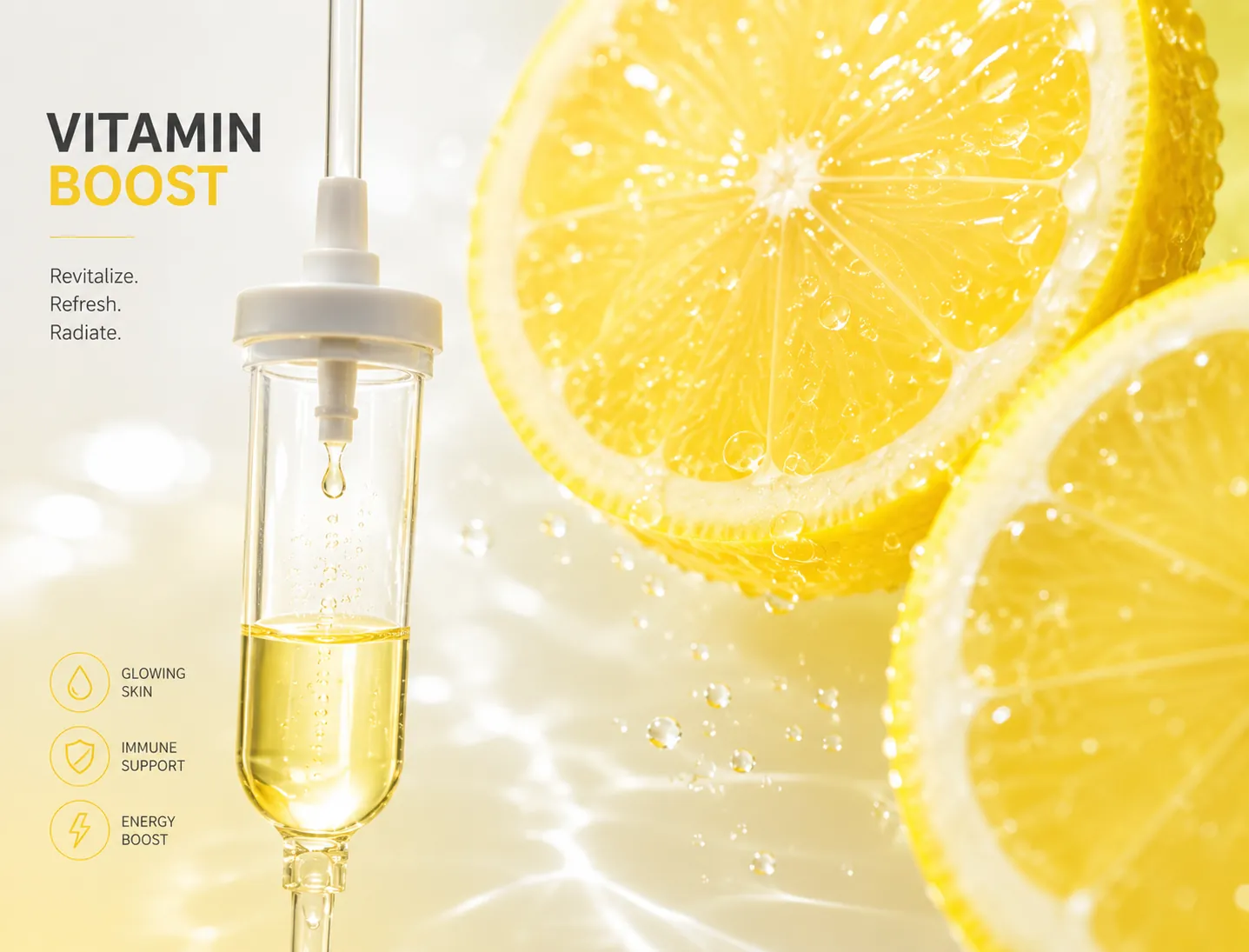
[Key points of this article]
- With a high-dose vitamin C IV drip, a feeling of physical lightness is often noticed from the same day to the next day, while skin tone and texture are often noticed after several sessions. The effect generally lasts about a few days to one week.
- The difference from oral vitamin C lies in the blood concentration. Because there is an upper limit to absorption from the intestine, the IV route is chosen with the aim of reaching concentrations that oral intake cannot achieve.
- For cosmetic purposes, it is common to start at a pace of once a week to once every two weeks, and to widen the intervals once the condition has stabilized.
- Reactions such as pain along the vein, dry mouth, and IV leakage may occur, and because there is a risk of hemolysis in people with G6PD deficiency, a blood test beforehand is a prerequisite.
- Because the cost varies with the dose and number of sessions, please check the treatment reservation page.
Six changes that may be expected from a high-dose vitamin C IV drip
To state the conclusion first, this drip works in the direction of "preparing the foundation of the skin while also supporting the body's condition." Since vitamin C plays several roles in the body, the changes that may be expected are not limited to just one.
- Firmness and elasticity — Vitamin C works as a coenzyme that is essential for collagen production. Because new collagen cannot be made when the raw materials are lacking, increasing the supply may contribute to building that foundation.
- Skin tone — Vitamin C is known to be involved in the process by which melanin is produced, so an influence on uneven color and a dull appearance may be expected. However, this is not a treatment that removes clearly demarcated spots.
- Antioxidant action — Vitamin C acts as an antioxidant in the body against oxidative damage caused by UV rays and stress. It is positioned as a way of preparing for the burden received day after day.
- Dryness and texture — Vitamin C may support processes involved in the skin's barrier function and moisture retention, and some people receive it at the change of seasons.
- Fatigue and sluggishness — Vitamin C is also involved in hormone synthesis in the adrenal glands and in the production of neurotransmitters. Since consumption increases during demanding periods, some people notice changes in how they feel physically when it is replenished.
- Condition management — Vitamin C is known as a nutrient that supports the function of cells involved in immunity. Some people choose it for ongoing use at the change of seasons or during periods with many contacts with other people.
Note that while this drip is sometimes discussed in the context of cancer treatment, this article deals only with cosmetic purposes.
Time until effects are noticed, and how long they last
Many people feel sensations such as physical lightness or waking up more easily the next morning from the same day through the following day. On the other hand, skin tone and texture do not change greatly in a single session; it is common to notice that "makeup goes on differently" after several sessions.
The duration is generally about a few days to one week. This is because vitamin C is a water-soluble nutrient that cannot be stored in the body, and any excess is excreted in the urine. This property is the reason the treatment is repeated at set intervals rather than being completed in one session.
Where the difference from oral vitamin C lies
The reason the IV route is chosen even though it is the same nutrient is that the blood concentration reached differs. There is an upper limit to absorption from the intestine, so even if the oral dose is increased, the blood concentration plateaus at a certain level. Doubling the amount taken does not double the concentration.
Because the drip is delivered directly into the blood vessel without passing through the digestive tract, it reaches concentrations that oral intake cannot achieve. This difference in concentration may broaden the range of actions that can be expected. However, it is not simply a matter of the higher the concentration the better; the dose is determined in balance with the burden on the body.
Cases in which a high-dose vitamin C IV drip is often considered
Who it suits depends on where the goal is placed.
Cases often considered
- You want to refine the surface with lasers or injections while also supporting the foundation from within
- You have frequent UV exposure and are concerned about the burden of oxidation
- Skin dryness or a dull appearance becomes more pronounced depending on the season
- Busy periods have continued, and both your skin condition and physical condition have declined at the same time
- You cannot take downtime and are looking for a method that does not produce visible changes in appearance
With an IV drip there is no procedure other than inserting the needle, and redness or swelling does not appear on the face. Being easy to receive even during periods with a packed schedule is what distinguishes it from treatments applied from the outside.
Areas that are hard to address with this alone
Clearly demarcated spots, deep wrinkles, and contour changes due to sagging are issues of structure and pigment. Since changes are hard to see with an approach that only supports the foundation nutritionally, when these are the main complaints, a plan combining lasers or injections is considered. Organizing what your main goal is before consulting makes it easier to decide on a direction.
What is a high-dose vitamin C IV drip
A high-dose vitamin C IV drip is a method in which vitamin C is administered intravenously in amounts of tens of grams. The amount contained differs greatly from that of general vitamin injections or cosmetic IV drips.
A dedicated preparation that does not contain preservatives is used. Because the specifications differ from those of general vitamin C injection preparations distributed in Japan, products imported from overseas may be used. When an unapproved product is used, key points at the time of consideration include whether this fact, the procurement route, whether a product with the same ingredient is approved in Japan, and information on how it is handled in other countries can all be confirmed in advance.
The time required for administration varies with the amount, but about 30 minutes to 1 hour is the general guide. There is no procedure other than inserting the needle, and you can go home immediately after it ends.
Three points that influence the effects of a high-dose vitamin C IV drip
Even with the same drip, how it is felt can differ. The reasons are mainly the following three.
Point 1: Dose
If the amount changes, the blood concentration reached also changes. It is common to start with a small amount and adjust while observing the body's response; a large amount is not given all at once from the first session. What amount to build the plan around is an item to discuss at the consultation.

Point 2: Intervals that are too long
Because it is water-soluble, it does not remain in the body, and if the intervals are long, the effects do not accumulate. Receiving it only once a month means it is reset each time. If you want to notice changes, it is important first to keep the intervals short and build up sessions for a certain period.
Point 3: Lifestyle habits
Smoking, strong UV exposure, lack of sleep, and mental stress all increase the consumption of vitamin C. When consumption is high, the amount remaining on balance decreases even when it is replenished. Rather than trying to push through with the drip alone, also working on reducing consumption is more likely to lead to results.
Guideline frequency and number of sessions for a high-dose vitamin C IV drip
For cosmetic purposes, the following approach is common.
| Stage | Guideline frequency | Positioning |
|---|---|---|
| Introductory phase | Once a week to once every two weeks | A period for adjusting the dose while observing the body's response |
| Maintenance phase | Once every two weeks to once a month | A period for maintaining the condition |
| According to physical condition | At the change of seasons or during periods of high burden | Return to a higher frequency as needed |
The first session starts with a smaller amount, and if there are no problems, adjustments are made from the next session onward. There is no set number of sessions at which treatment is complete; whether to continue is judged according to your goals and physical condition.
Differences from oral supplements and cosmetic IV drips
Placing it alongside other ways of replenishing vitamin C and drips for cosmetic purposes makes its positioning easier to see.
| Item | High-dose vitamin C IV drip | Oral supplements | Skin-brightening drip (glutathione) |
|---|---|---|---|
| Mechanism | Administered directly into the blood vessel to reach a high blood concentration | Absorbed from the intestine | An antioxidant is administered into the blood vessel |
| Main purpose | Firmness, tone, antioxidant action, physical condition | Everyday nutritional replenishment | Uneven color, dull appearance |
| Concentration reached | A range oral intake cannot reach | There is an upper limit to absorption | Direct comparison is not possible because the ingredient differs |
| Guideline frequency | Once a week to once a month | Daily | Once a week to once every two weeks |
| Time required | About 30 minutes to 1 hour | None | About 15 to 30 minutes |
| Cost | Depends on the dose | Relatively low | Depends on the dose |
Rather than choosing just one, another option is to replenish with supplements day to day and combine drips during periods when you want to focus on improving your condition. Whether combinations are possible and in what order is judged at the consultation.
Disadvantages, risks, and side effects of a high-dose vitamin C IV drip
It is important to understand not only the expected actions but also the reactions that can occur. The frequency and degree vary from person to person.

Pain along the vein and IV leakage
Because a highly concentrated fluid flows through the vein, you may feel pain or discomfort from the insertion site up through the arm. It often eases when the administration rate is slowed, so it is important to tell us rather than enduring it. Also, if the needle leaks outside the vein, that area swells and becomes painful. Please let us know as soon as you notice anything unusual.
Dry mouth and frequent urination
When a highly concentrated fluid is administered, fluid shifts occur due to osmotic pressure, which can cause a dry throat or more frequent trips to the bathroom. This is a normal response of the body, and drinking fluids before and after the drip is recommended.
Symptoms resembling hypoglycemia
Because the structure of vitamin C resembles glucose, after administration the body may respond as if mistaking it for glucose, which can cause lightheadedness or a feeling of weakness. This is more likely to occur if you receive it on an empty stomach, so it is important to eat before receiving it.
Risk of hemolysis in G6PD deficiency
In people who are congenitally low in the enzyme G6PD (glucose-6-phosphate dehydrogenase), it has been noted that high-dose vitamin C may cause hemolysis, a reaction in which red blood cells are destroyed. Since there are cases where people are unaware of it because there are no symptoms, a procedure of confirming this with a blood test before the first session is followed. An approach that omits this test is not recommended.
Cases where the treatment is unsuitable or requires careful consideration
For people with problems in heart or kidney function, or those on dialysis, the fluid load from the drip may affect the body, so postponing the treatment or using another method is considered. People who are pregnant or breastfeeding, or who are taking medication, must also consult in advance. In addition, when clearly demarcated spots, deep wrinkles, or sagging are the main concerns, this drip alone may not produce the expected result in these areas, and other methods such as lasers or injections are considered alongside it. Since the decision is based on examination, please tell us your medical history and any medications you are taking in advance.
The treatment process and how to spend the day
Since the first visit includes testing, it is important to come with more time to spare than usual.
- Examination and counseling — We confirm your goals, physical condition, medical history, and medications you are taking.
- Blood test — At the first visit, G6PD is checked. This may be split across different days until the results are available.
- IV drip — About 30 minutes to 1 hour in a reclining chair or similar. Reading or using a smartphone is possible.
- Completion and follow-up check — The needle is removed, bleeding is stopped, your condition is checked, and the session ends.
On the day, avoid an empty stomach and drink fluids frequently. After the drip you can go about your day as usual, but if you feel lightheaded, it is important to rest rather than push yourself. If bruising appears at the insertion site, it takes about a few days to one week for the color to fade.
Frequently asked questions about the effects of a high-dose vitamin C IV drip
When can I notice the effects?
It is common for physical lightness to be felt from the same day to the next day, and for skin changes to appear after several sessions. Because vitamin C cannot be stored in the body, this is not a treatment that is completed in one session. We recommend first continuing for several sessions at a pace of once a week to once every two weeks, and judging on that basis.
I am worried about side effects. What should I be careful about?
The main reactions are pain along the vein, dry mouth, frequent urination, and lightheadedness. The burden can be reduced with three points: do not receive it on an empty stomach, drink fluids, and tell us if you feel pain. G6PD deficiency is checked with a blood test beforehand, so please do not omit the initial test.
How much does it cost?
The structure varies with the dose and the number of sessions. Since this treatment assumes continuation, we recommend thinking in terms of the total amount across the expected number of sessions, not just the price per session. At the first visit, the cost of the blood test may be added. Please check the specific amounts on the treatment reservation page.
Can supplements be used instead?
In terms of everyday nutritional replenishment, supplements also serve a role. However, because there is an upper limit to absorption from the intestine, they do not reach the same blood concentration as a drip. Treating them as having different purposes and using them together is the realistic approach.
Can I receive it on the same day as other treatments?
There are cases where it is planned in combination with lasers or injections. However, since the judgment varies with the burden on the body and the order of treatments, whether they can be combined on the same day is decided after examination.
Summary
The effects of a high-dose vitamin C IV drip span several areas, including firmness, tone, antioxidant action, and physical condition. As a guide, physical lightness is felt from the same day to the next day and skin changes after several sessions, with a duration of about a few days to one week. Because it cannot be stored in the body, it is important to plan on the premise of building up sessions at a pace of once a week to once every two weeks.
On the other hand, reactions such as pain along the vein and dry mouth may occur, and because there is a risk of hemolysis in people with G6PD deficiency, a blood test beforehand is a prerequisite. When clearly demarcated spots or sagging are the main concerns, other methods are considered alongside it. After sharing your goals and physical condition at the consultation, please start at a frequency that is manageable for you. Please check the cost on the treatment reservation page.
References and sources
- Ministry of Health, Labour and Welfare, "Medical Advertising Guidelines"
- Handling information for the preparations used (please check the details at your consultation)
*This is self-pay treatment not covered by Japanese public health insurance. *Effects vary from person to person. *Side effects and risks: Pain along the vein, bruising at the insertion site or swelling due to IV leakage, dry mouth, frequent urination, lightheadedness resembling hypoglycemia, and rarely hemolysis in people with G6PD deficiency may occur. *As a guide, the standard treatment period and number of sessions involve several sessions at once a week to once every two weeks, then continuing at about once a month depending on your condition. Because prices vary with the period, campaigns, and contract conditions, please check the treatment reservation page and campaign page.
Supervised by: Director Rina Shindo (Cosmetic Dermatology)
Graduated from Shiga University of Medical Science, Faculty of Medicine, School of Medicine
2019: Sumitomo Hospital (General Incorporated Foundation)
2021: Department of Dermatology, Kobe University Hospital
2022: Chief at a major cosmetic surgery clinic
2025: Director, PGC CLINIC SHINJUKU
Supervised by: Director Rina Shindo (Cosmetic Dermatology)
- Graduated from Shiga University of Medical Science, Faculty of Medicine, School of Medicine
- 2019: Sumitomo Hospital (General Incorporated Foundation)
- 2021: Department of Dermatology, Kobe University Hospital
- 2022: Chief at a major cosmetic surgery clinic
- 2025: Director, PGC CLINIC SHINJUKU
Your next step, at your own pace.
Explore the official website for pricing and appointment information.
Pricing & booking