What Are Nose Fillers? Effects, Downtime, Risks, and How They Differ from Thread Lifts
Nose fillers are an aesthetic medical treatment in which fillers such as hyaluronic acid are injected around the nose to shape lines such as the nasal bridge, the nasal root, and the alar base. Unlike surgery that uses a scalpel, the balance of the appearance is adjusted through injection.

Nose fillers are an aesthetic medical treatment in which fillers such as hyaluronic acid are injected around the nose to shape lines such as the nasal bridge, the nasal root, and the alar base. Unlike surgery that uses a scalpel, the balance of the appearance is adjusted through injection.
At the same time, the nose is an area where blood vessels run in a complex pattern, so understanding the risks—not only the final result—is important. It is important to consider this treatment after confirming the downtime, side effects, and the differences from thread lifts and surgery.

What are nose fillers
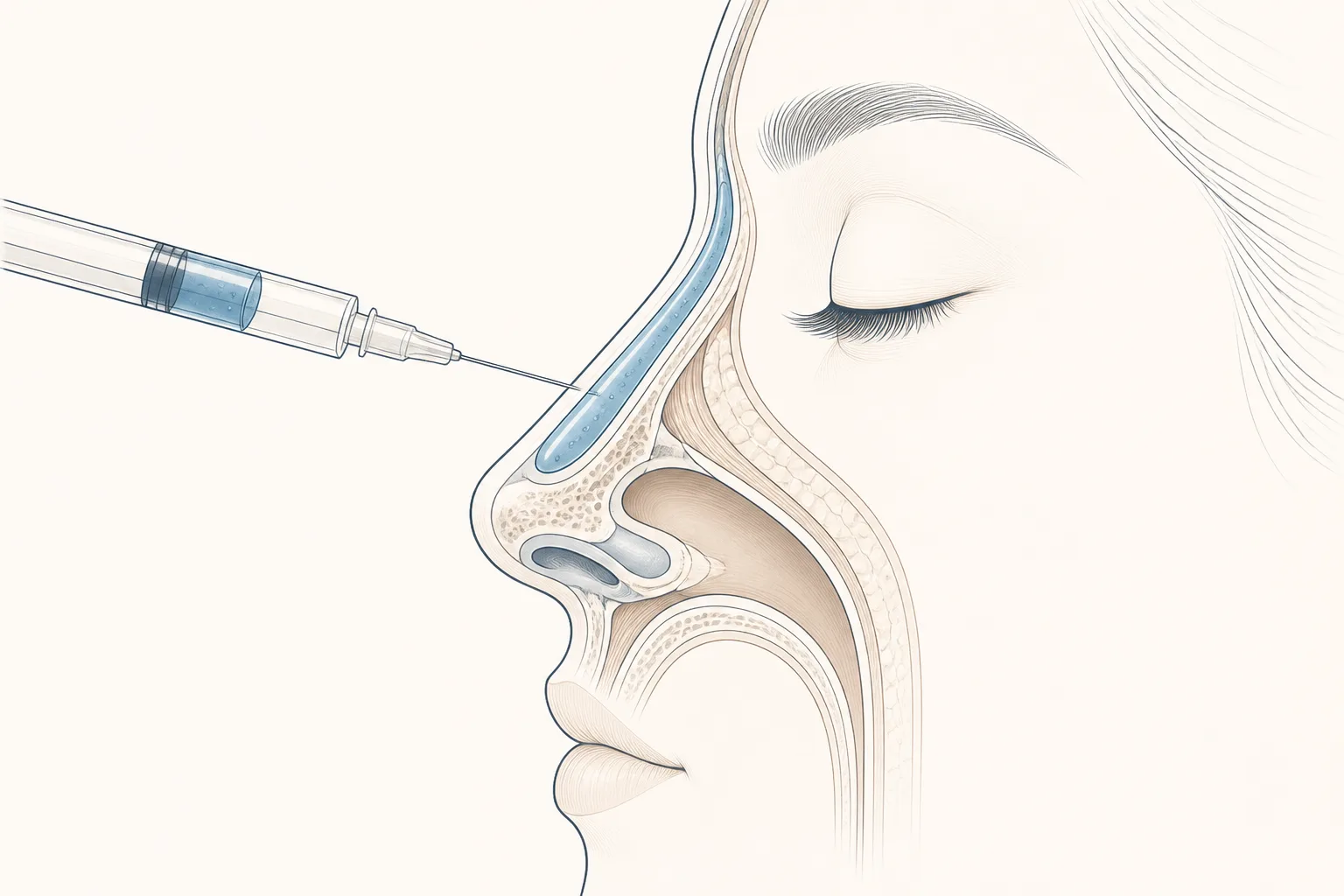
Nose fillers are a procedure that uses injectables such as hyaluronic acid to adjust the height and contour of the nose and its balance with the face as a whole. By adjusting the injection volume and sites, the aim is to create the impression of a defined nasal bridge and three-dimensional definition.
Hyaluronic acid is known as a substance that also exists within the body, but medical-grade products differ in firmness, duration, and other properties. When used in the nose, products with properties that make it easier to support shape may be selected. Results vary from person to person.
Which areas are injected?
The main areas injected with nose fillers are the nasal root, the nasal bridge, the area around the nasal tip, and the alar base. The nasal root is the part close to the glabella, and adding height here is done with the aim of shaping the beginning of the nasal bridge.
Injection into the alar base is sometimes called the so-called "aristocrat filler" (貴族フィラー). It is performed with the aim of making the hollow near the base of the nostrils and the step difference with the mouth area less noticeable, but the indications and injection volume differ depending on the area.
Changes that can be expected
With nose fillers, changes such as shaping the line of the nasal bridge, adding three-dimensional definition to the center of the face, and adjusting the balance of the profile can be expected. Rather than greatly changing the shape, it is a procedure that supplements in accordance with the existing bone structure.
When height is added to the nasal root or nasal bridge, shadowing from the eye area to the nose may become more apparent. With the aristocrat filler, improvement in the appearance of mouth-area protrusion and the hollows beside the nostrils can be expected.
Downtime with nose fillers

Downtime with nose fillers differs depending on the injection volume, the area, the individual's constitution, and the product used. In general, swelling, redness, bruising, and similar symptoms often settle within a few days to about one week.
Immediately after the procedure, the injected area may look somewhat raised, or a strange sensation may occur when it is touched. In some cases it settles over several days to several weeks and comes closer to a natural appearance.
Symptoms after the procedure
Symptoms that can occur after the procedure include swelling, redness, bruising, tenderness, a strange sensation, and a feeling of lumpiness. Most settle over time, but the degree and duration of symptoms vary from person to person.
Caution is needed if there is severe pain, a change in skin color, a change toward whitish or purple discoloration, a cold sensation, or spreading swelling. Since there may be a possibility of impaired blood flow, please consult the medical institution where you received the procedure promptly.
Points to be careful about in daily life
For a while after the procedure, it is recommended to avoid pressing the nose firmly. Care is needed with pressure from eyeglass nose pads, sleeping face-down, strong massage, and excessive stimulation during facial care.
Bathing, drinking alcohol, and vigorous exercise can promote swelling and bruising, so you may be advised to refrain from them on the day of the procedure. The timing for resuming them differs depending on the treatment content and the course of recovery, so it is important to follow your doctor's judgment.
Disadvantages and risks of nose fillers
Nose fillers are a procedure performed by injection, but as a medical act, there are disadvantages and risks. Please understand that, in addition to temporary symptoms such as swelling and bruising, serious complications may rarely occur.
The nose is an area where the course of blood vessels is complex and where there is little slack in the skin and tissue. If the injection volume is too large, or if the product is mistakenly injected into a blood vessel, this can lead to impaired blood flow, so careful assessment is necessary.
Possible side effects
Possible side effects of nose fillers include swelling, bruising, pain, lumps, asymmetry, infection, and allergic reactions. Firmness or unevenness may also be felt after injection, and follow-up observation or treatment may become necessary.
Of particular concern is impaired blood flow due to vascular occlusion. Symptoms such as a sudden change in skin color, persistent severe pain, or mottled discoloration may lead to skin necrosis, so prompt management is required.
What to know about serious complications
With fillers in the nose and around the nose, serious complications such as skin necrosis and visual impairment have been reported in rare cases. With paranasal filler (貴族フィラー) as well, the area around the alar base requires attention regarding its positional relationship with blood vessels.
If there is a sudden abnormality in your vision, severe pain, whitening or purple discoloration of the skin, or a cold sensation, please contact a medical institution without delay. Early assessment and management can affect the subsequent course.

Differences between nose fillers, thread lifts, and surgery
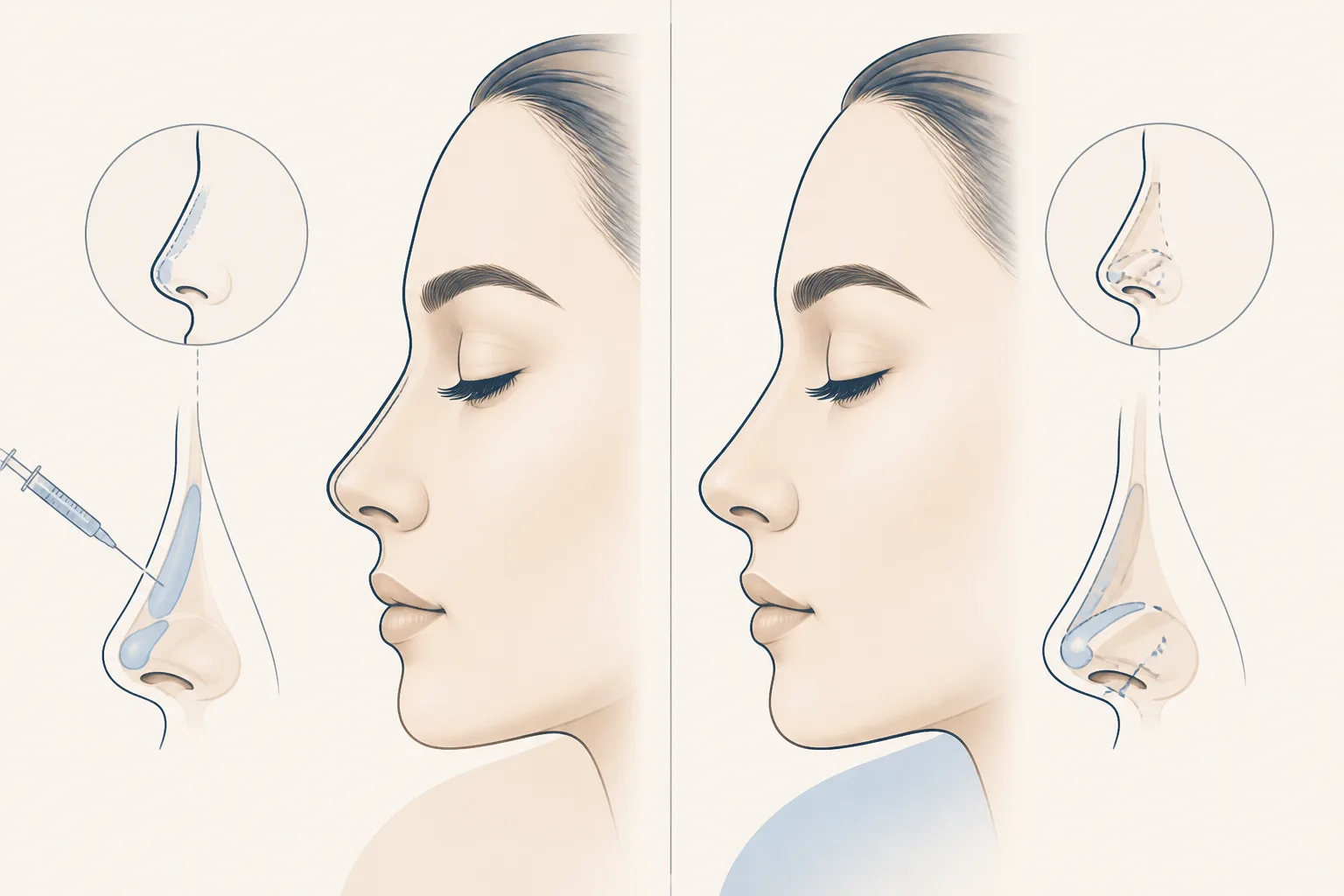
Nose fillers and thread lifts are a topic that is often compared in searches. Fillers supplement volume and lines with an injectable, whereas procedures using threads differ in that they aim at support, lifting, and assisting with shape.
Surgery is a method that approaches the cartilage, bone, and skin structure more directly. The extent of change, duration, downtime, cost, and ease of revision differ, so comparison according to your goals is necessary.
Differences between injection, threads, and surgery
Nose fillers are a procedure that supplements height and hollows through injection. The procedure time is comparatively short and downtime may be limited in some cases, but the product is absorbed over time.
Procedures using threads are sometimes performed with the aim of supporting the shape of the nasal tip or nasal bridge. Surgery, on the other hand, more readily aims at structural change, but swelling, fixation, suture removal, and a recovery period may be required.
Differences in who each is suited to
Nose fillers may be considered by people who want to slightly shape the line of the nasal bridge or nasal root without surgery, or who want to supplement the balance of their profile. They can be an option when mild adjustment, rather than a large change, is desired.
On the other hand, if you wish to greatly change the direction of the nasal tip, the width of the nose, skeletal height, or the shape of the cartilage, threads or surgery may also be considered. Since the suitable method differs depending on your condition, a doctor's judgment is necessary.
Pricing for nose fillers
Because nose fillers are self-pay treatment not covered by Japanese public health insurance, the cost differs from clinic to clinic. The price varies depending on the product used, the injection volume, the treatment area, the difficulty of the design, and whether consultation fees or anesthesia fees are included.
Specific amounts vary depending on the time period and campaigns. When considering treatment, it is reassuring to check what is included in the total amount, whether there are additional fees, and how follow-up visits or revisions are handled.
Price range
The price of nose fillers changes depending on the type and amount of product used and the area injected. The amount required may also differ depending on whether only the nasal bridge is treated, or whether the nasal root and alar base are included.
The aristocrat filler is sometimes handled as an injection for the hollows around the alar base and the nasolabial folds, and its fee structure may be separate from that of injection into the nasal bridge. For details, please check the treatment reservation page or the campaign page.
Reasons the cost varies
Reasons the cost varies include the properties of the product, the injection volume, the treatment area, the complexity of the design, and whether anesthesia or a cannula is used. When a product with different firmness or duration is selected, there may be a difference in price.
In addition, first-time prices or campaign prices may be set, but the indications and conditions may be limited. It is important to check not only the price but also the explanation of risks and the aftercare system.
People for whom nose fillers may be worth considering

Nose fillers are a procedure considered by people who are hesitant about surgery and want to shape the impression of the nasal bridge or nasal root through injection. They can also be an option when you want to make the balance of your profile or the hollows beside the nostrils less noticeable.
However, they may not be suited to wishes such as greatly changing the nasal tip, narrowing the width of the nose, or changing the shape of the bone structure or cartilage. It is important to align in advance the change you wish for with the range that the procedure can address.
In addition, those who are pregnant or breastfeeding, those with infection or inflammation at the injection site, those currently using certain medications, and those with a history of severe allergy may not be able to receive the procedure. Please report such information carefully in advance.
Flow of the procedure

Nose fillers are generally performed in the following flow: counseling, examination, design, injection, and follow-up check. In the counseling, the desired change, past treatment history, allergies, and medication status are confirmed.
In the design stage, the injection sites and volume are considered while looking at the balance from the front, at an angle, and in profile. By checking not only the nose but also its relationship with the forehead, mouth area, and chin, it becomes easier to avoid unnatural bulging.
During injection, cooling or anesthesia may be used to reduce pain. After the procedure, swelling, changes in skin color, and the degree of pain are checked, and you receive an explanation of how to spend your time after returning home and the criteria for seeking a consultation.
At the follow-up check, the shape after the swelling has settled, any asymmetry, and the presence of lumps are confirmed. If you have any symptoms of concern, do not rub or press the area on your own judgment; please consult a medical institution.
Frequently asked questions
Do nose fillers hurt?
With nose fillers, you may feel a pricking pain when the needle or cannula is inserted, a sensation of pressure during injection, and a dull pain after the procedure. How pain is felt differs depending on the area, the injection volume, and the individual's constitution.
Methods such as anesthetic cream, local anesthesia, and cooling may be used to reduce pain. If severe pain continues for a long time, or if it is accompanied by a change in skin color, prompt consultation is necessary.
How long does it last?
The duration of nose fillers differs depending on the type of product used, the injection site, the individual's constitution, metabolism, and lifestyle. In general, a guideline of several months to about one and a half years may be given.
Since the filler gradually settles in and is absorbed over time, re-injection may be considered as needed. However, caution is needed because excessive additional injection can lead to an unnatural shape and risks to blood flow.
How does it differ from the aristocrat filler?
"Aristocrat filler" is a term referring mainly to a procedure in which filler is injected into the area near the base of the nostrils known as the alar base. It differs from nose fillers that make the nasal bridge look higher in terms of the injection site and purpose.
It is considered when you want to make the hollows beside the nostrils or the step difference with the mouth area less noticeable, but as unsatisfactory outcomes of paranasal filler (貴族フィラー), problems such as excessive bulging, asymmetry, an unnatural look or feel, and impaired blood flow can sometimes occur. A doctor's judgment is necessary regarding suitability.
Disclaimer
*This is self-pay treatment not covered by Japanese public health insurance<br> *Results vary from person to person<br> *Side effects and risks: swelling, bruising, pain, lumps, asymmetry, vascular occlusion, skin necrosis, infection, and others<br> *The standard treatment period and number of sessions involve swelling for roughly 1 day to 1 week, with effects lasting approximately several months to one and a half years; side effects and the procurement route for unapproved devices, etc., must be confirmed in advance. Prices vary depending on the time period, campaigns, and contract conditions, so please check the treatment reservation page or the campaign page.
Your next step, at your own pace.
Explore the official website for pricing and appointment information.
Pricing & booking