How effective is Botox for a gummy smile? Differences from other treatments explained
With Botox for a gummy smile, changes appear in 2–3 days and last about 3–6 months. It tends to work best when the upper lip movement is strong. We outline how to distinguish the 3 underlying causes, along with a comparison table covering mucosal surgery and dental procedures.

[Key points of this article]
Botox for a gummy smile is a procedure that reduces the movement of the muscles that lift the upper lip, performed with the aim of narrowing the area of gum that shows when you smile.
Typically, changes begin to appear 2–3 days after injection, settle within 1–2 weeks, and last about 3–6 months.
A response can be expected in cases where strong upper lip movement is the main background factor. When the cause lies in the bone structure or the length of the teeth, injection alone is less likely to produce the expected result.
If the dose is too high, the upper lip may drop too much and the expression may look stiff when smiling. Starting with a small amount is an important consideration.
Because the cost varies with the number of units injected, please check the treatment booking page.
*This is self-pay treatment not covered by Japanese public health insurance. *Results vary between individuals. *Risks and side effects: bruising or swelling at the injection site, asymmetry of the upper lip, an unfamiliar feeling in facial expression, and headache may occur.
What is Botox for a gummy smile?
Botox for a gummy smile is a procedure in which a small amount of botulinum toxin preparation is injected into the muscles that lift the upper lip, reducing the movement of the upper lip when smiling. Rather than altering the gums themselves or the bone, the concept is to adjust excessive lifting of the lip.
Since it does not involve a surgical procedure, it is often considered at the stage when someone wants to try something first. However, it does not work for every type of gummy smile. Let us begin by reviewing the definition and the mechanism.
What is a gummy smile? The criterion for visible gums
A state in which 3 mm or more of the gum above the upper front teeth shows when smiling is used as one guide for a gummy smile. However, it is not determined by numbers alone; the impression changes depending on the size of the mouth, the alignment of the teeth, and the overall balance of the face.
Visible gums are not in themselves abnormal. Whether it bothers you depends on how you feel about it, so this is an area treated as an aesthetic concern rather than a medical problem. Try smiling naturally in front of a mirror and check how far the upper lip rises.
The muscles Botox acts on
The upper lip is lifted by several muscles working together. Among them, the levator labii superioris alaeque nasi, which runs from beside the nose toward the upper lip, together with the surrounding levator labii superioris and zygomaticus minor, are mainly involved. When these muscles contract strongly, the upper lip is lifted high and a wide area of gum is exposed.
Botox temporarily suppresses the nerve signals reaching these muscles. As a result, the extent to which the upper lip rises becomes smaller, and the visible area of gum may narrow. Because the muscle is not removed but only weakened in movement, the original state returns over time.
The amount injected is very small. Compared with use for expression lines, the number of units is modest, and a common method is to inject 1–2 points on each side. Because a small difference in dose directly affects the outcome in this area, careful adjustment is necessary.
Effects and what can be expected from Botox for a gummy smile
To state the conclusion first, what can be expected is "narrowing the area of gum that shows when smiling." The height of the gums or the length of the teeth does not change; the appearance changes because the range of lip movement changes.
Changes that can be expected
Excessive lifting of the upper lip when smiling is reduced
The visible area of gum becomes narrower
The fullness of the upper lip is maintained, making the lip less likely to look thin when smiling
The habit of covering the mouth with a hand when smiling in front of others decreases
Because no surgical procedure is involved, being able to return to daily life the same day is another reason it is often considered. In addition, since the effect wears off, there is the reassurance that even if the outcome differs from what you imagined, it will return over time.
When the effect appears and when it peaks
Changes are generally first noticed about 2–3 days after injection. This is because there is a time lag before the signals from the nerve to the muscle are suppressed, so it is too early to judge on the day itself if nothing has changed.
The change settles in about 1–2 weeks, and the state at this point serves as a guide to the final outcome. The first session often starts with a modest amount, and an approach of deciding on additional injection at a follow-up examination 2 weeks later is sometimes chosen.
Characteristics of gummy smiles that respond well
If strong upper lip movement is the main background factor, there is a tendency to notice the change more readily. The following characteristics serve as a guide.
The gums are barely visible when not smiling
When smiling, the upper lip lifts considerably and the lip becomes thin
The distance between the upper lip and the nose is relatively short
The teeth are of standard length, and there is no sense of the gums covering them thickly
Conversely, if the gums are visible even when not smiling, or if the upper jaw bone is vertically long, lip movement is not the only cause. This assessment is the most important part when choosing a method.
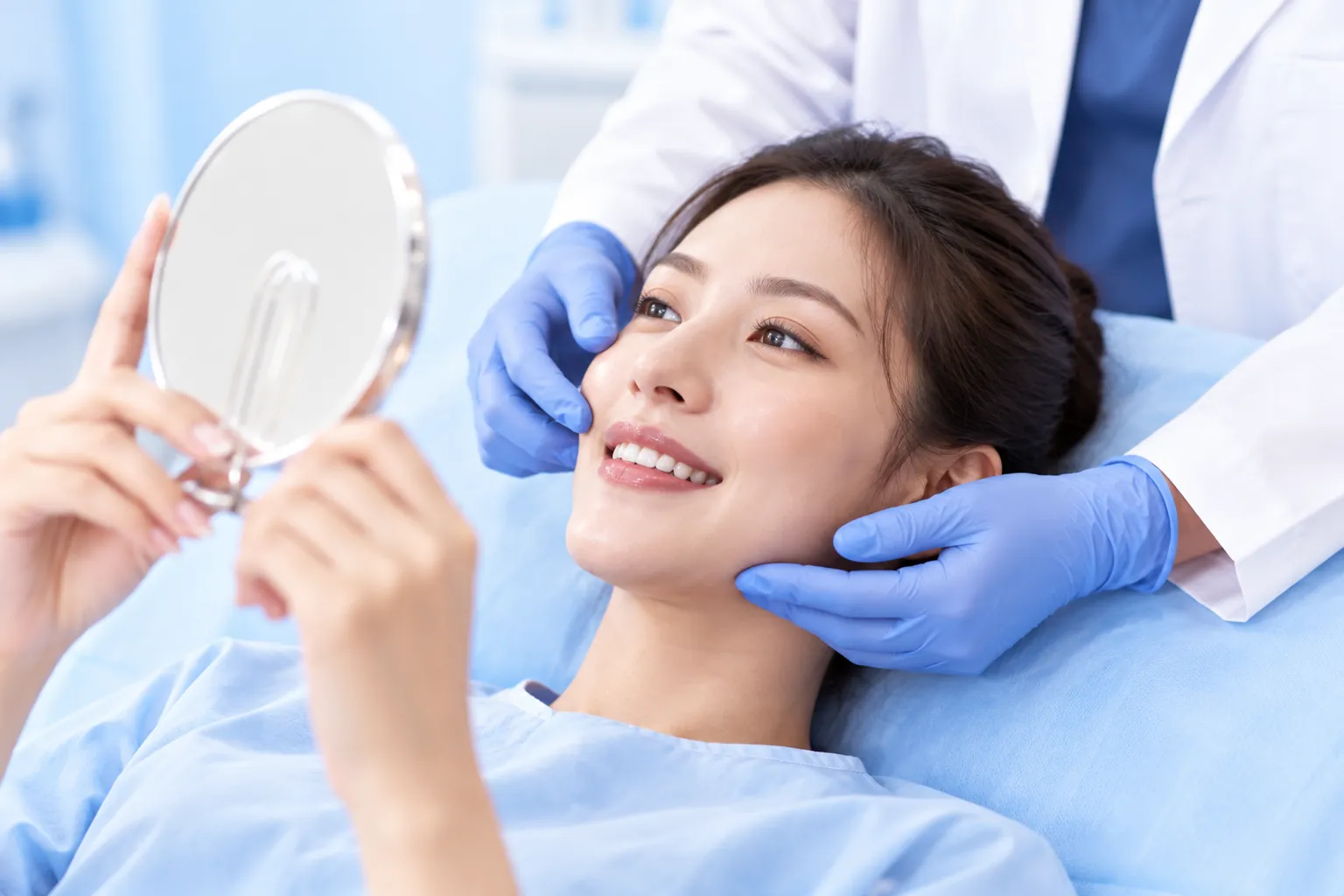
The 3 causes of a gummy smile and the type suited to Botox
The background of a gummy smile can be broadly divided into 3 categories. The suitable method changes depending on which one is predominant.
Cause 1: Strong movement of the muscles that lift the upper lip
This is the type in which the levator muscles of the upper lip contract strongly and the lip rises high when smiling. Of the 3, this is the area Botox can address most readily. If it is not noticeable when not smiling but the gums suddenly show when you smile, this factor may be central.
Cause 2: Factors involving the teeth or gums
In some cases the gums do not recede sufficiently during the process of tooth eruption, so the visible portion of the teeth is short. Because the gums cover the teeth thickly, the proportion of gum relative to the length of the teeth looks large. In this case, management centers on the dental field, and injection is less likely to produce a change.
Cause 3: The bone structure of the upper jaw
If the upper jaw bone has grown long in the vertical direction, the gums show even when not smiling. In this case, reducing lip movement does not greatly change the visible area. This is an area where orthodontic or surgical methods are considered.
A simple self-check
Diagnosis is made at an examination, but there are points you can check as a guide.
Are the gums visible with a neutral expression? — If they are, bone structure or dental factors may be involved.
Does the upper lip become thin when you smile? — If it does, there is a tendency for strong muscle movement.
The distance between the upper lip and the nose — If it is short, the gums are more easily exposed with only slight movement.
These are guides only. In practice, multiple factors often overlap, and the plan is put together after checking the state when smiling using photographs and video.
Differences between Botox for a gummy smile and other treatments
There are several methods for a gummy smile. Because each acts on a different target, it is important to choose according to the cause.
Item | Botox | Surgery to adjust the mucosa of the upper lip | Procedures on the gums or teeth | Orthodontic or surgical methods |
|---|---|---|---|---|
Target acted on | The muscles that lift the upper lip | The range of motion over which the upper lip rises | Gum thickness and the visible length of the teeth | The bone structure of the upper jaw |
Suitable cause | Type with strong muscle movement | Type with strong muscle movement | Gum or dental factors | Skeletal factors |
How the effect appears | From 2–3 days, settling in 1–2 weeks | From after the procedure | From after the procedure | Gradually, over the course of the treatment period |
Guide to duration | About 3–6 months | May last a long time | May last a long time | May last a long time |
Downtime | About a few days if bruising occurs | Swelling and pain for about 1–2 weeks | About a few days to 2 weeks depending on the procedure performed | Varies greatly depending on the method |
Reversibility | Returns over time | Difficult to reverse | Difficult to reverse | Difficult to reverse |
How cost is determined | Depends on the number of units injected | Depends on the nature of the surgery | Depends on the extent of the procedure | Depends on the overall treatment plan |
How to choose between them
The dividing point is whether the cause lies in the muscles. If the gums show only when smiling, a realistic approach is to first confirm the change with injection. Because the effect wears off, it is also used as a basis for judgment before considering surgical methods.
On the other hand, if the gums are visible even when not smiling, or if the teeth look short, these are cases where injection alone is less likely to produce the expected result. In such cases, consultation with dentistry or oral surgery comes first.
Cases where combined treatment is considered
When the upper lip lacks fullness and stretches thin on smiling, a method of adding volume to the upper lip with hyaluronic acid in addition to Botox may be considered alongside. The idea is that with more fullness in the lip, gum exposure when the lip rises is visually reduced.
However, injecting too much makes the mouth area look protruded, so the amount needs to be adjusted. Whether to perform them on the same day or at separate times is decided by looking at the state of swelling.
Duration of Botox for a gummy smile and a guide to re-injection
The guide for duration is about 3–6 months. This corresponds to the period until the suppressed nerve endings extend new branches and signals to the muscle return.
The first session may feel shorter. Those with stronger muscle movement tend to see the effect wear off sooner, and in some cases the interval lengthens from the second session onward. Rather than returning abruptly to the original state, the general experience is that the range of lip lifting gradually returns.
When repeating, it is common to leave an interval of 3–4 months or more. It has been pointed out that repeating at short intervals may lead to the formation of neutralizing antibodies against the preparation, making the change harder to notice. If you have an event such as a wedding or a photo shoot, an approach of having the treatment about 1 month beforehand is chosen, allowing for the 2 weeks needed for the change to settle.
Downtime with Botox for a gummy smile
Many people are concerned about the impact on daily life. Let us go over the general course.
Redness at the injection site: about a few hours
Needle marks: from the same day to about the next day
Bruising: if it occurs, about a few days to 1 week
Mild swelling: if it occurs, about 1–2 days
The injection itself takes a few minutes, and you can go home the same day. There are no major restrictions on work or housework. The area beside the nose has a relatively large number of blood vessels, so if bruising occurs, it can be covered with concealer.
On the day, limit bathing to a shower, and refrain from vigorous exercise, alcohol, and saunas. This is because increased blood flow makes bruising more likely to spread. Rubbing or massaging the injection site firmly can cause the preparation to spread into unintended areas. It is also important to avoid pressing your face down in a prone position on the day.
Disadvantages, risks, and side effects of Botox for a gummy smile
It is important to understand the reactions that can occur and the reasons behind them. Frequency and severity vary between individuals.
Possible reactions and their reasons
Asymmetry of the upper lip — Because the attachment and strength of the facial muscles are not symmetrical, even the same dose may suppress movement to differing degrees. Adjustment with an additional injection at the follow-up examination 2 weeks later can be carried out.
An unfamiliar feeling in the expression when smiling — If the dose is too high, the upper lip may not rise sufficiently and the smile may look stiff. Some people may also feel that the upper lip looks elongated, or that the teeth are hard to see even when smiling.
Difficulty moving the mouth area — If the preparation spreads to the surrounding muscles, movements such as pursing the lips or sipping through a straw may become difficult. This is temporary and returns over time.
Difficulty with pronunciation — Rarely, some people feel that sounds using the lips, such as "pa" and "ba" sounds, are hard to pronounce. For those who often speak in front of others, choosing the timing is important.
Bruising, swelling, headache — These are reactions to the needle passing through tissue and fine blood vessels. Headache generally settles within a few days from the day of injection.
Most of these relate to the dose and the injection site. Starting with a small amount and observing the course is the basic approach for avoiding them.
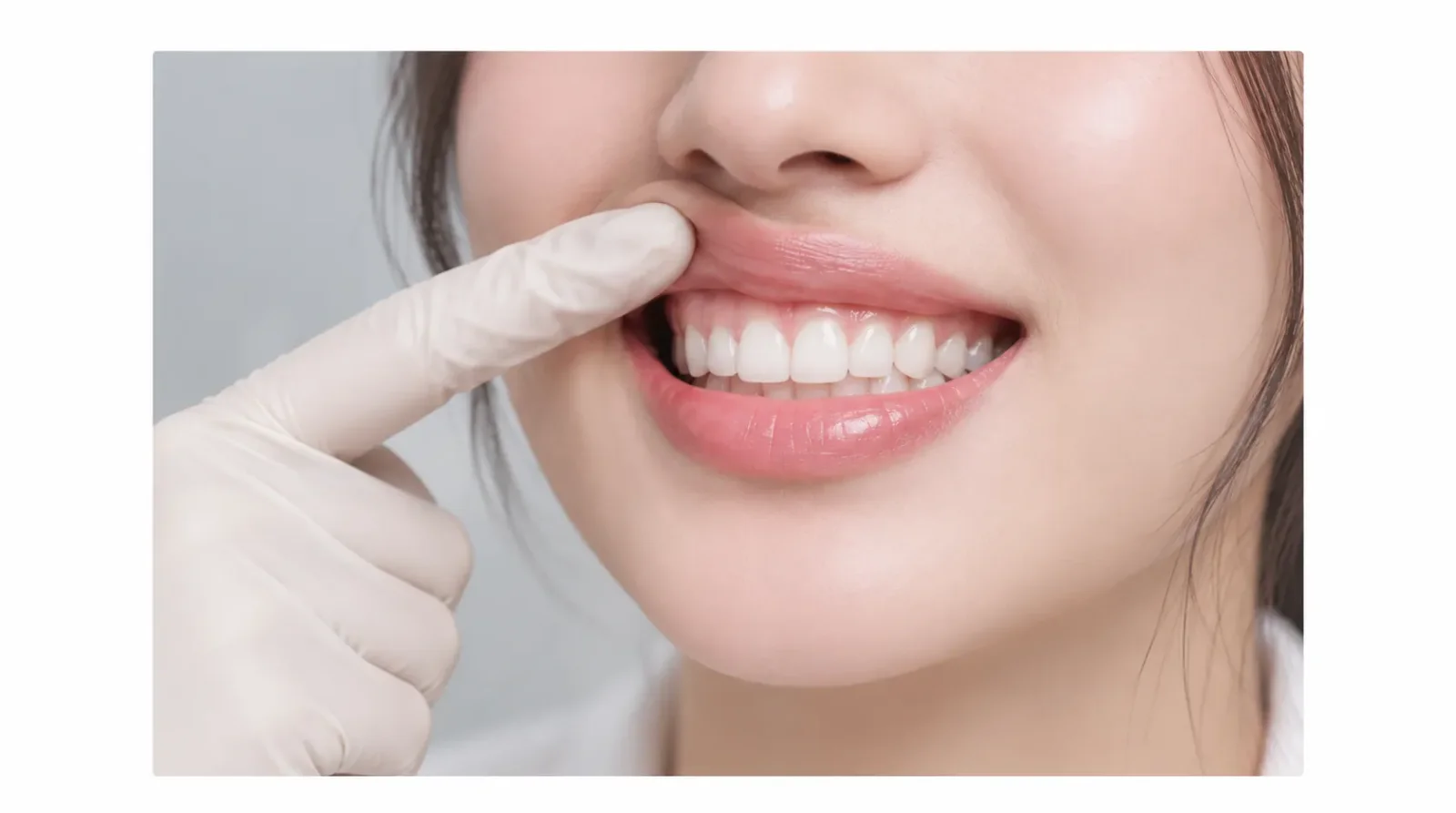
Cases unsuitable for the procedure or requiring careful consideration
Those whose main background factor is skeletal or dental
Those who are pregnant or breastfeeding
Those with a nerve or muscle disorder
Those with infection, inflammation, or skin wounds at the injection site
Those with an allergy to the components of the preparation
Those who have an upcoming engagement speaking in front of others and wish to avoid effects on pronunciation
Those seeking a result that does not revert
To repeat, if the gums are visible even when not smiling, injection is less likely to produce a change. Since the decision is based on examination, please tell us in advance about your medical history, allergy history, and any medications you are taking.
3 points for refining the outcome
Even with the same procedure, the perceived outcome changes depending on how it is carried out.
Start with a small amount — In this area, a difference of a few units directly affects the expression. If it feels insufficient, more can be added 2 weeks later, but if too much has been injected, you will have to wait for it to wear off. Starting conservatively is an important consideration.
Have an opportunity for review 2 weeks later — Once the change has settled, asymmetry and the degree of lifting are checked and adjusted as necessary. Whether or not this review takes place affects the precision of the outcome.
Do not touch immediately after injection — On the day, please avoid rubbing, kneading, or pressing your face down in a prone position. If the preparation spreads to surrounding areas, it can suppress the movement of unintended muscles.
In addition, taking a video of yourself smiling beforehand makes it easier to compare the change. A record of a natural smile provides better material for judgment than a momentary look in the mirror.
How the cost of Botox for a gummy smile is determined
The cost varies with the number of units injected and the type of preparation used. Because the amount injected for a gummy smile is small, the pricing is generally more modest than for treatment of expression lines.
Since this is a procedure premised on continuation, we recommend considering not only the amount per session but the total over the number of sessions in a year. Assuming repetition every 3–6 months, this works out to roughly 2–3 times a year. Please check the treatment booking page for specific amounts.
Frequently asked questions about Botox for a gummy smile
How long does it take to notice the effect?
Generally, changes begin to be noticed in about 2–3 days and settle in 1–2 weeks. Since a major change is often not seen on the day itself, it is important to allow some time before evaluating. Judgment of the outcome is made 2 weeks later.
Is it painful?
An ultra-fine needle is used and the amount injected is very small, so the procedure itself is over in a short time. Anesthetic cream or cooling is used as needed. The area beside the nose is prone to feeling stimulation, but the injection time itself is only a few minutes.
Will my expression become unnatural if I keep having injections?
Within the range of appropriate dose and intervals, problems due to accumulation are generally not reported. The factor that makes it look unnatural is too large a dose per session. With an approach of starting with a small amount and adjusting 2 weeks later, you can continue while maintaining a natural expression.
What happens if I stop?
Because muscle movement returns to normal, the state returns to what it was before the procedure. It is not something where a rebound makes things worse than before. However, some people feel that, with repetition, the way the muscles are used changes and the return becomes more gradual.
Can I have the procedure even if the cause is skeletal?
When the bone structure is the main cause, injection alone is less likely to produce the expected result. However, when multiple factors overlap, it can be used to suppress lip movement with injection and then judge how to address what remains. The starting point is to determine at an examination what the main cause is.
Summary
Botox for a gummy smile is a procedure that reduces the movement of the muscles that lift the upper lip, narrowing the area of gum that shows when you smile. Changes appear from 2–3 days, settle in 1–2 weeks, and last about 3–6 months.
What matters is whether the cause lies in the muscles. If you are the type whose gums show only when smiling, the change is easier to notice; on the other hand, if the gums show even with a neutral expression, or if the teeth look short, management centers on dentistry or oral surgery. If this assessment is skipped, repeated treatments will not achieve a change you find satisfactory.
Because too high a dose makes the smile look stiff, a realistic approach is to start with a small amount and adjust 2 weeks later. As the effect wears off, it is also used as a basis for judgment before considering surgical methods. First, please confirm at an examination which type your gummy smile is. Please check the treatment booking page for costs.
References and sources
Ministry of Health, Labour and Welfare, "Medical Advertising Guidelines"
Handling information for the preparation used (please confirm details at your examination)
*This is self-pay treatment not covered by Japanese public health insurance. *Results vary between individuals. *Side effects and risks: bruising, swelling, redness, or pain at the injection site, asymmetry of the upper lip, an unfamiliar feeling in the expression when smiling, difficulty moving the mouth area, difficulty with pronunciation, headache, and allergic reactions such as rash or itching may occur. *As a guide, the standard treatment period and number of sessions is about 3–6 months per injection, and when continuing, it is common to repeat at intervals of 3–4 months or more. Prices vary with the season, campaigns, and contract conditions, so please check the treatment booking page and campaign page.
Supervising physician: Dr. Rina Shindo, Director (Aesthetic Dermatology)
Graduated from Shiga University of Medical Science, School of Medicine
2019 Sumitomo Hospital (General Incorporated Foundation)
2021 Department of Dermatology, Kobe University Hospital
2022 Chief at a major cosmetic surgery clinic
2025 Director, PGC CLINIC SHINJUKU
Your next step, at your own pace.
Explore the official website for pricing and appointment information.
Pricing & booking