What is Fillroad? A Clear Guide to Its Effects, Duration, and Precautions
Fillroad is a PN-containing skin booster used over multiple sessions to help improve skin quality. We have organized how the effects appear, a guide to how long they last, the differences from Rejuran, and risks such as bruising. Use it as material for your decision before considering treatment.

[Key points of this article]
Fillroad is a type of skin-conditioning injection (skin booster) whose main ingredient is PN (polynucleotide), intended to help improve the texture of the skin.
The effects appear gradually, and treatment over multiple sessions is often considered; how long the results last varies from person to person.
It is considered for those concerned about fine lines, pores, loss of firmness, or dullness, but there are also risks associated with injections, such as bruising and swelling.
Below, we go through the effects, duration, downtime, risks, and how to think about pricing, in order.
Many people who come across the name "Fillroad" may wonder what kind of treatment it is. While it is known as an injection that helps improve skin quality, its effects, duration, and risks can be hard to understand. In this article, we organize information about Fillroad within the scope of facts and general knowledge.

What is Fillroad?
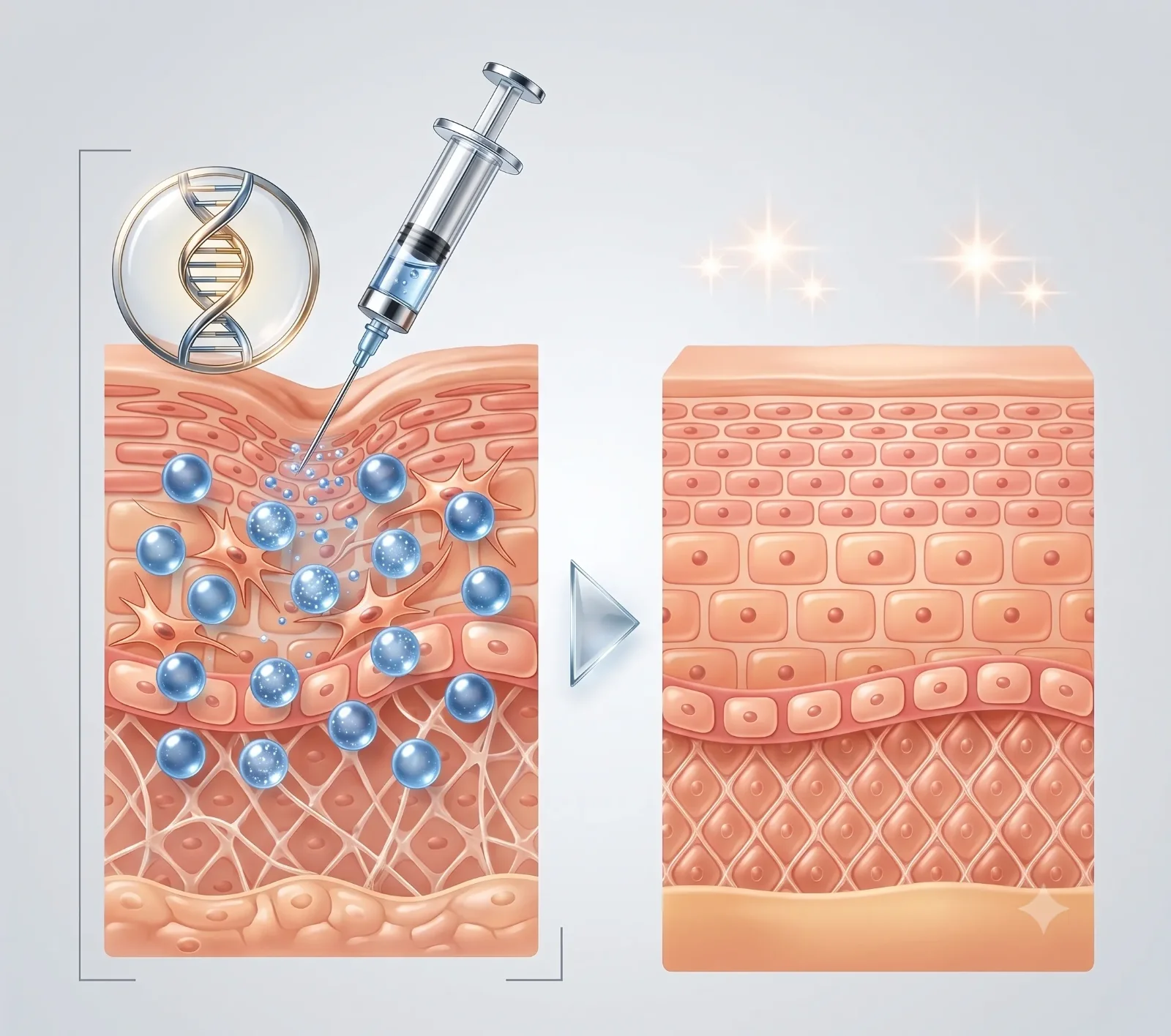
Fillroad is an injection based mainly on PN (polynucleotide) and is regarded as one of the skin-conditioning injections (skin boosters) intended to help improve skin texture. By delivering the ingredient directly into the skin, it may act on functions related to the skin's inherent moisture and firmness. Rather than adding significant volume, it is characterized by aiming to address the condition of the skin itself.
PN is known as an ingredient involved in helping to maintain the skin environment. By delivering this ingredient into the skin, changes may be expected in dryness, loss of firmness, and fine skin concerns. However, how these appear varies from person to person.
The area and amount injected are generally adjusted according to the condition of the skin and the site. In addition to the whole face, it may be used on areas where dryness and loss of firmness tend to be noticeable, such as around the eyes and the cheeks. Because the treatment content is not uniform, it is important to confirm the details during a consultation beforehand.
Effects that may be expected from Fillroad
Typical targets include fine lines caused by dryness, noticeable pores, loss of firmness, and a dull appearance. By delivering ingredients that help condition the skin environment, the aim is a smooth and well-conditioned impression of the skin.
Rather than producing a large change with a single session, such effects often appear little by little through treatment over multiple sessions. This is because the condition of the skin is not considered to be something that is completed with a single stimulus. Since the degree of change that can be expected cannot be stated definitively, it is advisable to discuss expectations with a physician before treatment.
How long the effects of Fillroad last
How long the effects last is a point many people are concerned about. To put it simply, duration varies greatly from person to person, and this is a treatment in which receiving multiple sessions is considered in order to maintain the condition.
The ingredient delivered into the skin gradually settles in and changes over time. For this reason, rather than a single session lasting a long time, the approach of receiving repeated sessions at set intervals to condition the skin is often taken. How long results feel like they last also varies with the condition of the skin, age, and lifestyle habits.
If you wish to maintain the change, continuing treatment in line with the period when the effects settle may be considered. However, the number of sessions and intervals must be decided in consultation with a physician, and cannot be stated definitively. Post-treatment skincare and sun protection may also affect the condition of the skin.
Who Fillroad may be suited for
Fillroad is a treatment considered for those concerned about dryness, loss of firmness, or skin texture. Here we organize what kinds of wishes it may suit. However, whether it is suitable depends on the condition of the skin and individual constitution, so ultimately a physician's judgment is required.
It is considered for those concerned about fine lines caused by dryness, those who have begun to feel a decline in skin firmness and moisture, and those who wish to address pores and dullness. It also tends to be chosen by those who wish to improve the condition of the skin itself rather than greatly change their appearance.
On the other hand, careful consideration is required in the following cases: when there is inflammation or infection at the treatment site, when there is an allergy to a particular ingredient, or during pregnancy or breastfeeding. In such cases, other methods may be considered. Since suitability is not uniform, it is important to inform your physician accurately in advance, including your medical history and any allergies.

Downtime with Fillroad
Fillroad is often described as a treatment with relatively light downtime, but because it involves injections, it does not mean that no reactions occur at all. How they appear and to what degree varies from person to person.
Redness, bruising, mild swelling, or pain may occur at the injected site. These are considered to result from the needle insertion and from the process of the ingredient settling into the tissue. In most cases they subside within a few days, but depending on the site and constitution they may last longer, and bruising tends to be particularly noticeable in the eye area, where the skin is thin.
After treatment, you may be advised to refrain from vigorously rubbing or excessively stimulating the injected area. If redness or discomfort persists, or if you notice symptoms that are unusual, it is advisable to consult a physician rather than judging on your own.
Disadvantages, risks, and side effects of Fillroad
Understanding the disadvantages and risks associated with Fillroad, along with the reasons they occur, is essential when considering the treatment. Frequency and degree vary from person to person.
Bruising: Needle insertion can injure capillaries, resulting in bruising. It may look like a blue-purple bruise.
Swelling: The tissue may react temporarily to the injection, resulting in swelling.
Redness: Stimulation from the injection may temporarily make the treated area red.
Pain: You may feel pain during injection or after the treatment.
Infection: Rarely, bacteria may enter through the injection site and cause inflammation.
Most of these are regarded as reactions arising from the use of a needle and from the process of the ingredient settling into the skin, and they often subside over time. However, to reduce risks such as infection, hygiene management after treatment and care following the physician's instructions are important. If symptoms of concern persist, consulting a physician promptly is recommended.
Differences between Fillroad and similar treatments
Fillroad is sometimes compared with other skin boosters that likewise help improve skin quality. Among these, Rejuran shares the use of PN-type ingredients and is frequently compared with it. The following compares general tendencies; actual responses vary from person to person.
Item | Fillroad | Rejuran |
|---|---|---|
Main ingredient | Mainly PN (polynucleotide) | Mainly PN (polynucleotide) |
Main purpose | Improvement of skin quality, such as dryness, firmness, and pores | Improvement of skin quality and moisture |
How effects appear | Appear gradually | Appear gradually |
Downtime | Bruising and swelling may occur | Bruising and swelling may occur |
Cost | Varies by area and number of sessions | Varies by area and number of sessions |
While the two have many points in common in terms of ingredients and purpose, there are differences in their characteristics as products and in how they feel to use. Since Rejuran and others may be considered in addition to Fillroad, it is advisable to decide on an approach in consultation with a physician, taking into account the condition of your skin and your concerns.
How to think about Fillroad and pricing
Fillroad is often provided as self-pay treatment not covered by Japanese public health insurance, and costs vary depending on the area, the number of sessions, and the medical institution. Specific amounts cannot be stated definitively in this article.
Because this is a treatment for which multiple sessions are considered, it is advisable to think not only about the cost per session but also about the outlook if treatment is continued. Rather than judging by cost alone, it is important to consider factors such as the thoroughness of the consultation and whether there is a system in place for consultation after treatment.
For accurate costs, please check the treatment booking page. Prices vary depending on the period and contract conditions, so it is a good idea to confirm in advance.
Frequently asked questions about Fillroad
When will I start to feel the effects of Fillroad?
The effects appear gradually, and rather than immediately after treatment, they are often felt little by little as sessions are repeated. This is because the condition of the skin changes little by little. How the effects appear varies from person to person.
Is Fillroad painful?
Because it involves injections, you may feel stimulation or pain during injection, but this varies from person to person. It also differs depending on the site and method, so it is a good idea to discuss pain management with your physician in advance.
How many Fillroad sessions should I have?
The number of sessions required differs depending on the condition of the skin and the goal, so it cannot be stated uniformly. This is a treatment in which effects are felt gradually, and receiving multiple sessions at set intervals is often considered. It is advisable to decide the appropriate number of sessions in consultation with a physician before treatment.
Summary
Fillroad is a type of skin-conditioning injection (skin booster) whose main ingredient is PN (polynucleotide) and which is intended to help improve skin texture. The effects appear gradually, and it is a treatment in which multiple sessions are considered in order to condition the skin, with duration varying from person to person.
While downtime is regarded as relatively light, bruising, swelling, and redness associated with injections may occur, and these are considered reactions arising from the use of a needle and from the process of the ingredient settling into the skin. Understanding the disadvantages as well as the effects, and proceeding in consultation with a physician, can lead to a choice you are satisfied with.
[References and sources]
Ministry of Health, Labour and Welfare, Medical Advertising Guidelines
*This is self-pay treatment not covered by Japanese public health insurance. *Effects vary from person to person. *Side effects and risks: redness, bruising, swelling, pain, and infection may occur. *The standard treatment period and number of sessions differ depending on the condition of the skin and the goal; effects appear gradually, and receiving multiple sessions at set intervals is considered. Redness and bruising after treatment are estimated to last about a few days. Side effects and, when unapproved devices are used, the procurement route and other details must be confirmed in advance. Prices vary depending on the period, campaigns, and contract conditions, so please check the treatment booking page and campaign page.
Supervising physician: Rina Shindo, Director (Cosmetic Dermatology)
Graduated from Shiga University of Medical Science, Faculty of Medicine, School of Medicine
2019: Sumitomo Hospital (General Incorporated Foundation)
2021: Department of Dermatology, Kobe University Hospital
2022: Chief at a major cosmetic surgery clinic
2025: Director, PGC CLINIC SHINJUKU
Your next step, at your own pace.
Explore the official website for pricing and appointment information.
Pricing & booking