Can Skincare Improve Facial Redness? Differences from Rosacea and Recommended Ingredients
Whether skincare can improve facial redness depends on the cause of the redness. Here we outline how to distinguish it from rosacea, ingredients that are easy to incorporate such as ceramides, ingredients to use with caution, and 5 basic care steps.
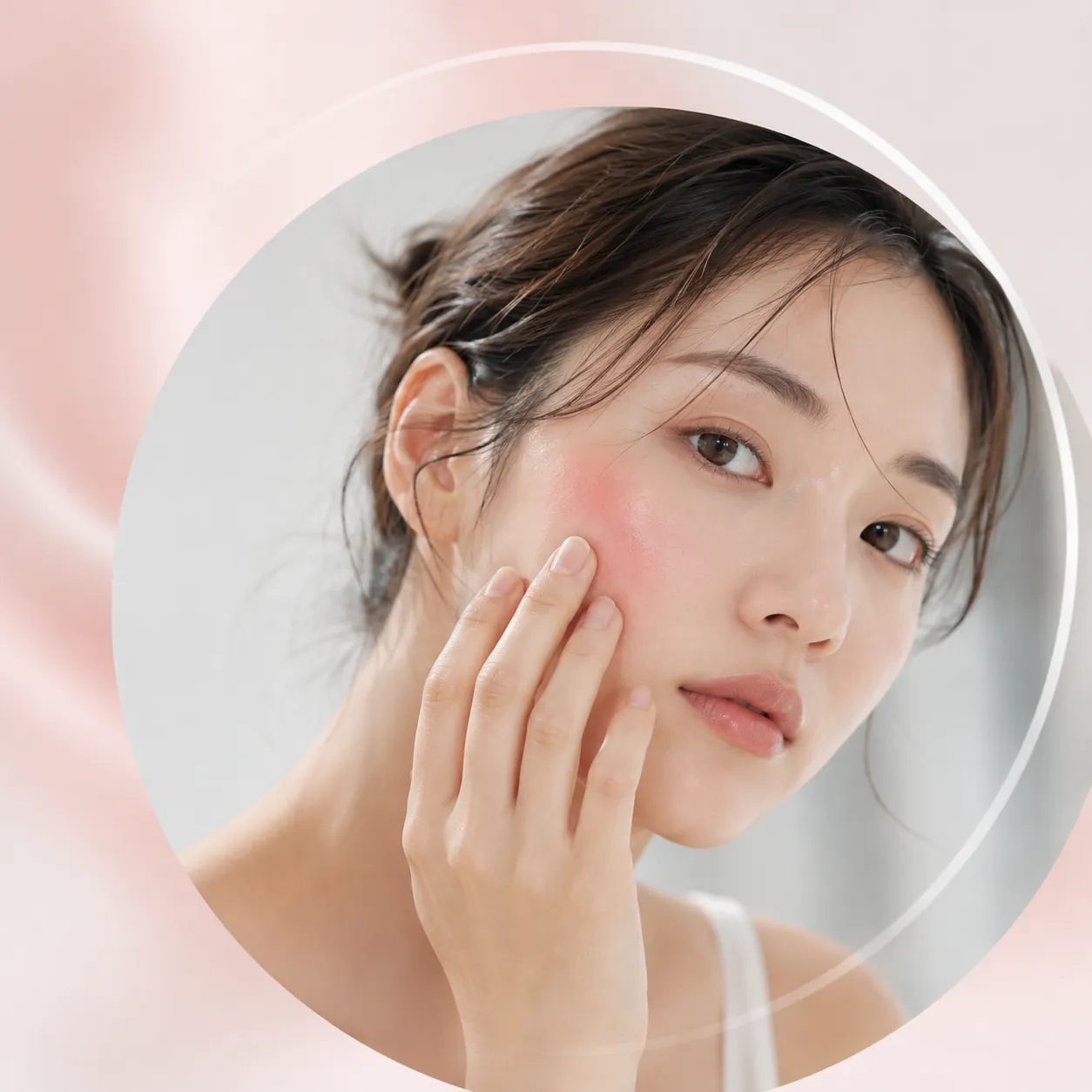
Toner stings, and your cheeks turn red after only slight warmth. Has this been continuing for you?
Skincare for facial redness refers to daily care that works to restore the skin's barrier function through cleansing, moisturizing, and UV protection, aiming for a condition in which redness is less likely to appear.
To state the conclusion first, whether facial redness improves with skincare depends on the cause of the redness. Redness from a weakened barrier function or from irritation tends to settle down with daily care, while redness from dilated capillaries or rosacea is difficult to reverse with cosmetics alone. This article outlines the types of facial redness, ingredients that are easy to incorporate and those to avoid, how to distinguish it from rosacea, and 5 basic care steps for improvement. Please read it as a starting point if you are looking for options in Shinjuku.
*Treatment for facial redness at a medical institution is self-pay treatment not covered by Japanese public health insurance. *Results vary from person to person. *Risks and side effects: Even with skincare, irritation, itching, or rash may occur, and if symptoms persist, examination is necessary.
What Is Facial Redness? Causes to Know Before Considering Skincare
Facial redness refers to a condition in which the skin of the face appears red persistently or repeatedly. Before choosing your care, let us go over why the skin looks red.
The Main Mechanisms Behind Facial Redness
Redness of the face occurs because the color of the blood in the capillaries running beneath the skin shows through. When the vessels dilate, the volume of blood flowing through them increases and becomes noticeable as redness. Because the skin of the face is thin and the vessels lie at a shallow depth, this is an area where such changes readily show on the surface.
Typical backgrounds that lead to redness include the following.
A weakened barrier function makes inflammation more likely to occur in response to external irritants
Vessels are temporarily dilated due to temperature changes, exercise, alcohol consumption, and the like
Dilated capillaries do not return to their original state and become fixed as thin visible lines
A skin disease such as rosacea or seborrheic dermatitis is present in the background
After acne or eczema has healed, redness remains as a mark of the inflammation
Even with the same "red face," the condition of the skin differs. Which of these is closest to your own redness—does any of them sound familiar?
Some Redness Is Difficult to Improve with Skincare Alone
Redness caused by a weakened barrier function or by irritation is the part that tends to settle down when care is reviewed. When the skin becomes dry and the stratum corneum is disrupted, external irritants reach the skin more easily and inflammation recurs. Breaking this vicious cycle is the role of daily care.
On the other hand, dilated capillaries themselves do not become narrower with cosmetics. A state in which the vessel walls have stretched and widened is a structural change, and delivering ingredients from outside may not restore them to their original diameter. In such cases, laser or light treatment at a medical institution is considered as an option.
Thinking about care for facial redness in terms of "where the role of cosmetics ends and where the medical domain begins" is the shortest way to avoid detours.
Types of Facial Redness and How to Approach Skincare
Redness can be broadly divided into two patterns based on how it appears. Which one is closer to your case also changes which care to prioritize.
Temporary Redness and Chronic Redness
Temporary redness spreads in response to triggers such as temperature differences, bathing, exercise, alcohol, or tension, and subsides within minutes to a few hours. It is a physiological change in which vessels dilate in reaction to a stimulus, and in itself it is not abnormal. However, the more it repeats, the more the vessels may tend to remain dilated.
Chronic redness is a condition in which redness is always present even without a trigger. It may spread over the cheeks and around the nose, or fine vessels may be visible as lines. At this stage, it is difficult to eliminate the redness with daily care alone, and the purpose of care shifts toward preventing worsening.
Try checking in the mirror right after waking up, before doing anything, to see whether redness is present. This is the first clue for distinguishing between the two.
Care Methods Differ Depending on Skin Condition and Cause
If dryness and irritation are the main background, moisturizing and reinforcing the barrier function are central. Simply reconsidering cleansers with strong cleansing power or wipe-off type makeup removers can sometimes lessen the redness.
If sebum is abundant and the redness around the nose and between the eyebrows is accompanied by flaky, dandruff-like dryness, seborrheic dermatitis may be present in the background. In this case, rather than layering on more moisturizer, it is important to prioritize a diagnosis at a dermatology clinic.
When redness remains as an acne mark, it corresponds to a temporary color change in the process of inflammation subsiding, and it generally fades over several months. Not adding irritation is the way to keep it from progressing to pigmentation.
What You Can Expect from Skincare for Facial Redness
What can be expected from daily care is not the elimination of redness, but the building of a foundation in which redness is less likely to appear. With this premise in mind, you are less likely to lose sight of your care along the way.
Aiming for Skin Less Prone to Irritation by Moisturizing and Restoring the Barrier Function
When moisture is retained in the stratum corneum, irritants from outside are less able to penetrate, and the starting points of inflammation decrease. When intercellular lipids such as ceramides are lacking, dryness and irritation occur alternately, becoming a factor in recurring redness.
The purpose of moisturizing is not to cover the skin with oil but to restore the structure of the stratum corneum. Rather than layering on thick, viscous cream, applying a product containing barrier ingredients thinly and evenly places less burden on the skin.
Taking into account the cycle in which the stratum corneum is renewed, it is common to continue the same care for 2 to 4 weeks before making a judgment.
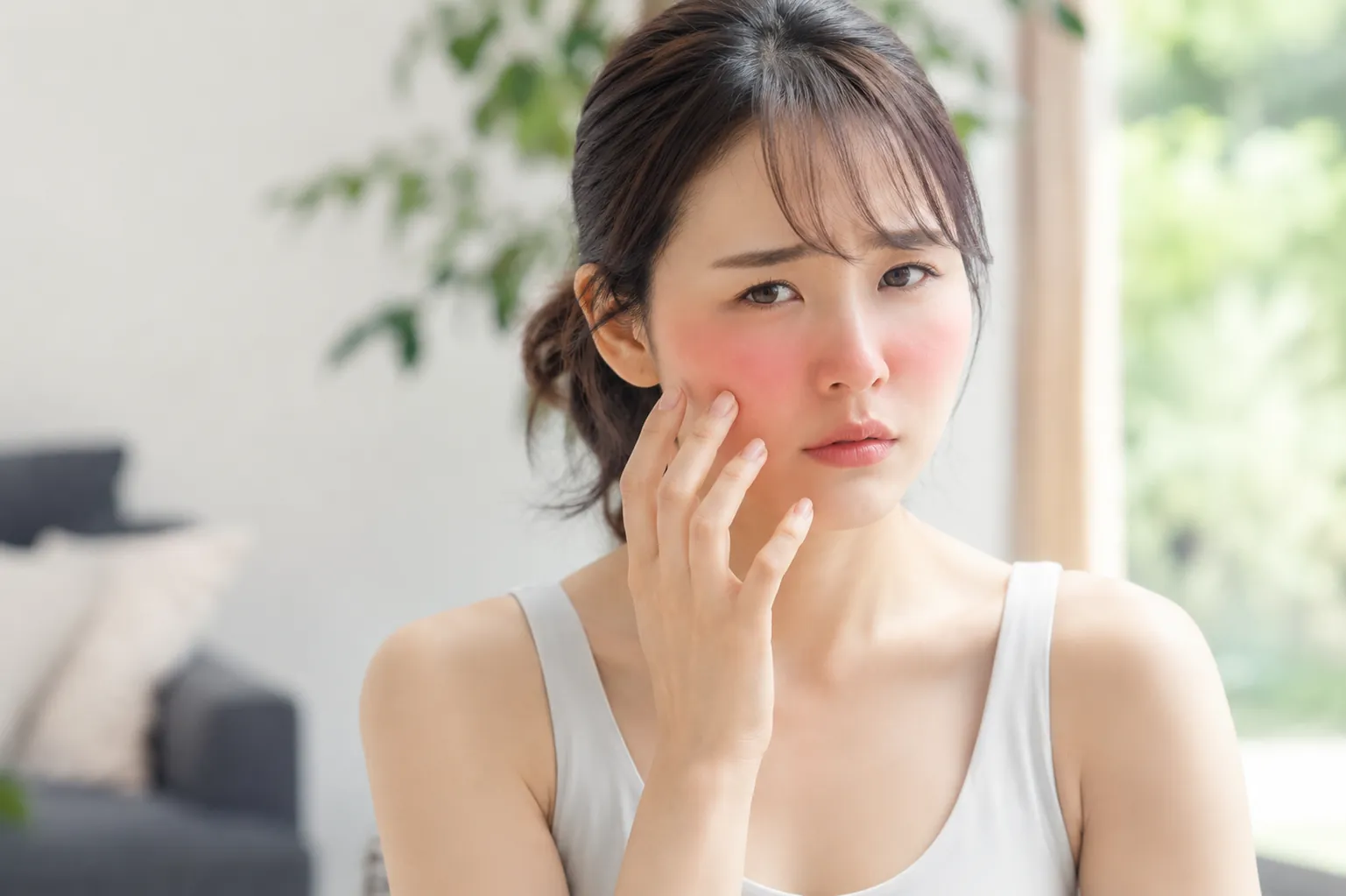
Ingredients Easy to Incorporate for Facial Redness and How to Choose Them
These are ingredients that tend to be candidates for skin where redness is a concern.
Ceramides — Replenish the intercellular lipids of the stratum corneum and support barrier function.
Heparinoid — Retains moisture and helps settle roughness caused by dryness.
Niacinamide — Considered for both its inflammation-suppressing action and its moisturizing properties.
Panthenol — An ingredient often included with the aim of calming rough skin.
Dipotassium glycyrrhizinate — An ingredient intended to suppress redness and inflammation.
Azelaic acid — Sometimes used for redness associated with rosacea or acne.
When choosing a product, check what is "not included" before looking at ingredient names. Whether the formulation is free of alcohol, fragrance, colorants, and menthol is a useful basis for judging how to reduce irritation. With a new product, test it for a few days on an area such as the inner forearm before using it on the face.
What Is the Difference Between Facial Redness and Rosacea? Comparing How to Tell Them Apart and How to Manage Them
They look similar, but the direction of management differs. Rosacea is a skin disease and is subject to diagnosis and treatment.
[Comparison Table] Mechanism, How Effects Appear, Duration, Downtime, and How to Think About Cost
Item | General facial redness | Rosacea |
|---|---|---|
Mechanism | Weakened barrier function or temporary dilation of blood vessels | A condition in which vascular and inflammatory reactions continue chronically |
How symptoms appear | Turns red with irritation or temperature differences, and subsides once it settles | Persistent redness on the cheeks, nose, and forehead, sometimes accompanied by flushing and papules |
Course and persistence | Often lessens when the cause is avoided | Repeatedly improves and worsens |
Impact on daily life | Within the range that can be addressed by reviewing skincare | Requires management of aggravating factors and continued treatment |
How to think about cost | Within the range of cosmetics | Depending on the diagnosis it may be covered by insurance, while treatments for cosmetic purposes are self-pay treatment not covered by Japanese public health insurance |
For rosacea, topical agents such as metronidazole are approved in Japan, and oral medication is sometimes used in combination depending on symptoms. Continuing to change only cosmetics based on your own judgment can become a reason for delaying the start of appropriate treatment.
Signs to Consider Consulting a Dermatologist Rather Than Judging on Your Own
If any of the following applies to your condition, please consider an examination.
Redness on the cheeks or nose has continued for several months even without doing anything
In addition to redness, bumps or pus-filled lesions have appeared
There is accompanying flushing or stinging that bothers you in daily life
You also feel a gritty sensation in the eyes or eye redness
There has been no change for more than a month even after switching to low-irritation products
These may be beyond the range that can be addressed with cosmetics. The earlier you consult, the more options are available to choose from.
Disadvantages, Risks, and Cautions of Skincare for Facial Redness
Care performed with good intentions can sometimes become a factor that intensifies redness.
Why Over-Moisturizing and Highly Irritating Care Lead to Redness
Layering on oil-rich products thickly covers the surface of the skin and traps heat, leading to clogged pores and an imbalance of resident bacteria. As a result, inflammation becomes more likely to occur instead. Moisturizing is determined not by quantity but by ingredients and application method.
In addition, rubbing hard with the palms or repeatedly patting the skin also acts as irritation. Friction wears away the stratum corneum and works in the direction of lowering barrier function. It is enough simply to spread products as if pressing them in with the warmth of your hands.
Prolonged use of sheet masks also requires caution. As water evaporates, moisture is drawn from the skin as well, inviting dryness and redness.
Ingredients and Cosmetics to Use with Caution for Facial Redness
Toners containing ethanol (alcohol) at high concentrations
Ingredients that create a cooling sensation, such as menthol
Fragrance and colorants
Scrubs and cleansers with strong cleansing power
Peeling products containing high concentrations of AHAs or BHAs
High-concentration retinol products
High-concentration vitamin C serums formulated at a low pH
Wipe-off type makeup removers
This does not mean none of them can be used. Once barrier function has been restored, there are cases where they can be incorporated by trying lower-concentration products for short periods. During a period of strong redness, the priority is to set them aside for the time being and let the skin rest.
How Is Facial Redness Improved? 5 Basic Care Steps
This is probably the part of greatest concern. To state the conclusion first, improving facial redness is considered in three directions: "reduce irritation," "avoid aggravating factors," and "connect to medical care if needed."
Reducing Irritation Through Cleansing, Moisturizing, and UV Protection
What you can do day to day can be summed up in the following 5 points.
Cleanse briefly with lukewarm water — Hot water removes too much sebum and also dilates the vessels. Use lukewarm water at around 32°C and finish quickly, rolling the foam over the skin. Up to twice a day is the guideline.
Apply barrier ingredients thinly and evenly when moisturizing — Spread products containing ceramides or heparinoid without rubbing. The more items you add, the more occasions there are for irritation, so limiting yourself to the three steps of cleansing, moisturizing, and sunscreen is a realistic approach.
Continue UV protection all year round — Ultraviolet light is involved in both vessel dilation and inflammation. Choose low-irritation products based mainly on physical UV filters. Using a parasol or hat as well allows you to reduce the amount you apply.
Record and avoid aggravating factors — Temperature differences, spicy foods, alcohol, hot drinks, stress, and long baths. Keeping notes on the circumstances of days when redness appeared helps you see your own triggers.
Review every 2 to 4 weeks — Continue the same care for a set period and look back on the changes. If you change products frequently, you will not be able to judge what suits you.
Among these, the fourth is the one many people tend to overlook. While attention readily goes to choosing skincare products, it is not uncommon for the triggers of redness to lie on the lifestyle side.
If Skincare Does Not Improve It, Cosmetic Dermatology and Dermatology Are Also Options
If you see no change after continuing for 1 to 2 months, the cause may lie outside the range that cosmetics can reach.
If dilated capillaries are the main cause, treatments that act selectively on the blood vessels, such as light-based therapy or lasers, may be considered. The approach is to deliver light that is absorbed by the red color, making the dilated vessels less noticeable. Treatment is generally divided into multiple sessions, and after each session, redness or a stinging sensation may continue for several hours to several days.
When rosacea is present in the background, treatment with topical or oral medication is central. Because there are methods that can only be chosen once a diagnosis has been made, confirmation at a dermatology clinic is the starting point. There is also an approach of suppressing the inflammation first and then combining light treatment for the remaining redness.
Treatment at a medical institution does not reduce redness to zero either. It presupposes avoiding aggravating factors and continuing daily care. At our clinic, we sort out in the consultation whether care or treatment should be prioritized, and then explain our plan to you.
The Flow of Continuing Skincare for Facial Redness and When to Review It
There is also an order to how you continue. Daily accumulation is what influences the outcome.
The Order of Use and Key Points to Keep in Mind in Daily Care
Makeup removal — Only on days you wore makeup. Choose a milk or cream type and finish quickly.
Cleansing — Roll the foam with lukewarm water and rinse without rubbing.
Toner or moisturizing lotion — Warm it in your palms, then let it absorb with a pressing motion.
Emulsion or cream — Spread a product containing barrier ingredients thinly.
Sunscreen — An essential step in the morning.
Reducing the number of items at night and carrying out the morning routine through sunscreen in one continuous flow makes it easier to turn into a habit. On days when redness is strong, it is fine to limit yourself to toner and moisturizer only.

Guidelines for Considering Discontinuation or a Consultation When Redness Worsens
Discontinue at that point any product that causes stinging or itching after you start using it
If bumps, swelling, or blisters appear in addition to redness, do not continue based on your own judgment
The face feels hot and a painful state continues
The area of redness has spread even after continuing for a month
Please do not keep using a product that does not suit you on the assumption that you will "get used to it eventually." When irritation accumulates, recovery takes time.
Frequently Asked Questions
Can facial redness be improved with skincare?
It depends on the cause of the redness. If a weakened barrier function due to dryness or irritation is the background, you can expect it to settle down by reviewing your cleansing, moisturizing, and UV protection. As a guideline, continue the same care for 2 to 4 weeks and then look back on the changes.
On the other hand, when dilated capillaries or rosacea are the background, eliminating the redness with cosmetics is difficult. In such cases, diagnosis at a dermatology clinic and options such as light treatment or lasers are considered. Skincare is then continued in the role of preventing worsening.
Can vitamin C or niacinamide be used for facial redness?
Both can be used, but the conditions differ. Niacinamide is expected to offer both an inflammation-suppressing action and moisturizing, and it is an ingredient that is easy to incorporate even for skin where redness is a concern.
With vitamin C, the degree of irritation varies depending on how the formulation is designed. High-concentration pure vitamin C serums formulated at a low pH can cause stinging when barrier function is compromised. If you incorporate it, try a derivative or a low-concentration product for short periods during a time when your skin is calm. If you feel a stinging sensation when using it, that product does not suit you.
Summary
What skincare for facial redness aims for is not the elimination of redness, but the building of a skin foundation in which redness is less likely to appear. If a weakened barrier function due to dryness or irritation is the background, change can be expected by reviewing your cleansing, moisturizing, and UV protection.
On the other hand, redness with dilated capillaries or rosacea in the background is an area that is difficult to reverse with cosmetics alone. Redness continuing for several months even without doing anything, accompanying bumps, eye redness—if you have such signs, please prioritize confirmation at a dermatology clinic.
What you can do day to day comes down to 5 things: brief cleansing with lukewarm water, applying barrier ingredients thinly and evenly, UV protection all year round, recording aggravating factors, and reviewing every 2 to 4 weeks. Please start by checking whether the products you are currently using contain alcohol or fragrance. If you are considering treatment at a medical institution, please check the fees on the treatment reservation page.
References and Sources
Ministry of Health, Labour and Welfare, "Medical Advertising Guidelines"
Handling information for the medications and devices used (please confirm details at the time of consultation)
*This is self-pay treatment not covered by Japanese public health insurance *Results vary from person to person *Side effects and risks: Irritation, itching, or rash from cosmetics may occur. With treatment for facial redness at a medical institution (light treatment, lasers), redness, stinging, swelling, purpura, pigmentation, or blisters may occur at the irradiated site. *As for the standard treatment period and number of sessions, daily skincare is continued while checking the course every 2 to 4 weeks, and light treatment and lasers are performed over multiple sessions at intervals of roughly several weeks to about one month. Because fees vary depending on the period, campaigns, and contract terms, please check the treatment reservation page and campaign page.
Supervised by: Rina Shindo, Director (Cosmetic Dermatology)
Graduated from Shiga University of Medical Science, School of Medicine, Department of Medicine
2019 Sumitomo Hospital (General Incorporated Foundation)
2021 Department of Dermatology, Kobe University Hospital
2022 Chief at a major cosmetic surgery clinic
2025 Director, PGC CLINIC SHINJUKU
Your next step, at your own pace.
Explore the official website for pricing and appointment information.
Pricing & booking